


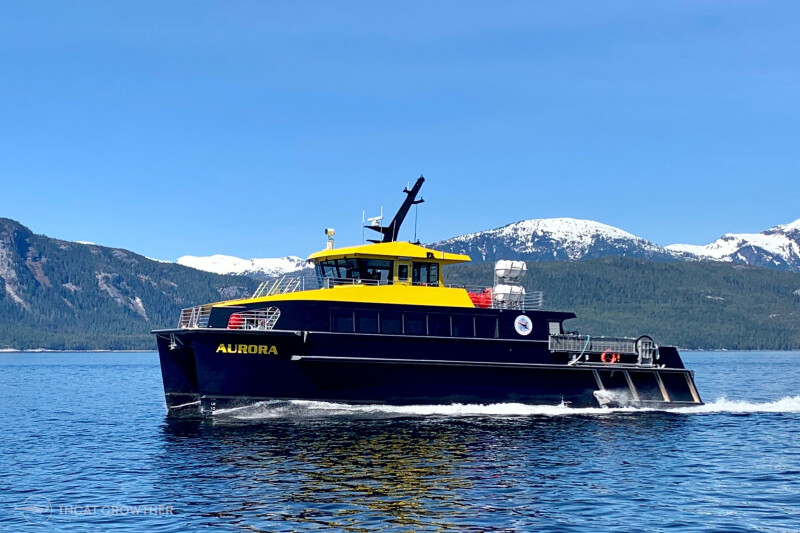
Naval architects Incat Crowther, Belrose, Australia, have been selected by Canadian marine transportation business West Coast Launch to design a new fast response workboat and crew transfer vessel. The new design is inspired by the operational performance of Aurora, a 26-metre (85’) passenger and freight vessel designed by Incat Crowther in 2019.
Canadian shipyard Bracewell Marine, Richmond, British Columbia, will build the vessel using Incat Crowther’s digital shipbuilding technology. When complete the planned Transport Canada-certified vessel operate on West Coast Launch's existing routes along the British Columbia coast.
The IMO Tier III vessel will be powered by twin Volvo Penta D16 engines driving twin fixed-pitch propellers, for speeds up to 26 knots, providing an increase in power output when compared to Aurora while also meeting IMO Tier III emissions requirements.
The vessel will be equipped with a cargo deck crane with a 9.5-metre (31’) operational reach, twin swim platforms and a large storage area with roller door access. An integrated gangway will provide passenger transfer to a 100-seat passenger cabin.
Captain Doug Davis, head of family-owned West Coast Launch, says it made sense to return on Incat Crowther for the company’s next design.
“This new vessel builds on the operational success of Aurora, while providing the capacity for West Coast Launch to expand the crew, cargo, survey, response and freight missions which we have become renowned for,” said Davis.
“The vessel has been tailored for the unique conditions it will face in Canada's Pacific Northwest, while operational feedback from West Coast Launch has helped to create a highly capable and multi-functional vessel that builds on the success of Aurora.”
