



Asserting that offshore oil and gas production is critical to U.S. security, the federal Endangered Species Committee voted March 31 to exempt Gulf of Mexico companies from wildlife protection requirements.
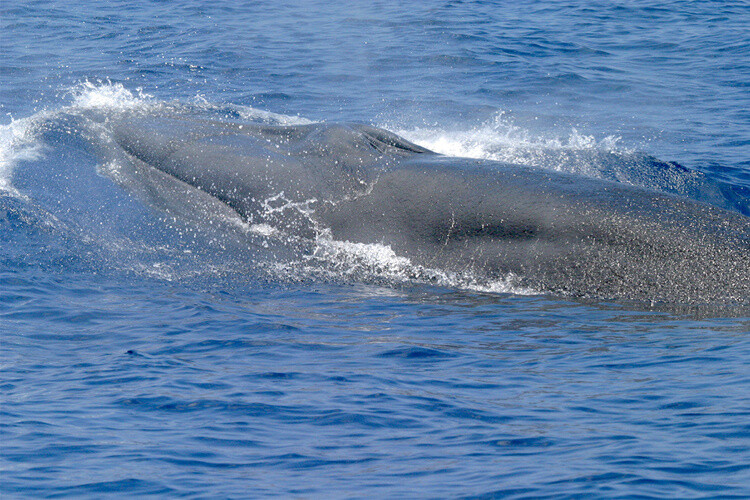
The exemption to the 1973 Endangered Species Act is the first since the early 1990s when the Department of the Interior allowed logging in Northwest states amid lengthy controversy then over the status of the northern spotted owl. In the Gulf, environmental advocates say the exemption threatens the endangered Rice’s whale, sea turtles and other protected species.
“This is not just about gas prices. It’s about our ability to power our military and protect our nation,” Hegseth said, seated beside Burgum. “The Strait of Hormuz is the world’s busiest oil route, and recent hostile action by the Iranian terror regime highlights yet again why robust domestic oil production is a national security imperative.”
The move to exempt oil and gas companies from complying with the ESA in the Gulf of Mexico would lift the possibility of ship speed restrictions to protect the Rice’s whale, now estimated to number only 51 animals.
The National Marine Fisheries Service has issued a biological opinion that oil industry ship traffic could jeopardizing Rice’s whale as well as other whales and sea turtles. NMFS issued a similar finding in 2020 and during the Biden administration there was movement toward expanding a protected area in the Gulf.
Once thought to be a subspecies of Bryde's whale, Rice’s was recognized by biologists and NMFS as a distinct species in 2021. Environmental groups have pressed for more protections for the whales from collisions with vessel traffic, in Gulf oil and gas production areas and near approaches to Gulf shipping ports.
A 2023 rule proposal by the Biden administration would have expanded designated critical habitat in the central and western Gulf, potentially restricting oil exploration.
Other proposals to limit vessel speeds to 10 knots when Rice’s whales are present met heated opposition from Gulf port interests, recreational fishing advocates and state governors. In October 2023 NMFS withdrew one plan after critics insisted the risk to whales at the surface from boat traffic was not justified by potential economic impact on maritime industries.
Burgum released a statement after the committee vote:
“Energy production in the Gulf of America is indispensable to our nation’s strength, safeguarding our energy independence and preventing reliance on foreign adversaries,” according to Burgum. “Robust development in the Gulf keeps our economy resilient, stabilizes costs for American families and secures the U.S. as a global leader for decades to come."
Two weeks before the meeting environmental advocates with the Center for Biological Diversity filed an “emergency lawsuit” to prevent Burgum from convening the Endangered Species Committee. The court allowed the meeting to proceed last week.
“Burgum’s extinction committee is immoral, illegal and unnecessary,” Kierán Suckling, executive director of the Center for Biological Diversity, claimed March 18 in trying to block the meeting. “This sham is nothing more than Burgum posturing for Trump and saving the fossil fuel industry a few dollars by allowing its boats to drive faster and more recklessly.”
