



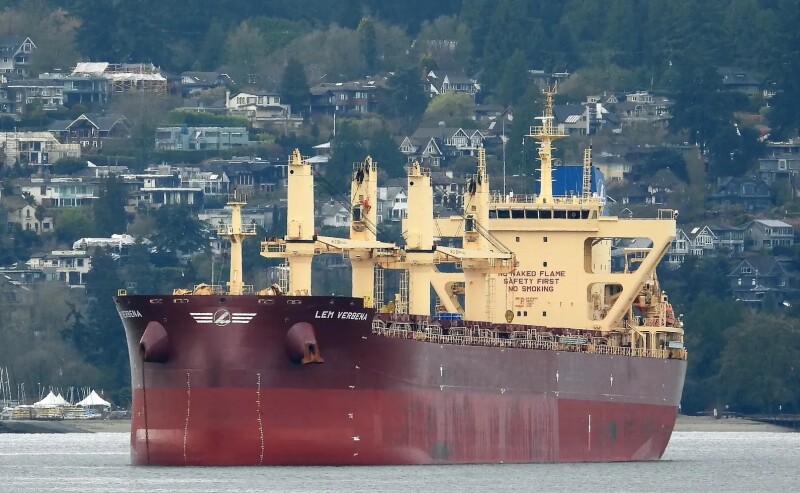
An engine room fire aboard the 655’ bulk carrier Lem Verbena at the Alabama State Docks in Mobile, Ala., was caused by a failed O-ring seal in the vessel’s boiler burner fuel system, according to a National Transportation Safety Board investigation.
The fire occurred Jan. 4, 2025, at about 11:23 p.m. while the vessel was docked and conducting cargo operations. The crew activated the vessel’s fixed carbon dioxide fire extinguishing system, and shoreside firefighters later confirmed the fire was extinguished. No injuries or pollution were reported, and damage was estimated at $5.5 million.
The fire originated in the upper engine room near the composite boiler burner unit. Shortly after cargo operations were completed and the boiler burner had cycled off, a fire alarm activated in the engine control room indicating a fire in the upper engine room zone. The vessel’s water mist system automatically activated, but the fire spread from the upper deck down to lower engine room platforms.
Crew members attempted to enter the engine room wearing firefighting gear but were forced back by heat and smoke. The crew secured engine room ventilation, shut down fuel pumps, mustered all personnel, and began boundary cooling. The master then ordered release of the vessel’s fixed CO₂ fire extinguishing system. After the CO₂ discharge, smoke from the exhaust stack diminished, indicating the fire was being suppressed.
Shoreside firefighters boarded the vessel and allowed the engine room to remain sealed to maintain CO₂ concentration before entering the space. The fire was confirmed extinguished early Jan. 5.
Post-fire inspections determined the fire began near the fuel flow meter on the boiler burner unit. Investigators found an O-ring seal in the burner unit’s oil fittings block had become pinched due to misalignment between two fuel port modules. Over time, the damaged O-ring degraded and failed, allowing pressurized diesel fuel to leak and atomize near hot machinery surfaces.
Investigators also found a software configuration error caused the burner fuel pump to continue running between burner cycles, keeping the fuel system pressurized continuously. This constant pressure accelerated degradation of the damaged O-ring and contributed to the fuel leak that led to the fire, NTSB said.
The NTSB noted that the crew’s actions of securing ventilation, shutting down fuel pumps, mustering personnel, and coordinating with shoreside firefighters helped ensure the CO₂ system was effective in extinguishing the fire.
The NTSB concluded the probable cause of the fire was failure of an O-ring seal in the composite boiler burner unit fuel system due to misalignment of fuel port modules, which allowed pressurized diesel fuel to leak, atomize, and ignite on a nearby hot surface.
