



NOAA has issued a final rule revising the permitting process for deep seabed mining exploration and commercial recovery under the Deep Seabed Hard Mineral Resources Act (DSHMRA), establishing a consolidated application pathway intended to shorten timelines for prospective operators.
The rule, published in the Federal Register, allows companies to apply simultaneously for an exploration license and a commercial recovery permit, rather than moving through the long-standing two-step sequential process. The change takes effect upon publication.
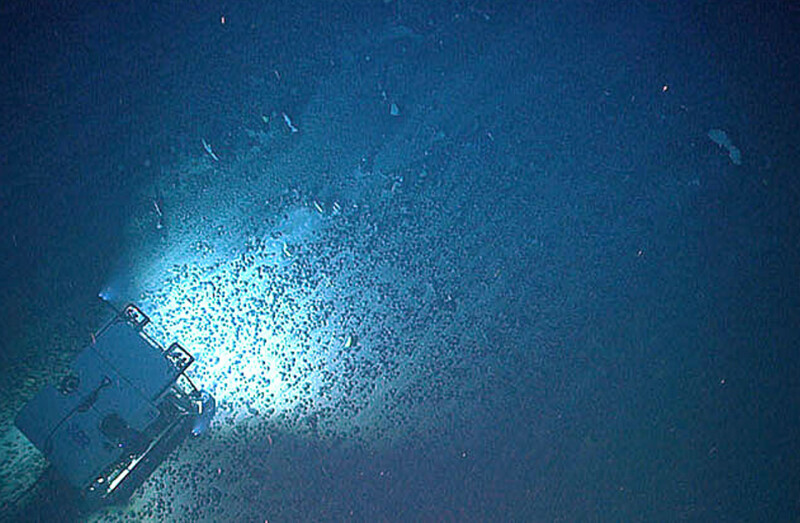
The permitting update comes just one day before NOAA announced plans to begin a large-scale hydrographic survey of more than 30,000 sq. nm. of federal waters off American Samoa to map and characterize potential deep-sea critical mineral deposits. That effort, funded with roughly $20 million in fiscal 2025 dollars, is aimed at improving baseline data on polymetallic nodules and other seabed resources and is expected to inform future federal decision-making related to offshore mineral development.
Since DSHMRA was enacted in 1980, U.S. entities seeking to mine polymetallic nodules and other seabed mineral resources in areas beyond national jurisdiction have first been required to obtain an exploration license from NOAA before separately applying for a commercial recovery permit. The updated regulations retain that pathway but add the option for a single, combined application.
NOAA said the revision is intended to reduce administrative delays while maintaining existing statutory and environmental review requirements. The agency made clarifying edits to the rule following public comments on a proposed version released July 7, 2025, but did not change the overall scope of the update.
The move aligns with broader federal efforts to identify and develop domestic sources of critical minerals used in energy storage, electronics, and defense systems. NOAA is the lead federal agency responsible for issuing deep seabed mining licenses and permits under DSHMRA.
NOAA said interest in seabed mineral development has grown in recent years as the U.S. and other nations look to diversify supply chains for minerals such as nickel, cobalt, copper, and manganese — materials commonly found in polymetallic nodules on the ocean floor.
The rule does not authorize any specific mining activity but modifies how applicants submit and sequence license and permit requests. Companies pursuing projects in international waters must still meet technical, financial, and environmental requirements outlined in DSHMRA and NOAA’s implementing regulations.
