



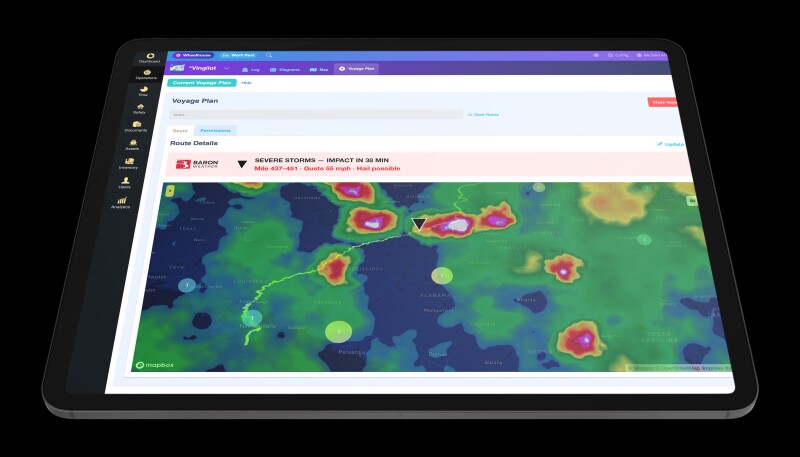
MobileOps and Baron Weather have formed a strategic partnership aimed at integrating real-time maritime weather intelligence into fleet operations and voyage planning workflows.
The companies said the integration will embed Baron Weather’s forecasting and metocean data directly into the MobileOps platform, giving vessel operators access to high-resolution forecasts, river and sea-state conditions, currents, winds, storm development, and other operational weather information within the platform’s MapTracker system.
According to the companies, the integration is designed to support voyage planning, operational risk assessments, and real-time decision-making for vessel operators, dispatchers, and shoreside personnel.
The combined platform will include weather overlays, historical weather review capabilities, and automated alerts tied to changing environmental conditions that could affect vessel operations. The system will also provide planning tools intended to help operators identify favorable departure windows and operating conditions based on voyage requirements.
The companies said the platform will allow captains, dispatchers, and shoreside operations teams to maintain shared situational awareness during all phases of a voyage, from planning through underway operations.
Additional features include custom alerting tied to safety management system requirements and trip-planning tools designed to support go/no-go operational decisions based on forecasted marine conditions.
Baron Weather provides weather intelligence services across several transportation and industrial sectors, while MobileOps develops fleet management and vessel operations software for the maritime industry.
“We are excited to partner with Baron Weather, adding valuable planning tools that meet our customers' primary focus of safe navigational assessments,” said David Hill, President and CEO of MobileOps. "This collaboration is focused on adding vital weather forecasting tools to the voyage planning process and simplifying the steps to make good, safe decisions.
“The best part is that it will be done within a single operational ecosystem, reducing the use of disparate systems while increasing the decision-making accuracy.”
