

BREAKING NEWS: The WorkBoat Show returns to New Orleans, Dec. 2-4. Registration is now open. Get your free pass today →

Although marine pilots are primarily viewed through the lens of navigation safety, environmental protection, and maritime commerce, they also perform vital maritime security functions. By boarding vessels before they enter U.S. ports and guiding them through domestic waterways, pilots help close critical gaps between foreign-flagged vessels and the domestic maritime system. As we observe the 25th anniversary of the Sept. 11, 2001, terrorist attacks, it is fitting to recognize pilots as a first line of defense safeguarding coastal waters, vital commerce, and critical port infrastructure.

Unlike foreign vessel crews, who are employed by international shipping companies or, in some cases, entities subject to foreign government influence, pilots are licensed by individual states or, for the Great Lakes, by the U.S. Coast Guard. Their responsibilities are grounded in the public interest — the safety and security of local waterways and infrastructure — not in the commercial or governmental interests of a vessel’s operator.

When a pilot boards a vessel, she or he takes command of navigation through local waters, a critical safeguard given that foreign-flagged ships make up over 90% of commercial port calls in the U.S. Because pilots are vetted, credentialed, and background-checked by federal and state authorities, placing them on the bridge helps guard against insider threats, undertrained crews, and hostile intent.

Pilots also serve as additional “eyes and ears” for law enforcement and intelligence agencies. Boarding incoming vessels miles offshore, well before they reach populated areas or inland waterways, puts pilots in a unique position to spot anomalies and provide real-time situational awareness. While the Coast Guard and Customs and Border Protection monitor documentation and intelligence streams, pilots provide firsthand assessments from the bridge — tracking equipment, crew behavior, and structural integrity throughout the transit from sea to berth. They are trained to identify red flags such as unexplained route deviations, erratic crew behavior, mechanical deficiencies, and unreported personnel.

Pilots maintain direct, real-time communication with the Coast Guard, CBP, and port authorities. If a threat emerges, a pilot can alert authorities, coordinate an emergency response, or direct a vessel to stop short of a bridge, refinery, or military installation. A formal memorandum of agreement between the American Pilots’ Association and the Coast Guard formalizes this cooperation, recognizing pilots’ unique awareness and deep understanding of the maritime domain and committing both parties to strengthen port security together.

Today’s threat landscape includes the potential use of a commercial vessel as a weapon. An intentional grounding, allision, or channel obstruction could cripple military ports, paralyze economies, or disrupt supply chains. Pilots mitigate this risk through intimate knowledge of local tides, currents, hazards, and harbor layouts, helping prevent both accidents and deliberate sabotage during a vulnerable phase of transit.

In short, pilots are more than skilled navigators — they are essential participants in America’s maritime security framework. Their independent authority, early detection capabilities, local expertise, and communication networks help insulate domestic ports from international vulnerabilities. As vessels grow larger and geopolitical tensions rise, that security role will only become more vital.

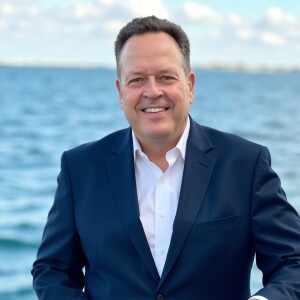
Clay Diamond is the executive director-general counsel for the American Pilots’ Association (APA). Prior to that, he served 13 years as APA’s deputy director-associate general counsel. A 1989 graduate of the Coast Guard Academy, he also earned a master’s degree from Rensselaer Polytechnic Institute and a Juris Doctor from Case Western Reserve University School of Law. During law school, he earned the award for “Highest Proficiency in Admiralty Law.” In addition, he was a fellow at the Massachusetts Institute of Technology Center for International Studies. Diamond is admitted to the Ohio and District of Columbia Bars and is a member of the Maritime Law Association of the U.S. 

As APA’s general counsel, he represents pilots and the piloting profession before Congress, federal agencies, and state and local legislative and administrative bodies. He also advises pilot groups and pilotage authorities on operations, practices, business structures, and oversight of pilots and pilotage systems. He has served on more than sixty U.S. delegations to the International Maritime Organization (IMO) and currently serves as a subject matter expert on U.S. delegations to IMO’s Maritime Safety Committee; Subcommittee on Navigation, Communications and Search and Rescue; and Subcommittee on the Human Element, Training and Watchkeeping. Diamond is also an instructor at the Maritime Institute of Technology & Graduate Studies, California Maritime Academy, Maritime Pilots Institute, and U.S. Maritime Resource Center, where he teaches courses on the Legal Aspects of Pilotage. As executive director, he manages APA’s budget, office operations, membership services, and administrative activities. 

Diamond regularly speaks on pilotage and pilotage law and has been published in numerous professional trade and law journals, including as co-author of “Unique Institutions, Indispensable Cogs, and Hoary Figures: Understanding Pilotage Regulation in the United States,” University of San Francisco Maritime Law Journal, 2010-11. He was also a contributing author for the book “IMPA on Pilotage” (2014 Witherby Publishing Group), and a contributing editor for “The American Practical Navigator – Bowditch” (2017 Lighthouse Press).

In 2012, the Secretary of Homeland Security appointed Diamond to serve on the Navigation Safety Advisory Council, a federal advisory committee that provides navigational safety recommendations to the Commandant of the Coast Guard.

During his 20-year Coast Guard career, Diamond served aboard several Coast Guard cutters, culminating with command afloat. During these operational assignments, he was On-Scene Commander during the early hours of the 1996 crash of TWA Flight 800, participated in the seizure of over $300 million in illegal drugs, the interdiction of hundreds of illegal migrants in the Caribbean, and the execution of heavy weather search and rescue cases in the North Atlantic and Bering Sea.

In the legal field, Diamond served as regional counsel for Coast Guard operations in the eight Great Lakes states, Coast Guard Liaison to the State Department (where he was legal advisor to U.S. delegations to IMO), and as the Coast Guard’s Legislative Counsel. In addition, following 9/11, Diamond was the first Coast Guard lawyer assigned to support the Department of Defense’s (DoD) Military Commissions, where he served as a Special Advisor to the DoD General Counsel and assisted in preparing prosecution cases for some of the most significant terror suspects in U.S. custody. Diamond also served on the faculty of the Defense Institute for International Legal Studies, where he conducted maritime law seminars in Asia, Africa, and Europe, and was also appointed as a Special Assistant U.S. Attorney for the Northern District of Ohio.

In 2002, Diamond was chosen by the American Bar Association as the “Outstanding Young Military Lawyer.” Other honors include two Coast Guard Meritorious Service Medals, the Joint Service Commendation Medal, the State Department Superior Honor Award, and the NOAA General Counsel’s Award.