



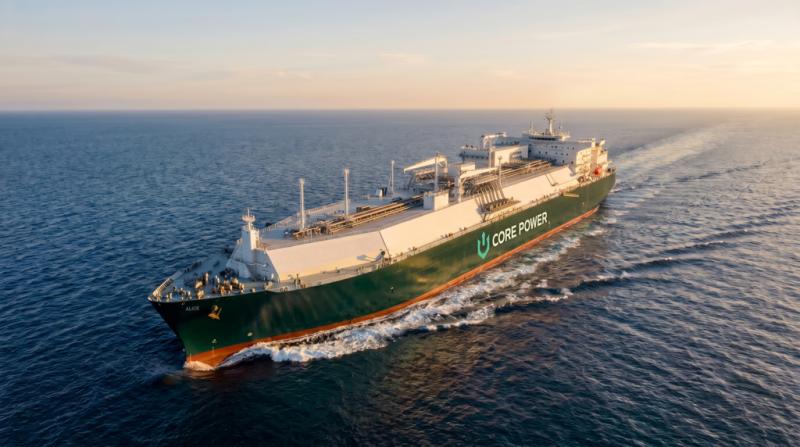
The U.S. Maritime Administration (Marad) and Core Power Inc. have signed an agreement to develop regulatory and commercial frameworks for nuclear-powered U.S.-flag merchant ships.
The memorandum of cooperation establishes a forum for government agencies, industry and other stakeholders to address regulatory approval, port operations, workforce credentialing, nuclear fuel and lifecycle services, insurance, financing and industrial capacity.
Core Power said it is targeting the start of construction in 2028. The company plans to use allied shipyards to build conventional hulls and marine systems while establishing a specialized U.S. shipyard for nuclear integration, fueling, testing, commissioning and lifecycle support.
“Nuclear propulsion is a serious commercial opportunity, but it must be approached as a complete system — safe, secure, licensable, and investable,” Maritime Administrator Stephen M. Carmel said. “As we accelerate this vital aspect of American maritime dominance and energy dominance, we are proud to be building this framework with Mikal Bøe and the team at Core Power.”
The agreement follows a recent Marad request for information seeking commercially viable, system-based approaches to using nuclear power in the U.S. marine transportation system. It also supports elements of the Trump administration’s Maritime Action Plan, which is intended to expand U.S. shipbuilding and maritime capacity.
Core Power highlighted nuclear propulsion could allow commercial vessels to operate for years between refueling and maintain higher speeds without the fuel-capacity and price considerations associated with conventional propulsion. Its commercial adoption, however, would require regulatory, security, insurance, financing, port and workforce systems that extend beyond the vessels themselves.
Core Power said its proposed U.S. nuclear-grade integration yard would handle reactor installation, initial fueling, testing, commissioning, refueling, defueling and through-life support. Conventional shipyards, including facilities in allied countries, would build the vessels’ hulls and nonnuclear systems.
“The United States has seven decades of nuclear-at-sea experience, world-class allies and the nuclear expertise to lead the next generation,” Core Power founder and CEO Mikal Bøe said. “Japan and Korea can accelerate conventional ship construction while America builds the specialist nuclear-grade integration and lifecycle capability at home — capability that can also strengthen the wider maritime industrial base.”
Bøe said private investment would be necessary to move the effort from planning into construction.
“We are not asking for another study. Core Power is targeting first construction starts from 2028,” he said. “Government can set the direction and coordinate; private industry must move the money and the steel.”
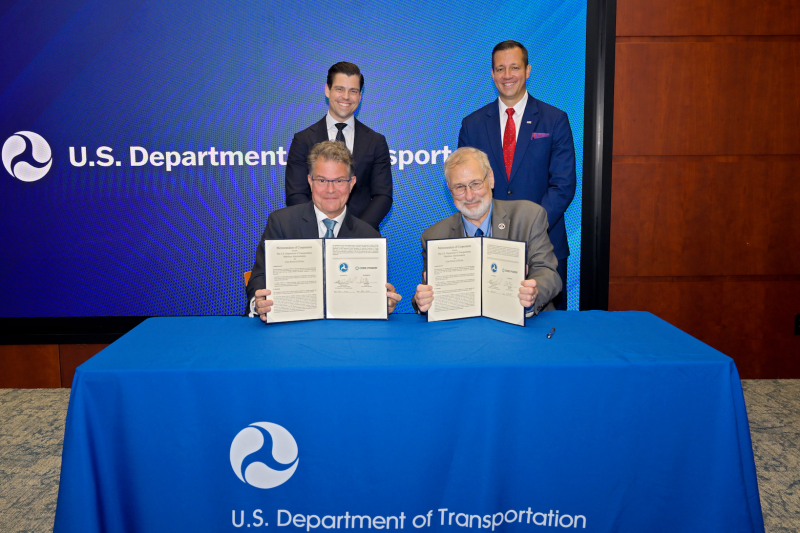
Marad and Core Power formalized the agreement Aug. 24 at the Department of Transportation's headquarters in Washington, D.C. The signing preceded the International Atomic Energy Agency’s Aug. 26-27 launch of Atlas, an initiative focused on nuclear applications at sea.
