



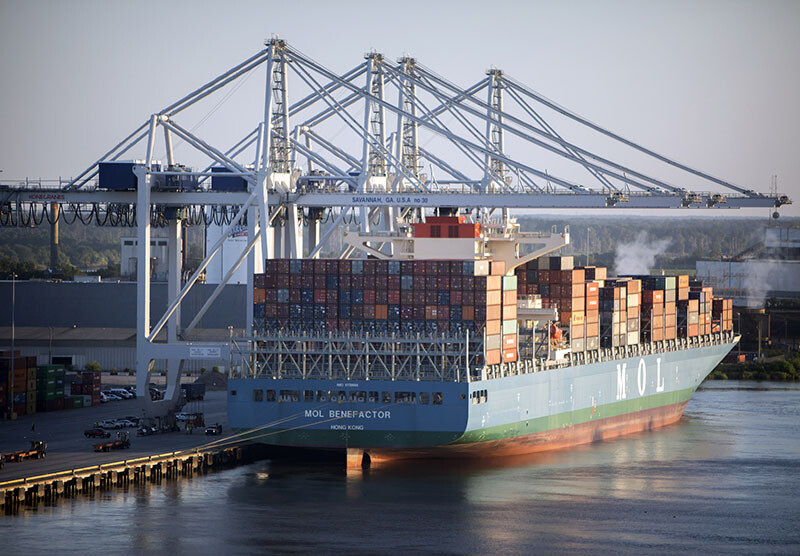
The U.S. Department of Transportation’s Maritime Administration (Marad) has awarded $774 million in funding through its Port Infrastructure Development Program (PIDP), supporting 37 projects across coastal seaports, Great Lakes ports, and inland river systems.
According to the agency, the investments are aimed at improving port capacity, efficiency, and resiliency within the U.S. supply chain. Funded projects span a range of infrastructure upgrades, including rail tunnel expansions, cargo handling improvements, security screening enhancements, and terminal development.
Transportation Secretary Sean P. Duffy said the funding reflects a broader effort to strengthen domestic freight networks and support economic activity tied to port operations. Marad Administrator Stephen M. Carmel added that the projects are intended to improve both near-term throughput and long-term competitiveness across the maritime sector.
Among the announced projects, Port Canaveral has been selected to receive a $20.21 million PIDP grant to upgrade its North Cargo Berths 1 and 2. The berths primarily serve tanker vessels transporting refined petroleum products that supply Central Florida’s transportation network.
The berth improvements are part of a broader $37.43 million port-led initiative to modernize aging bulkheads, extending their service life by an estimated 20 to 30 years while increasing capacity for bulk cargo. Transportation fuels currently account for more than 50% of the port’s annual cargo tonnage.
The latest round of awards follows a March announcement from Marad detailing $488.6 million in FY2026 PIDP funding for ports, shipyards, and related maritime infrastructure.
As outlined by the agency, at least 25% of PIDP funding—$122.16 million—is reserved for small projects at small ports. The program typically carries an 80% federal cost share, though that percentage may be increased for rural projects or smaller port initiatives. Eligible applicants include port authorities, state and local governments, Tribal nations, and other qualifying entities. Applications for the current funding round are due June 27, 2026.
The American Association of Port Authorities (AAPA) noted that 18 of its member ports were included among the award recipients, including Alaska, Baltimore, Beaumont, Davisville, Duluth, Everett, Freeport, Georgia, Guam, Gulfport, Greater Baton Rouge, Hueneme, Houston, Memphis, Monroe, Richmond, Tampa, and Virginia.
AAPA also highlighted that the FY25 awards include both newly appropriated funds and dollars rescinded from prior grant cycles that were re-awarded through the PIDP process. According to the association, the redistribution of those funds contributed to a record-high annual PIDP total, surpassing the previous $703 million awarded in fiscal year 2022.
Looking ahead, AAPA cautioned that while $488 million is currently available under the FY26 PIDP application cycle, future funding levels could decline following the expiration of the Bipartisan Infrastructure Law. The group has advocated for advanced appropriations in the next surface transportation reauthorization to maintain consistent funding for port infrastructure projects.
Marad officials have also indicated that program staff are conducting 30-minute debriefs with unsuccessful FY25 applicants in the coming weeks, as the FY26 application window remains open.
The PIDP program, administered by Marad, is designed to modernize port infrastructure and reduce bottlenecks in freight movement. The agency noted that improvements funded under this round include adaptable dock systems for all-weather operations and the construction of new cargo terminals aimed at increasing handling efficiency.
The U.S. port system includes more than 300 facilities operated by a mix of public and private entities, playing a central role in the movement of goods, energy products, and bulk commodities.
Marad has not yet released the full list of award recipients. WorkBoat will report on the complete list of awardees once it is announced.
