


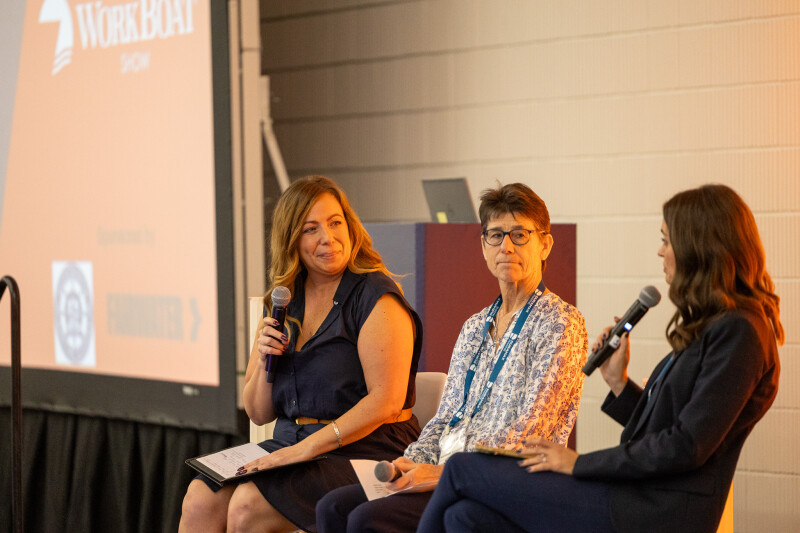
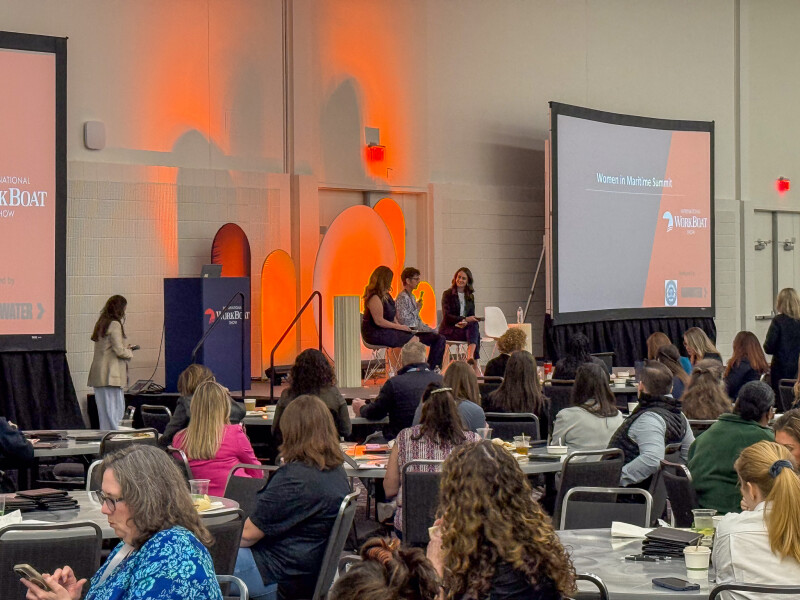
The Women in Maritime Summit took place on Day 1 of the International WorkBoat Show, featuring two mini-sessions with industry leaders, each followed by a brief roundtable discussion and audience Q&A.
Back for its second year, the summit is designed as a space for connection, reflection, and peer-to-peer learning among women and allies from across the maritime industry.
This year’s program introduced an interactive format aimed at sparking deeper dialogue, as attendees were invited to join small-group conversations to share their experiences and compare strategies. Whether they are just entering the field or bring decades of experience, the goal was the same: leave with practical takeaways and stronger professional relationships.
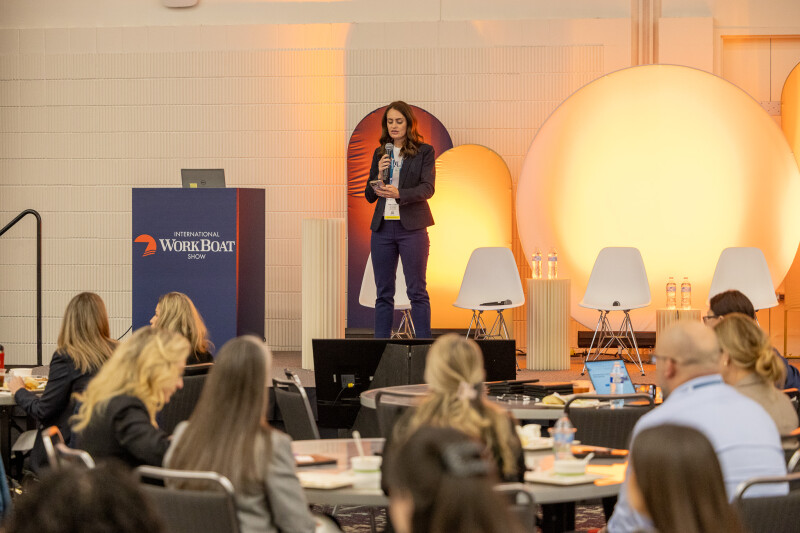
Following lunch, the first session, “The Power of Networks: Strengthening Professional Connections in Maritime,” got underway. Moderator Amelia Smith, founder and CEO of BluSiren, led a conversation with Maryanne Richards, director of career services at Massachusetts Maritime Academy, and Maggie Moon, chief marketing officer at Glosten. Their discussion centered on the value of peer networks, cross-sector mentorship, industry associations, and how maritime professionals can leverage relationships to open doors and share knowledge.
Smith first asked Richards what habits she sees in students and early professionals who tend to succeed. Richards was candid, saying, “It doesn’t come naturally to people to network, so we actually spend time talking to them about practicing their elevator pitch.” Her team works closely with cadets on professionalism tactics, including being prepared, being polite, and treating career fairs as intentional networking opportunities.
Emphasizing the basics, she continued, “Always be professional, be polite, have business cards. The goal is to walk away from a person with their business card.” But she stressed that collecting contacts isn’t enough. “Most importantly, you have to follow up. You have to maintain your contacts or you lose them.”
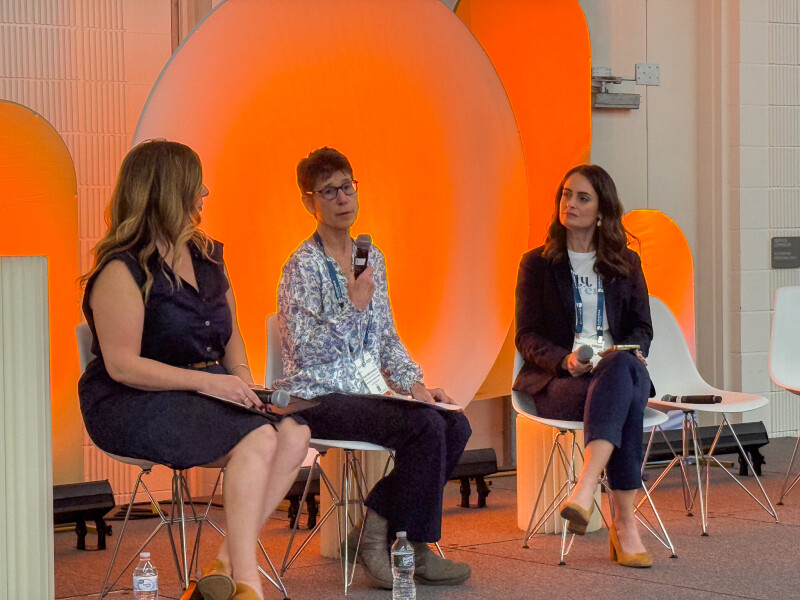
When asked about her own approach to networking, Moon focused on authenticity over formality. For her, effective relationships begin with genuine connection. “Finding common ground that isn’t just all about business,” she said, makes interactions more meaningful. “Really wanting to become friends with people just makes the work part so much more fun.”
Richards shared practical tips on keeping professional relationships alive, emphasizing how each touchpoint creates an opportunity for ongoing dialogue. She pointed out how effective it is to routinely check in, asking, “How’s it going? Are internships working for you? Are you hiring any of them? What’s the conversion rate?”
Both speakers recommended paying attention to what people share about themselves in conversation to make follow-ups more personal. “If there’s common ground, you should write it on the back of their business card,” Richards suggested.
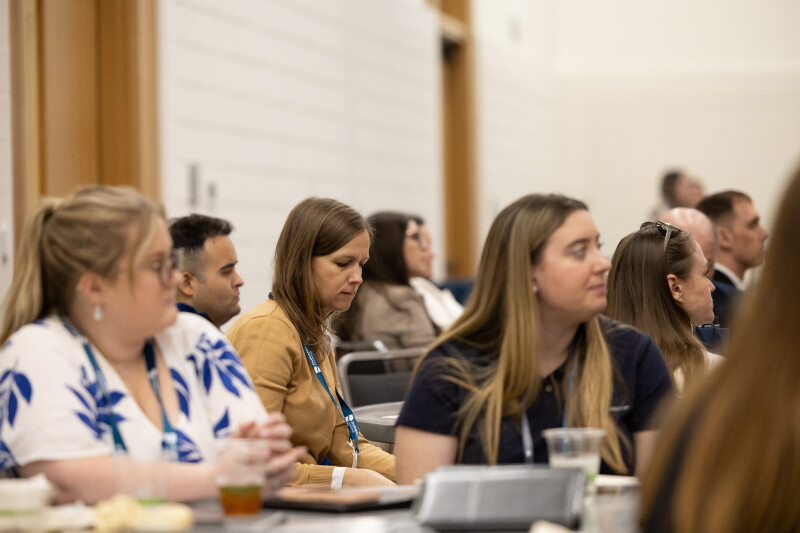
During the roundtable discussions and following Q&A, attendees traded personal experiences about working in a male-dominated sector. One audience member offered a perspective that resonated across the room: “You absolutely have an impact. People don’t always necessarily remember that there’s a lot of body language and cues you’re giving.”
She shared advice for entering a room where the dynamics feel off, saying, “If you walk into a room of men that side-eye you and continue their conversation, throw your hand out and say your name. Because they will interrupt you too.” The comment captured the spirit of the session: be confident, be present, and don’t wait to be invited into the conversation.
The second panel discussion, “Innovation at Sea and Ashore,” shifted the focus from relationship-building to the technologies shaping the industry’s future. Anastasija Kuprijanova, director of business development at Carbon Ridge joined Eileen Tausch, electrification program manager at Fleetzero, offering their perspectives on maritime decarbonization and electrification.
Before diving in, Kuprijanova helped bridge the two sessions: “I think it’s really important to recognize that these two different topics this afternoon are very closely aligned. Because in our industry, networking is not just about relationship-building. Networking is the engine of innovation in the maritime sector.”
When asked about lagging indicators for broader adoption of carbon capture technologies, Kuprijanova answered, “I think the lagging indicator is not the technology, because the technology is there.” Instead, she pointed to what she called an “innovation-regulation paradox,” especially present in decarbonization.
“At the end of the day, we are the backbone of global trade,” she added. “We have to think about things from a logistics perspective, which means capital cost, how are you getting things on time, and all aspects of logistics.”
When asked about whether cost is the top concern for ship owners, she described a two-part equation. “Of course, cost, first and foremost. Second, what future fuels are going to be available? There’s a lot of options out there. Will we be able to implement them safely? Can they reach cost parity with conventional fuels? How do I make sure my fleet is ready to adopt these technologies?”
