



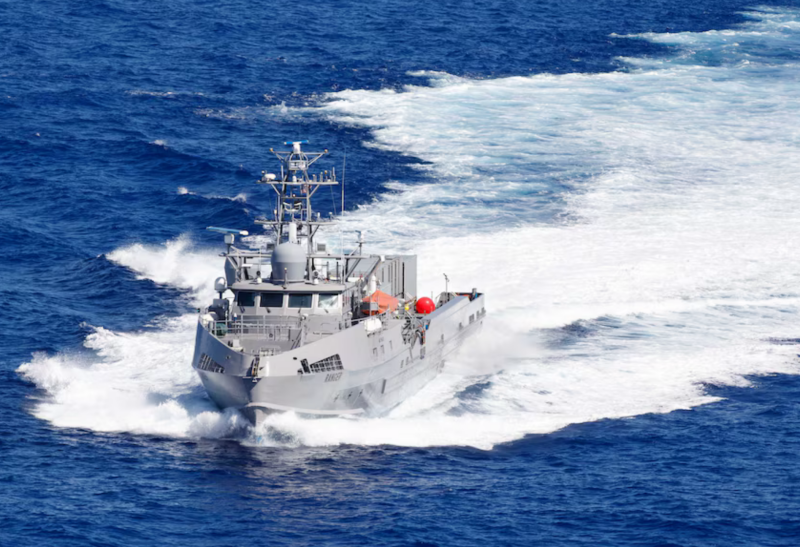
The U.S. Navy is mulling a dramatic — if not unprecedented — build-up of autonomous platforms. It is great to see the Navy consider sailing high-tech robotic warships alongside conventional warships, but these visions must come with a caution. Unless the Navy starts experimenting at scale soon, the U.S. waterfront will be unready to accommodate wide-ranging fleets of autonomous watercraft.
Without operational preparation, port stakeholders at the state, local, and federal levels will put this new fleet at risk. Right now, as Pentagon bureaucrats trade PowerPoint slides, a fleet of armed, 150' autonomous surface vessels (ASV) looks like a massive manufacturing “win” for hungry shipbuilders. It is a great vision, but, once these robots start showing up, needing maintenance — or even just basic things like, say, mooring spots — this enormous shipbuilding initiative will collapse.
The risks are real. Just accommodating this new fleet will be a management challenge. In America’s aging, decaying, and deindustrialized waterfront, the thousands of robotic craft currently on the drawing board will struggle to tie up.
Traffic is another issue. Key ports are near capacity, and, in busy waterways, seasoned Coast Guard port captains are already warning that traffic is too intense. Integrating roving battle swarms into crowded harbor traffic isn’t something to take lightly. Basic maintenance, security — even simple line handling protocols — are unresolved for robotic fleets. The intricacies of autonomous harbor traffic with degraded sensors, in bad weather — or both — has yet to be fully addressed outside of simulations.
Without serious leadership and tests at scale, the prospect of waterfront chaos looms.
As the Pentagon explores unconventional ways to boost operational readiness, it is best to start planning now. The waterfront knows that ASVs are the not-so-distant future. Builders are already racing to add capacity. And, with the numbers that are being bandied about, states and local ports that get about doing the hard work of preparing and coordinating for this massive fleet may win big.
Of course, the federal government still has work to do in understanding the macro challenges of managing autonomous combat fleets. Naval leaders are wasting time bickering over tactical-level platform requirements, pushing production later and later. That is unnecessary. If the Navy’s maritime industrial base was engaged, America could quickly start 10 pumping out numbers of simple, easily-upgraded — or even easily-discarded — autonomous prototypes to test at scale.
Getting operational experience at scale is critical. Once we have a fleet out there, America’s waterfront stakeholders can really start working through the basics. Operational grinding has got to be done; the waterfront does not know what it doesn’t know. Without the ability to test autonomous fleet support, the nation will never be ready to manage and support the robotic navies of the future.
As large-scale building programs get underway, other federal stakeholders can start grappling with larger management issues. The Maritime Administration owes America a full, condition-based inventory of America’s piers, moorings, and other things. As an autonomous buildup looms, it is high time to figure out just where waterfront gaps and opportunities exist. There’s no need to wait — state and local officials who want to become centers of autonomous expertise can quietly start their capability assessments, figuring out where to put autonomous combat ships once they arrive.
On the operational side, a fleet of basic autonomous ships can get about grinding through some boring proof-of-principle operational challenges. If ASVs are to operate in large numbers, they will, for example, need to conserve pier space. Cadets in the Japanese training fleet can come alongside and “nest” next to other ships in less than 15 minutes, but “nesting” protocol for autonomous ships may still be evolving. Given the Navy’s timorous approach to experimentation, some of these basic port maneuvers — maneuvers that ports will require to manage big autonomous fleets — may not have even been tested yet. A fleet of reasonably capable test articles can help move things forward, pushing command-and-control, autonomous systems, AI, and even tired old regulatory frameworks to get better.
Coast Guard and Navy approaches to vessel management have a lot of growing to do as well. Hosting a visiting U.S. Navy ship in the post-USS Cole world is a regulatory nightmare. Aimed at ensuring both crew and vessel safety, port visit pre-meetings can begin months in advance. Navy personnel need half a year or more to march local port authorities through a bewildering — and often hard to justify — array of additional security assessments, pier surveys, ship husbandry demands, and other requirements.
With autonomous ships, tiresome regulatory protocols won’t go away, but they will change. Autonomous fleets are likely going to be accompanied by a large shoreside entourage that may require secure harborside accommodation. Basic security, fire-watch, and other tasks will likely fall upon busy local harbor personnel. Lines of authority for autonomous ships have yet to be fully defined, and they will likely struggle under initial mishaps, accidents, or other stress tests.
These shifts will work themselves out over time. But, as boatbuilders rush to support an expected national call to build a massive fleet of simple, modestly-scoped unmanned small craft, America’s oft-ignored waterfront must get a chance to gear up and get ready, too.
