


The American Great Lakes Ports Association and the Great Lakes Alliance of Shipyards have signed a memorandum of understanding to coordinate on domestic shipbuilding, infrastructure, workforce development and federal maritime policy.
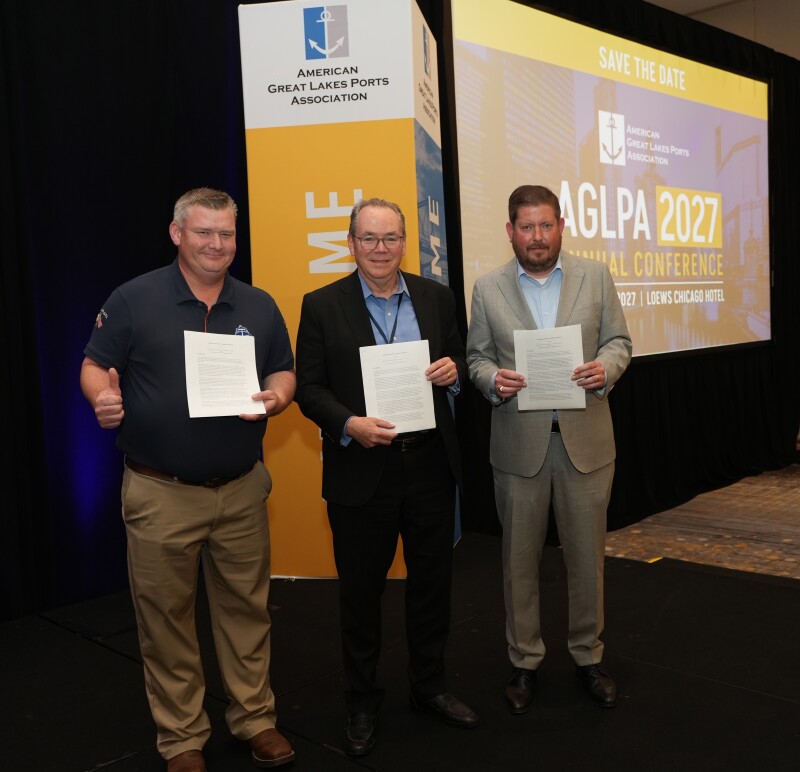
The voluntary, nonbinding agreement was signed July 31 during AGLPA’s annual conference in Chicago and announced Aug. 26. It establishes the first formal partnership between U.S. Great Lakes ports and shipyards, according to the organizations.
Under the agreement, the groups will coordinate on vessel construction, repair and modernization; fleet renewal; cargo and export growth; port and shipyard infrastructure; workforce recruitment and training; and federal investments affecting the Great Lakes maritime economy.
“The Great Lakes have long served as one of America’s most strategic maritime gateways, and their continued success depends on the strength of the industries that support them,” said Capt. Paul LaMarre III, AGLPA president. “This agreement brings our ports and shipyards together around a common vision: expanding American shipbuilding, supporting economic growth, creating skilled jobs, and reinforcing the Great Lakes as a vital part of our nation’s transportation and industrial infrastructure.”
Patrick Kelly, CEO of Fraser Industries, signed the agreement on behalf of the Great Lakes Alliance of Shipyards.
“By working together, shipyards and ports can expand domestic vessel construction, improve supply-chain resilience, invest in skilled workers, and ensure this region remains one of the nation’s premier centers of maritime commerce and industrial capability,” Kelly said.
The organizations said the partnership will also seek to develop new cargo and export opportunities and promote the Great Lakes-St. Lawrence Seaway System’s role in connecting U.S. industries with domestic and international markets.
“Shipyards and ports succeed together,” said John A. Witte Jr., president and CEO of Donjon Marine Co. LLC. “Closer coordination will help us identify new opportunities for vessel construction, repair and modernization while supporting the infrastructure and commercial activity necessary to sustain a thriving Great Lakes maritime economy.”
Jan Allman, CEO of Fincantieri Marinette Marine, said closer cooperation could help the region attract investment and expand its maritime industrial capacity.
“The Great Lakes have the industrial capacity, skilled workforce, and technical expertise to play a leading role in the resurgence of American shipbuilding,” Allman said. “Bringing ports and shipyards closer together will help attract investment, encourage innovation, and strengthen the region’s maritime industrial base for long-term growth.”
The MOU creates a standing framework through which the organizations can pursue joint initiatives. Additional shipyards and maritime organizations may join with the approval of the original signatories.
AGLPA represents public port authorities throughout the U.S. Great Lakes. The Great Lakes Alliance of Shipyards represents regional shipbuilders and repair yards.
The partnership comes as a University of Michigan study commissioned by the Conference of Great Lakes St. Lawrence Governors and Premiers identified the region as an “underutilized but strategically significant industrial corridor.” The report counted 44 shipbuilding and repair sites and more than 12,000 marine suppliers across the Great Lakes-St. Lawrence region. Although global competition has shifted much of the region’s shipyard activity from new construction to repair and maintenance, researchers concluded that its core industrial assets remain strong and could support expanded commercial, Coast Guard and defense shipbuilding with coordinated investment.
