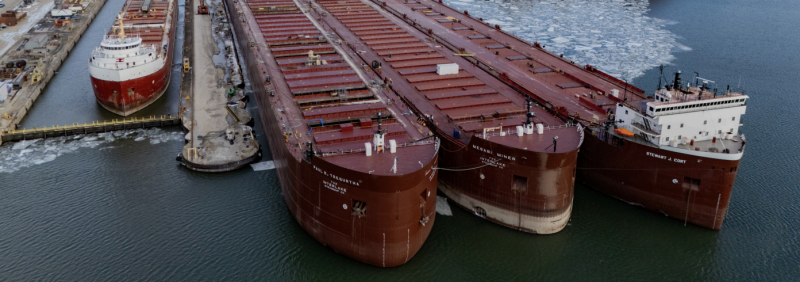
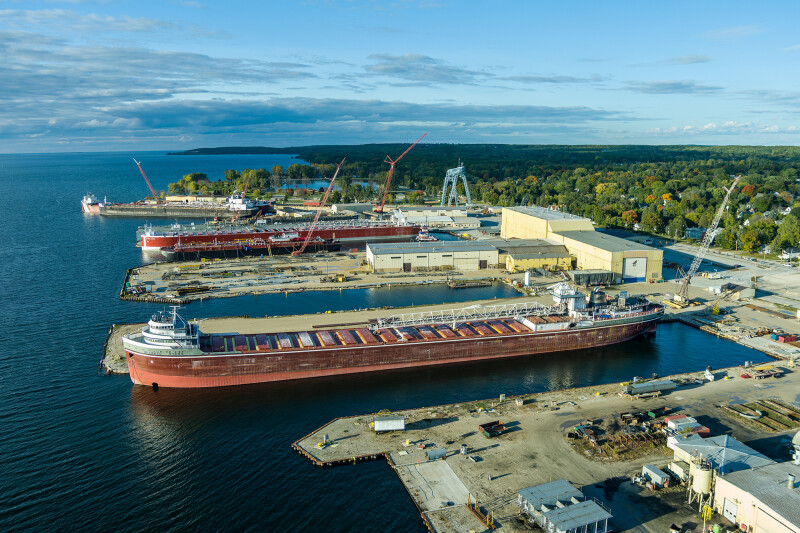
Over the decades, global competition has pushed shipbuilding in the Great Lakes and St. Lawrence Seaway region away from building new ships to providing repair and maintenance services.
Yet “the region’s core industrial assets and manufacturing competencies remain strong,” say researchers who surveyed the region’s shipbuilding and maritime industry. “Across shipyards, suppliers, and vessels, the evidence points to an underutilized but strategically significant industrial corridor.”
The Conference of Great Lakes St. Lawrence Governors and Premiers (GSGP) commissioned the University of Michigan’s School of Naval Architecture and Marine Engineering, Ann Arbor, Mich., to conduct what they called “a foundational capacity study … to advance a new regional shipbuilding initiative that could revitalize and expand the region's industrial base and create jobs.”
“The United States and Canada both recently announced new shipbuilding initiatives and national support for shipyards. At the same time, States and Provinces have been making investments in shipbuilding assets,” Eric Oberhart, transportation program director with the Conference of Great Lakes St. Lawrence Governors and Premiers, said in announcing the release of the report.
“However, the Great Lakes St. Lawrence region’s shipbuilding industry is relatively small when compared to coastal shipbuilding complexes outside of our region, and risks being overlooked for major investments or orders. Our hope is that this research helps revitalize and expand the region’s industrial base and creates jobs connected to shipbuilding."
In summary, the 22-page report identifies several broad findings and five “pathways” toward leveraging the region’s strengths for shipbuilding.
– Substantial shipyard capacity with room to grow: With 44 shipbuilding and repair sites including 17 active shipyards, 6 inactive shipyards, and 21 clusters of undeveloped land suitable for new shipyards, the region can rapidly scale up large-vessel capabilities.
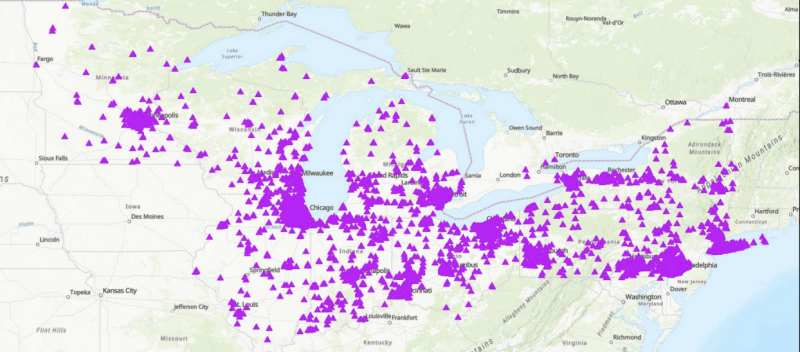
– Deep regional supply chains: The region is home to a massive cluster of firms that support shipbuilding activity. There are over 12,000 shipbuilding suppliers in the region, spanning propulsion, electronics, structural materials, and other systems.
– Vessel size limitations imposed by the St. Lawrence Seaway’s lock dimensions are not an issue: 46% of US naval vessels can fit through Seaway locks, while 97% of US Coast Guard and Army vessels, and 57% of the global commercial fleet can fit through the locks. For vessels larger than the locks, the region can utilize a “distributed production” approach by building hull sections or modules and transporting them via heavy-lift barges through the Seaway to coastal yards for final assembly. Simple modifications, like temporary buoyancy aids or the removal of masts, may also allow deep-draft ships to clear the locks safely.
The report continues on to describe five “specific investment pathways…to leverage the region’s shipbuilding strengths and assets.”
Pathway 1 builds on the region’s existing strengths in research universities, naval and defense innovation programs, and a commercial fleet that already relies on winter layup and challenging operating conditions to test and refine new systems.
The Great Lakes’ inland geography and winter climate provide a uniquely controlled, lower-risk environment for Arctic-capable, ice-strengthened, and unmanned technologies that coastal test ranges cannot easily replicate. National initiatives such as the ICE Pact, U.S. Navy autonomy programs, and emerging zero-emission vessel efforts create a ready set of partners and demand signals for GLSLS technology pilots.
On that basis, the recommendations below focus on near-term, applied technology programs that improve current commercial operations, prove out autonomy and alternative systems on defined routes, and link regional innovation assets directly to national and bi-national (U.S.-Canadian ) programs.
Pathway 2 focuses on leveraging the region’s broad industrial base to build a marine-qualified, bi-national supply chain that can reliably support naval and commercial programs. The analyses together show that the region already has the right mix of vessel opportunities, potential sites, and more than 12,000 supplier locations.
The task is to connect them and lower barriers for adjacent industries to enter the maritime sector. The recommendations below emphasize scaling existing marine suppliers, converting automotive, aerospace, and clean-energy manufacturers, and using brownfield and greenfield sites, especially near steel-producing ports, as anchors for a more integrated “steel-to-hull” industrial corridor.
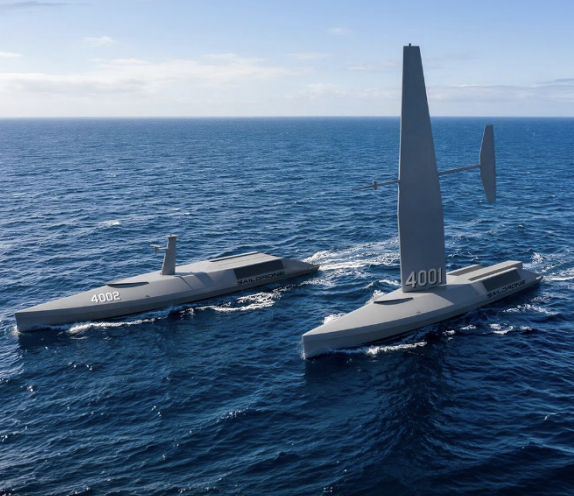
Pathway 3 builds on assets already in place: a dense small-craft yard base in Wisconsin, Michigan, and Ontario, existing autonomy and unmanned testing activity on the Great Lakes, and early commercial wins that show leading autonomy firms already view the Great Lakes-St. Lawrence as a viable production location.
Federal experimentation through efforts like Silent Swarm on Lake Huron and regional initiatives such as the Smart Ships Coalition and Michigan Tech’s Marine Autonomy Research Site demonstrate that the region can host, and safely regulate, uncrewed systems at scale.
Pathway 4 leverages how the region’s yards can fabricate large, high-complexity blocks and modules even when moving fully assembled warships through the Seaway is impractical.
“The GLSLS is arguably the best place to demonstrate and scale distributed ship production that draws on the region’s full strengths and uses the Lakes and Seaway as its transportation backbone. The Seaway-max heavy-lift barge concept developed in the vessel analysis demonstrates that a purpose-sized carrier can move submarine and ship blocks within Seaway constraints, allowing GLSLS yards to act as block-fabrication nodes feeding coastal naval and commercial programs.”
The report in detail focuses on turning technical feasibility into a repeatable distributed-production model, with standardized modular designs, barge logistics, and bi-national consortiums linking multiple sites to East Coast assembly yards.
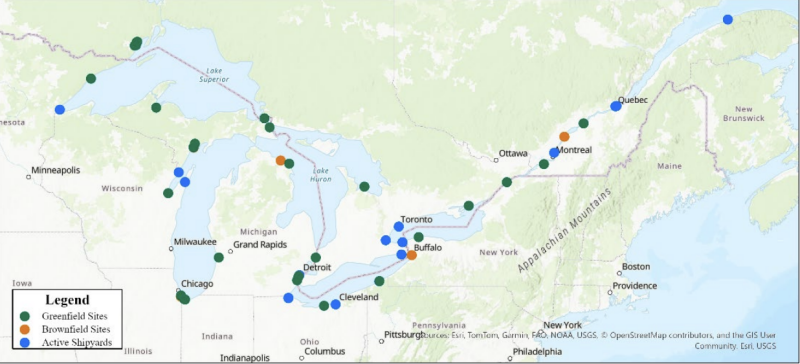
Pathway 5 focuses on fully using and expanding GLSLS yards that can already handle Seaway-max and frigate-sized vessels, positioning the region to build, home-base, and sustain complete ship classes rather than serving only as a repair backdrop.
Vessel-fit analysis shows that frigate-sized combatants, icebreakers, auxiliaries, and specialized commercial craft all fall within Seaway limits, while the shipyard and supplier studies confirm that a handful of large, expansion-ready yards and a strong industrial base can support both new construction and lifecycle work. The report’s recommendations emphasize scaling these anchor yards, capturing full lifecycle value, and winning back conversion and newbuild work currently going overseas.
“With these assets and competencies, the Great Lakes St. Lawrence region is ready to play a much more central role in North American shipbuilding, repair, and maritime innovation than it does today, and many perceived constraints are surmountable with targeted, coordinated investment,” the study concludes.
“Across shipyards, suppliers, and vessels, the evidence points to an underutilized but strategically significant industrial corridor that can support defense, Coast Guard, Arctic, commercial, and decarbonization priorities. The primary challenge facing the region is the underutilization of its existing industrial shipbuilding corridor, including its active shipyards, deep supplier base, skilled-trades workforce, and technology ecosystem.”