


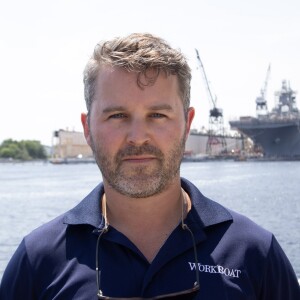
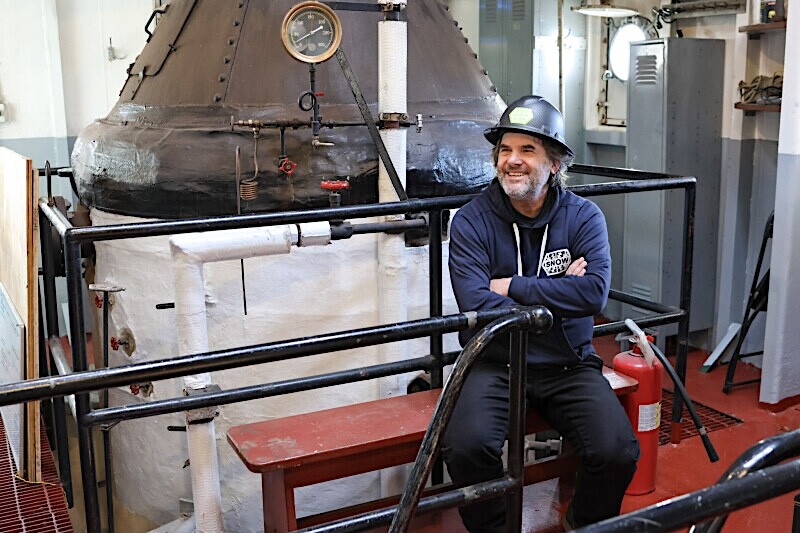
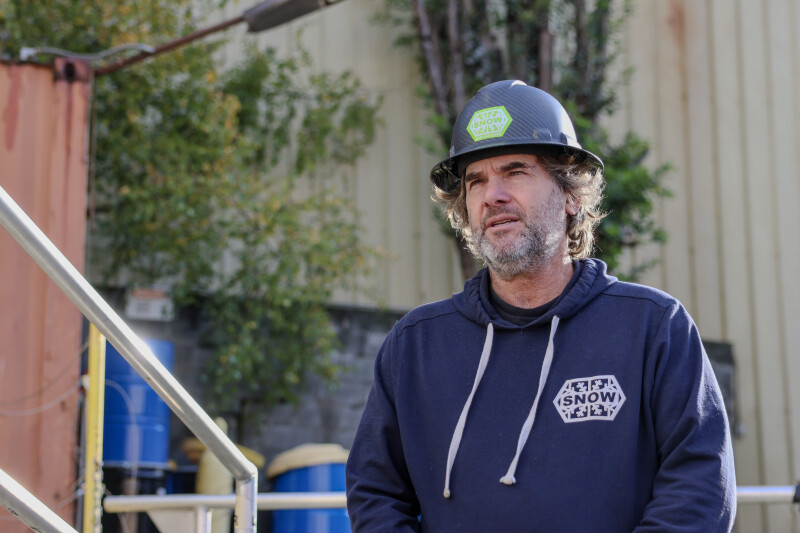
Spend a week moving through the working waterfront in Seattle, and just about everyone has a Brett Snow story. Long before he became president and founder of Snow & Company, Snow had a reputation as a “free-spirit", but across the industry he was widely recognized as an “exceptionally talented boatbuilder with the drive and determination to turn Snow & Co. into what it is today.”
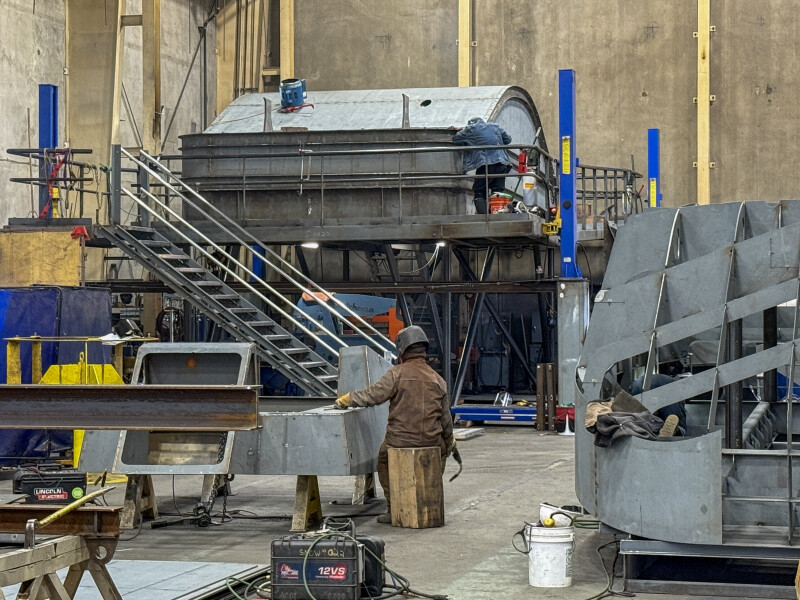
In less than a decade, the 110-employee, family-owned shipyard has grown into a steady producer of government and commercial vessels. Its output includes 24 Navy workboat larges, 23 workboat mediums, along with pilot boats, research vessels, and an eight-boat series of battery-powered electric ship assist tugs currently under construction. The yard’s total hull count now stands at 174 and climbing.
The Beginning
The origins of Snow & Company trace back well before Navy contracts or aluminum fabrication. Back to a cabinet shop, where a teenage Brett Snow watched a coworker decide on a whim to build a sailboat.
“I was working in a cabinet shop when I was a junior in high school, and the guy says, ‘I’m gonna build a sailboat,’” Snow recalled. “So, we built it together. It took two months. We lofted it all out and made every single piece. Everything from the oars and the spars. It was a gunter rig, which is kind of an odd rig, but there was so much to learn from building that boat.”
The boat was a Herreshoff H14, a round-bottomed design with hard-chine plywood sides. The experience stuck. Snow paid for the materials, his friend gave him the finished boat, and the trajectory was set.
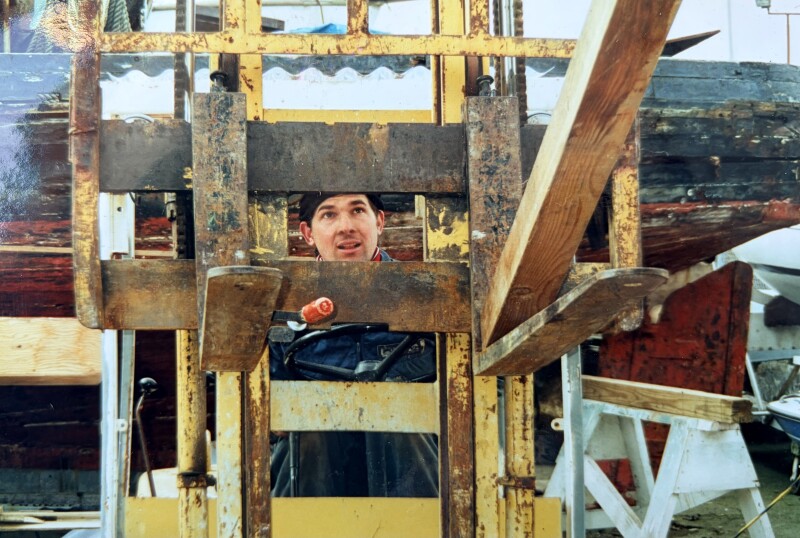
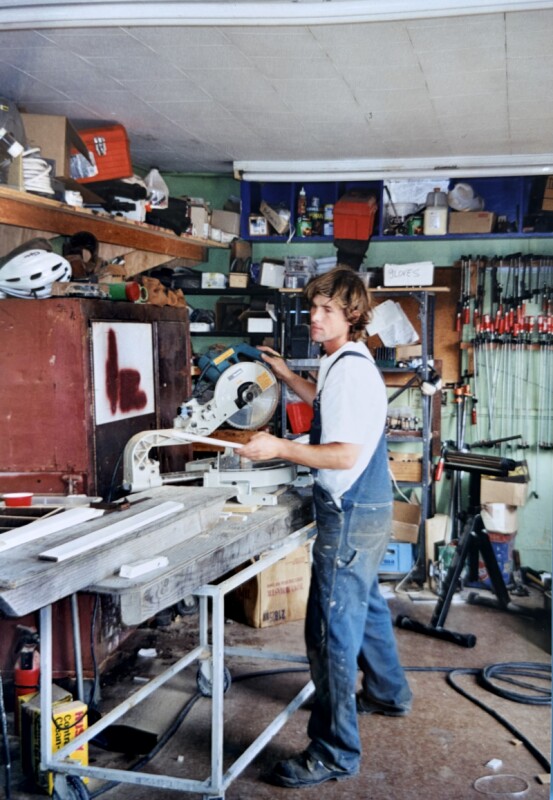
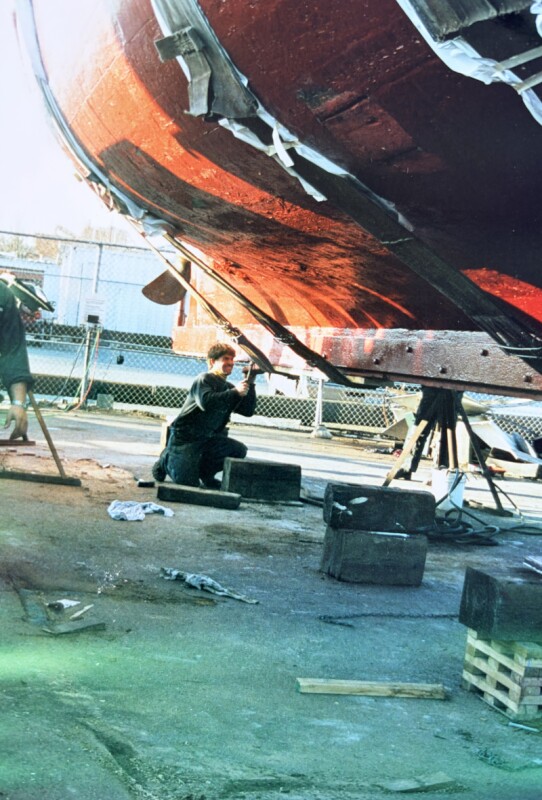
After dropping out of high school to finish the sailboat, Snow moved to Port Townsend to attend the Northwest School of Wooden Boatbuilding, spending nearly two years learning the craft. In 1987, he left the United States expecting to be gone six months. He returned seven years later.
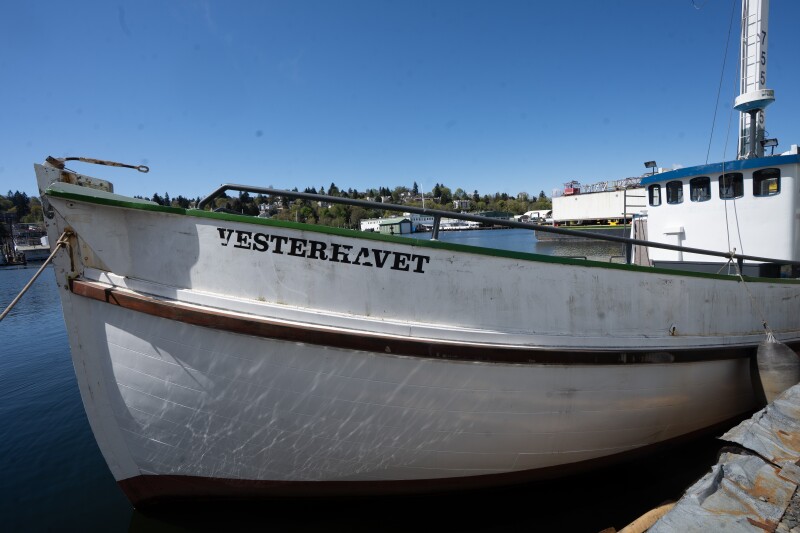
Much of that time was spent in Denmark, living on the island of Bornholm in the Baltic Sea. There, at age 20, he found and purchased a traditional fishing vessel, the Vesterhavet, a high cutter originally built for North Sea fishing. “Vesterhavet means the Western Ocean,” Snow said. “That’s the North Sea to the west of Denmark. That’s what that boat’s named after.”
While sailing Vesterhavet back to the U.S. in 1995, Snow passed through Portugal, where he stopped at a shipyard dating back to what he remembered to be the 1500s. Drawing on a skiff-building exercise from boat school, he built a small flat-bottomed boat on-site called “the one-day skiff” that typically required eight sets of hands to put together in a day.
“They thought I was completely crazy,” he said. “But of course they wanted to sell me the wood.”
Working alone, it took two days to build and another week and a half to paint. “I wanted to get the Portuguese colors just right,” he said. It would be the only boat he built between 1986 and 2010.
Ballard Oil and the Payphone Years
Back in Seattle, Snow returned to what he knew: boat carpentry. After a short stint in a small shop, he rented a space at Ballard Oil Company made up of a single room at the end of a dock.
Without the budget for a dedicated phone line, he listed the number of a nearby public payphone on his business cards.
“I was too cheap to have my own phone,” he said.
Brett’s wife Jenny recounted that her phone calls were unpredictable on who would pick up. More often than not, it was a commercial fisherman that would answer and holler across the docks. “Brett! Phone’s for you!” she remembered with a laugh.
By the late 1990s, as cell phones became widespread, the payphone was abandoned, and Snow repurposed it into a rolling workstation as a computer, mounted on a wheeled cart that could move with the job containing design files.
It was during those years that his focus remained on commercial vessels made up of fishing boats, workboats, and utility craft. “The commercial clientele are professional clients. They know what they want. It’s easy to please,” he said.
Learning to Weld
Around 2000, with traditional carpentry work on fishing vessels beginning to decline, Snow made a shift. He bought a welding machine and taught himself aluminum fabrication.
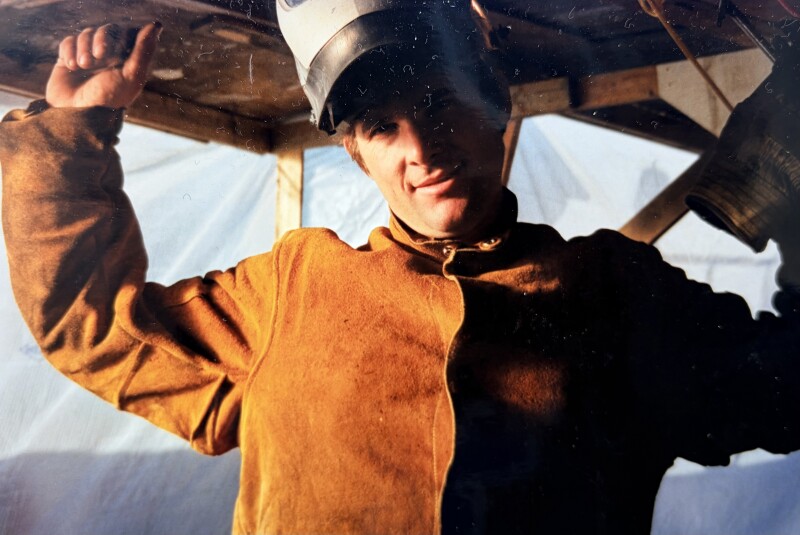
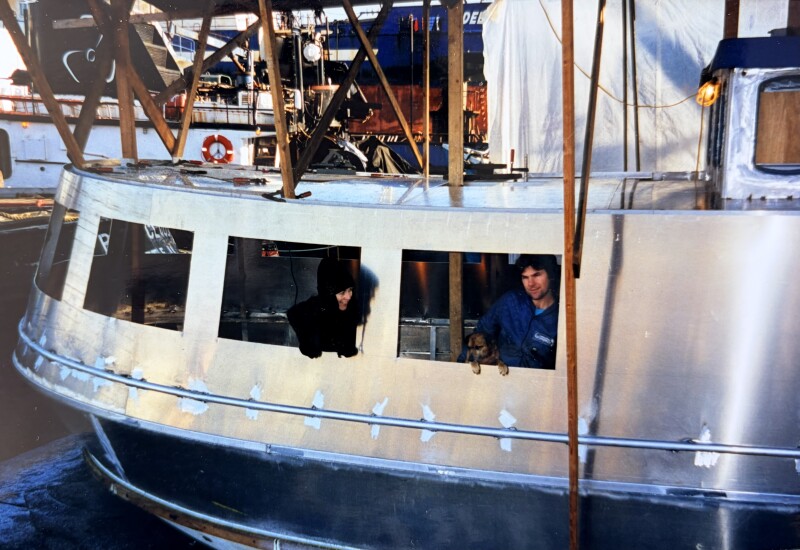
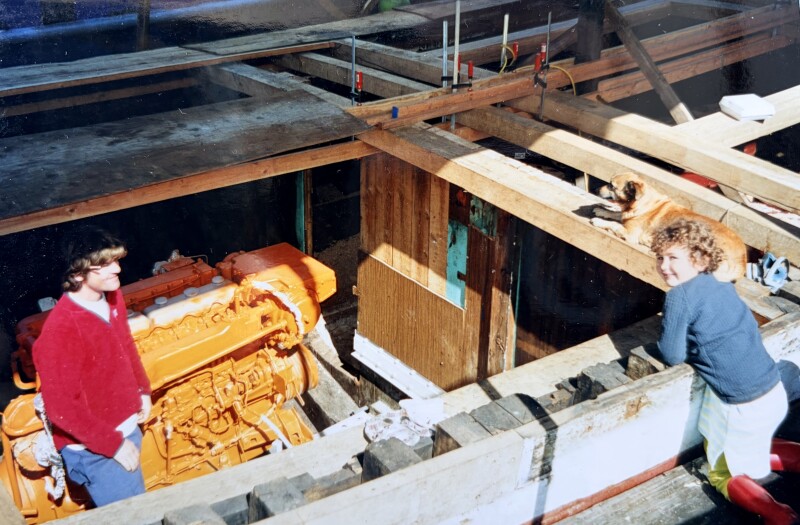
The transition was gradual he said, small parts at first, then larger assemblies. By around 2010, the yard completed its first aluminum vessel, a seine skiff. More followed: utility skiffs, small barges, and workboats.
In the first six years of aluminum construction, the yard built 83 boats: largely repetitive, workmanlike vessels that established production discipline and workflow.
Navy Contract
In 2017, Snow submitted a proposal for a Navy request for quotation to build 26 workboat larges, 41’ steel tugs with superstructure pushboats used in naval harbors.
“I thought, well, that’d be kind of fun,” he said. “And we won it, amazingly.”
The first vessel was completed at Ballard Oil, but with multiple boats already underway, the limitations of the facility became clear. In March 2020, Snow & Company moved into its current Seattle yard, the former home of Kvichak boatbuilding.
The timing was, to put it mildly, adventurous. The move coincided almost exactly with society shutting down for COVID-19. Brett had about 25 employees at the time, and the new space was enormous compared to their previous location. “We were spread out. It was good,” he said.
The move also brought continuity. Work that had previously gone to Kvichak began flowing to Snow & Company, and former employees joined the team, bringing experience and institutional knowledge.
In 2022, the yard secured a second Navy contract for the workboat medium program. These 30' tugboats became a high-volume production platform. At peak output, the yard delivered one vessel every three weeks.
“We figured out how to build the boats in about 12 weeks,” Snow said. “We’d have three or four under construction and deliver one every three weeks.”
The program also marked a turning point in design capability. While the workboat large had been designed externally, the medium was developed in-house, led by naval architect Jay Edgar. Today, the yard maintains a growing internal design team supporting increasingly complex builds.
Electric Tugs
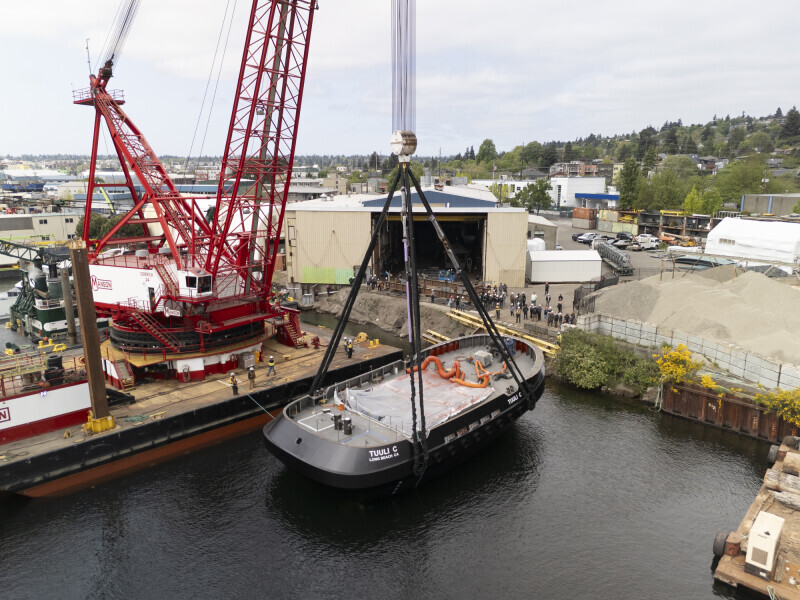
The yard’s current focus is an eight-boat series of battery-powered electric ship assist tugs for the California coast. The first vessel, the Tuuli C, has launched, with delivery expected in early September.
At 80' and rated for 55 tons of bollard pull, the tugs represent the most complex vessels the yard has undertaken. Snow remains closely involved in the details, reviewing systems and layouts to ensure integration across the build. When WorkBoat met with Snow on a Saturday morning in April, he was going through ventilation systems, piping layouts, and machinery space details on CAD software to make sure nothing interferes with anything else.
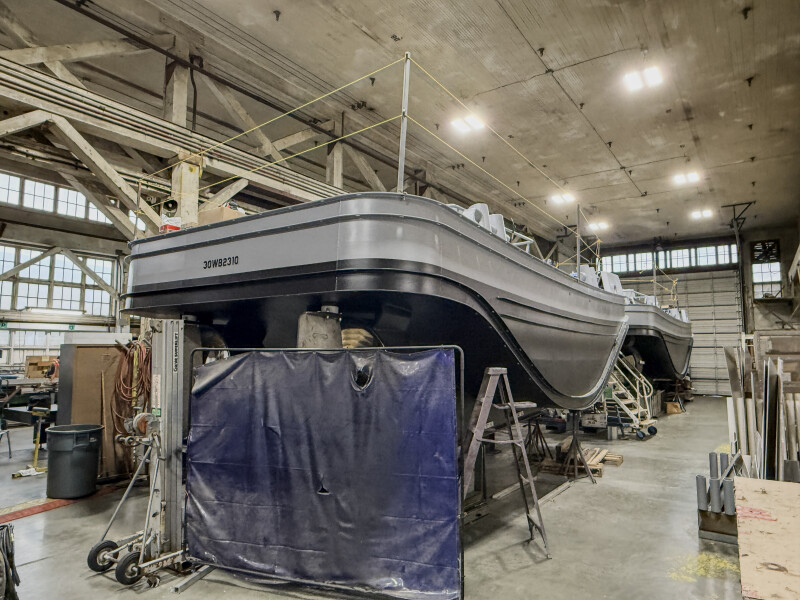
Brett spoke about high-volume production for this class of boat with the same confidence he had when the workboat medium finally clicked. “We’re very confident that putting these boats into high production is not a problem,” he said. “We can build a bunch of these.”
The Vesterhavet
Through it all, the Vesterhavet remains part of the story. The Danish fishing vessel Snow purchased in his early 20s still sits at the yard.
In recent years, he and his youngest daughter Tiger replaced planking, recaulked the hull, and restored the vessel. At one point removing waterlogged planks with an estimated 30,000 pounds of absorbed water.
His oldest daughter, Tuuli Snow, namesake of the yard’s first electric tug, is the company’s lead recruiter.
And when asked what he’s most proud of, Snow doesn’t point to vessels or contracts.
“My team. The people I’m surrounded by,” he said. “We build some cool boats and stuff, but boats are easy. People’s hard. And we got a good team.”
When it comes to work itself, his answer is similarly direct.
“Personally? I like big picture and details—two very opposite things,” he said. “My favorite parts of the job are detailing things out and just figuring out how to run a business like this and how to make a boatyard happen. I like the bookends.”
The big picture and the details. It's a description that fits a man who once spent over a week getting Portuguese paint colors right on a boat nobody asked him to build, and one who still shows up on Saturday mornings to trace ventilation ducts through an 80’ tug.
The Vesterhavet still sits in the yard, as next door, the first two electric tugs bear his daughters’ names. Whatever comes next, Snow seems less concerned with legacy than with the next thing that needs figuring out.
