



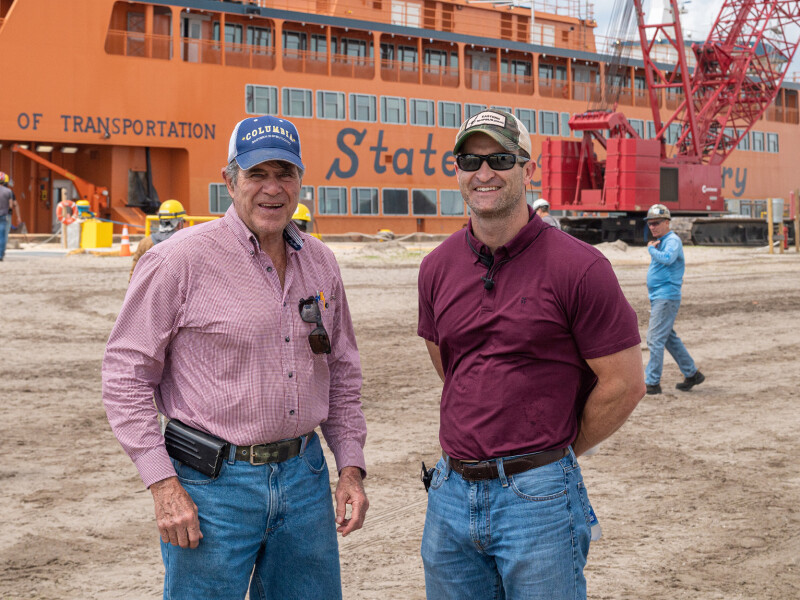
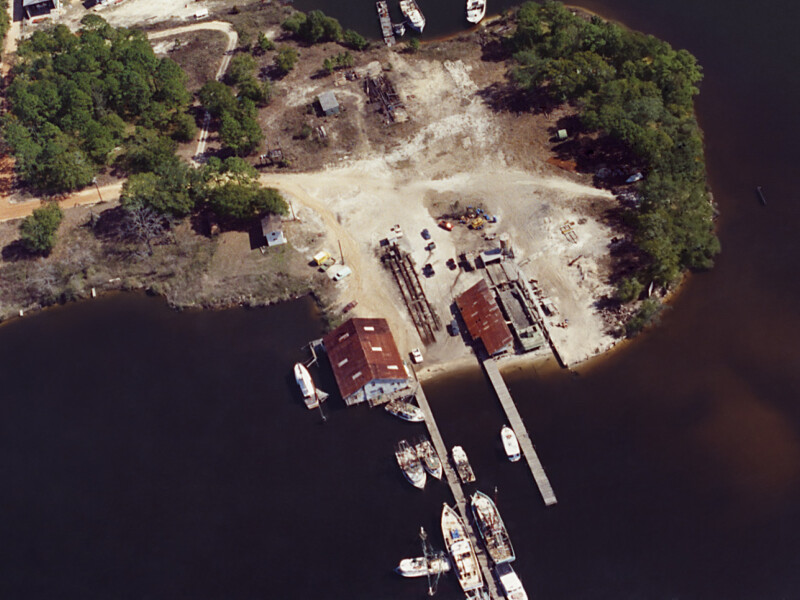
What began in Panama City, Fla., in 1976 as a yard building commercial fishing vessels has become a three-yard operation taking on hybrid-electric ferries, hopper dredges, escort tugs, and sophisticated government shipbuilding work.
Fifty years in, Eastern Shipbuilding Group has grown into all of it.
For Joey D’Isernia, CEO and chairman, reaching the half-century mark also reflects the long view afforded by a family-owned-and-operated company.
“We’re not one of those businesses that has to show a certain thing in the next quarterly report to investors,” D’Isernia said. “That gives private, family-run businesses a lot of flexibility to do smart things.”
Much about Eastern has changed over five decades. D’Isernia believes the values behind the company have not.
“We’re a different company, and our company leadership has transitioned largely over to the second generation,” he said. “But the values remain. We’re the folks that are always going to be ready and willing to roll up our sleeves, sit down around a table with our customers, partners, and vendors, and figure something out.”
BUILT THROUGH CHANGE
Eastern was founded in 1976 by Brian R. D’Isernia, who led the company for decades and now serves as chairman emeritus. Brian’s son Joey joined the company full time in 2003, just before Eastern began another period of rapid growth.
Beginning around 2004, Eastern pushed heavily into the inland pushboat market. Brian challenged the yard to deliver a 90' pushboat every four weeks for Florida Marine Transporters, a pace Joey said Eastern sustained over a string of 75 vessels. He managed the construction of dozens of them.
The next major production surge came after the Deepwater Horizon disaster in 2010 and the federal moratorium on deepwater drilling that followed. D’Isernia recalled activity roaring back in 2011 and 2012, when Eastern took on contracts to build diesel-electric platform supply vessels for Hornbeck Offshore Services and a Brazilian customer.
This time, the challenge was to build and deliver a 300'-plus diesel-electric supply vessel roughly every eight weeks.
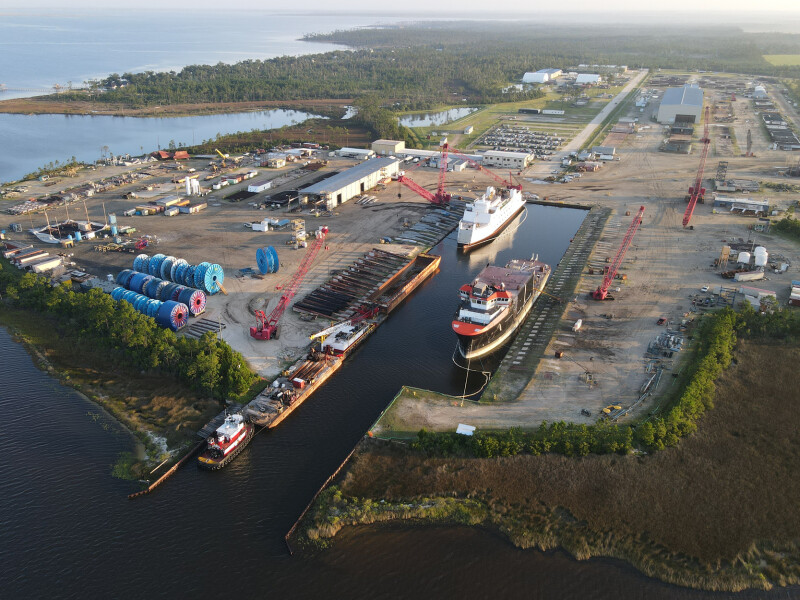
As the vessels moved through the shipyard, Eastern expanded around them. Launchways grew, outfitting areas and docks expanded, launch basins were enlarged, and the company added construction positions to keep pace with the work.
“I remember when those came down the pipeline, they were daunting,” D’Isernia said.
“We had to figure out what we needed to do facilitieswise, resourcewise, and personnelwise, and how to arrange the shipyard to make all the pieces work,” he said. “To be a part of that and see us do it successfully was really rewarding.”
Then came a test that had nothing to do with production. In October 2018, Hurricane Michael struck the Florida Panhandle, devastating Eastern’s facilities and the surrounding community.
D’Isernia was serving as president when the storm hit. The destruction reached beyond damaged buildings and equipment at the shipyard. Employees lost homes, including longtime workers who had spent decades with Eastern and suddenly had to decide whether rebuilding their lives in the area was possible.
“We all rallied around each other. We all helped each other,” D’Isernia said. “And we did it one day at a time. And days turned to weeks, weeks turned to months. And eventually, you got water and you got power and life started to get back to normal a little bit.”
Eastern rebuilt while continuing to grow its workforce, and the recovery changed parts of the company that were less visible from the waterfront. D’Isernia said Eastern used the opportunity to redesign the architecture of its information technology systems, building in greater resiliency and multiple backups.
It also changed what the company knew about itself.
“Coming out of that, we were a much stronger company,” D’Isernia said. “The kind of things I know we can endure and that our people have endured, it’s not that we want to do it again by any means, but it was incredible to see the resilience our company, our people, and our community have.”
ACROSS THE DIVIDE
Eastern’s growth eventually carried it into another kind of transition, from a shipyard identified primarily with commercial vessels into one capable of working in both commercial and major government shipbuilding.
The similarities between those businesses can end quickly once the work moves beyond the fundamentals of cutting, fitting, and welding.
“They’re wildly different,” D’Isernia said. “The requirements are on two opposite ends of the spectrum. And it really drives significant differences in just about every facet of shipbuilding.”
The Coast Guard selected Eastern in 2016 for the detail design and construction phase of its Offshore Patrol Cutter program. The program, D’Isernia said, gave Eastern the opportunity to establish many of the management processes and certified business systems associated with major government acquisition programs.
D’Isernia pointed to Eastern's federally certified contract award and finance management systems: a Defense Contract Audit Agency-certified finance system and Defense Contract Management Agency-certified earned value management and procurement systems. Building those systems, assembling the teams to support them, and maintaining the certifications required years of investment.
“Those certified business systems are not something you typically see in a Tier II shipyard,” D’Isernia said. “And it’s one of the things that makes us unique. We have those capabilities.”
Developing them also required Eastern to decide where government requirements belonged across the company and where they did not. A process appropriate for a major government program could add cost or complexity to commercial construction if it became a companywide standard without a reason.
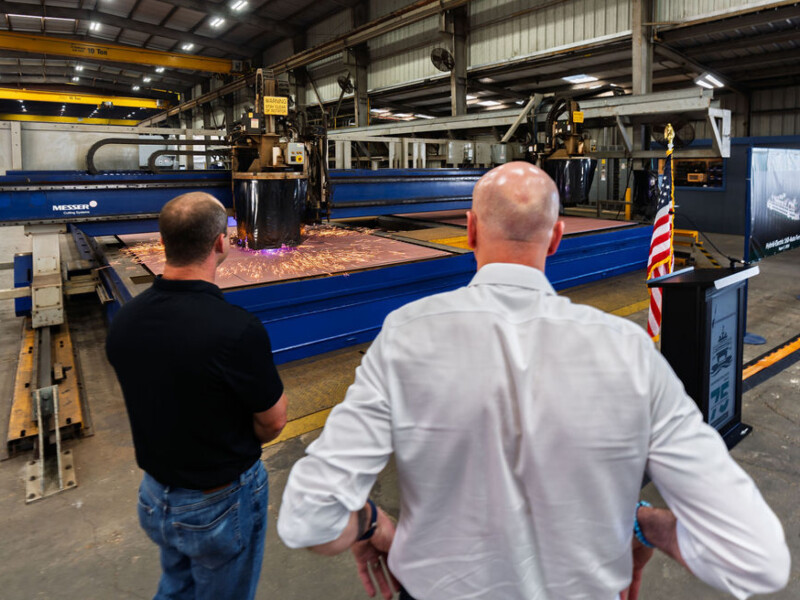
“There’s a reason why you don’t see many shipyards that play in both spaces,” he said. “It does take a lot of effort, energy, and investment to learn those various differences and to be able to understand them, properly account for them, and then execute on the government side while at the same time still remaining competitive on the commercial side.”
Eastern is now applying some of that experience through a distributed shipbuilding initiative run by defense shipbuilder Huntington Ingalls Industries (HII). The companies entered into an agreement for Eastern to produce outfitted structural units for the Navy’s Flight III Arleigh Burke-class destroyers, building on an earlier pilot effort. HII reported this summer that units fabricated by Eastern as well as Gulf Copper in Port Arthur, Texas, and Galveston, Texas, had been incorporated into grand blocks erected on the future USS Thad Cochran (DDG 135) at HII’s Ingalls Shipbuilding in Pascagoula, Miss.
D’Isernia said participation requires a yard capable of understanding the standards, materials, and certifications involved in combatant construction, even when another shipyard provides the design.
“It’s not just a hit the button and go. There’s a learning curve there,” he said. “And we have that.”
Eastern also works with HII on planning and material flow between the yards, a relationship D’Isernia sees as evidence of the management capabilities the company has developed alongside its construction skills.
“They can rely on us to be a seamless part of their team and a force multiplier rather than a vendor that they have to babysit,” he said. “So I think that speaks volumes about us and our capabilities, not just on the construction side, but on the management side as well.”
The same push toward more sophisticated management extends across Eastern’s commercial work. D’Isernia pointed to engineering, 3D modeling, and the integration of data among different parts of the company as increasingly important as the yard takes on a wider range of vessels and more complex systems.
Keeping track of that work, measuring it, and moving information efficiently through the company has become part of the job. So has finding ways to turn institutional knowledge into something that can be repeated from project to project.
“There was a time and a place when everything was in between everybody’s ears,” D’Isernia said. “And that’s great. But as time goes on and things get more and more diverse, and the overall skill level of the shipbuilding industrial base and all of its support vendors has eroded over time, to be consistent, you really need to try to establish processes and procedures and have workflow.”
HANDS BEHIND THE WORK
None of those systems can build ships without people.
D'Isernia considers the shortage of skilled labor the largest constraint facing U.S. shipbuilding, the product of a workforce erosion he said has been visible throughout his 23 years in the industry.
There is no single program capable of reversing it. Eastern recruits through high schools, colleges, vocational and technical programs, and other local and regional talent pipelines while training workers on site and through apprenticeship programs.
The company has also been working with Gulf County and regional partners on a maritime training academy tied to its Port St. Joe, Fla., operation, while a marine electrician apprenticeship launched with Tom P. Haney Technical College in Panama City combines classroom instruction with on-the-job training at Eastern.
Recruitment, D’Isernia said, only begins the process.
“You have to retain them by treating them right, paying them well, and making sure they understand that they’re appreciated and they belong to something,” he said.
Eastern also makes a point of including employees’ families in company events, an approach D’Isernia ties to the culture of a family-owned business. Behind a shipbuilder coming to work each day, he said, is often a family supporting that career.
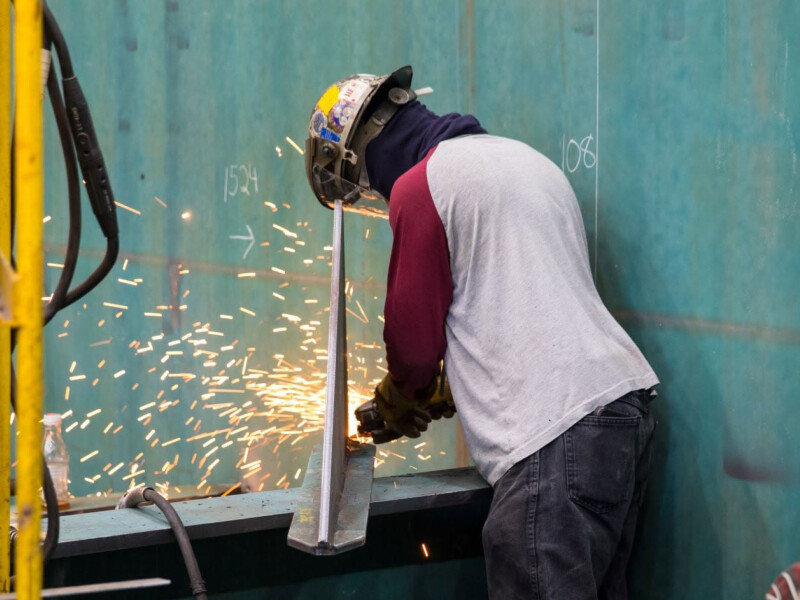
Workforce development has also become part of a larger national conversation about rebuilding U.S. shipbuilding capacity. D’Isernia said progress will require a consistent demand signal and continued attention across administrations and sessions of Congress, because developing skilled workers and strengthening the industrial base will take years.
“If you don’t have a healthy industrial base, shipbuilding industrial base, you cannot defend your shores in times of need,” he said. “And we’re there again.”
For Eastern, the longer view comes back to the values Brian D’Isernia established and the second generation is now responsible for carrying forward.
The vessels will change again, along with the technology, customers, and demands placed on the yard. Eventually, another generation will decide what to carry forward from the one before it, and D’Isernia already has a measure in mind for whether his generation did its part.
“I hope that they see that we took a lot of time to try to make sure that we put in place things that would scratch the itch for today and tomorrow, that we were forward thinking, and ultimately that we were doing it all because we’re proud of this company and we’re proud of the legacy that it represents,” D’Isernia said. “And if they have that same level of pride and they have that same level of desire to carry on that legacy and carry on that tradition, then I think we’ve done our job.”
