



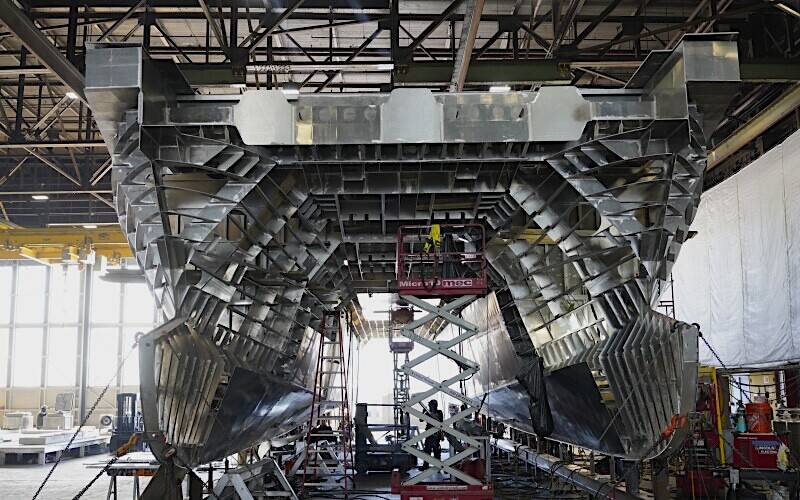
The U.S. Maritime Administration is seeking proposals for a vessel design challenge aimed at improving fuel efficiency and reducing underwater radiated noise in the next generation of U.S. commercial vessels.
Marad plans to provide up to $1.25 million through its Maritime Environmental and Technical Assistance program to support multiple design teams. Individual cooperative agreements are expected to range from at least $150,000 to approximately $450,000, depending on the number and complexity of the designs proposed.
The agency is targeting projects that can demonstrate a 30% improvement in energy efficiency compared with conventional vessel designs while meeting specified underwater radiated noise limits. The targets are aspirational, Marad said, and teams that cannot meet them must document the limits of currently available technologies and the costs associated with further reductions.
Projects must use an integrated design approach that considers the vessel’s hull, machinery and propulsion system together. Marad said advanced modeling could help teams compare different arrangements and quantify the combined fuel savings, noise reductions and return on investment offered by multiple technologies.
Proposals may cover the redesign of an existing project, a vessel entering the specification stage or a theoretical design testing a new approach. Eligible concepts may include commercial vessels operating on coastal and inland waterways or the Great Lakes. Small watercraft, recreational boats and fishing vessels generally fall outside the program’s intended scope.
Design teams should include naval architects, marine engineers, shipyards, vessel owners or operators and technology suppliers. Teams may also include charterers, logistics companies, ports, public agencies and financing partners. Preference will be given to teams led by U.S. companies, businesses headquartered in the U.S. and U.S.-flag operators.
The designs must reflect normal operating conditions rather than requiring changes to vessel routes, schedules or operating practices to meet the program’s targets. Modeling must address fuel consumption, underwater noise and the economic return associated with the proposed technologies.
Each project’s primary deliverable will be a preliminary vessel design covering hull form, propulsion, power generation, machinery, stability and load analysis. Teams must also provide anticipated construction and technology costs, a return-on-investment timeline and an estimate of the total return over the vessel’s expected service life.
Final reports must identify obstacles to commercial adoption, including technology availability, escalating costs and whether U.S. shipyards have the experience needed to integrate the proposed systems. Public reports will summarize the findings, although proprietary designs, modeling results and other commercially sensitive information may remain restricted to Marad and the project team.
Projects must be completed within 18 months of an award. Marad will fund up to 100% of eligible project costs but said the solicitation does not commit the agency to making an award.
Proposals are due Jan. 10, 2027, at noon EST. Applicants must disclose and justify any use of artificial intelligence tools in preparing their proposals.
