


Passenger ferry operators across the United States are accelerating the shift toward hybrid-electric and fully electric propulsion, buoyed by millions of dollars in federal funding aimed at modernizing aging fleets, reducing emissions, and improving long-term financial sustainability.
Executives currently operating hybrid and electric vessels, as well as those in the process of integrating them into their fleets, say the transition represents a significant opportunity — provided the U.S. commits to it. While cleaner propulsion can lower lifecycle costs, build new domestic manufacturing capacity, and improve operational resilience, industry leaders continue to point to a lack of a cohesive, long-term national strategy: a hesitation that stands in contrast to European markets that have already decided on the shift and are now focused on execution.
That momentum took a tangible step forward in 2024, when the Federal Transit Administration’s (FTA) Passenger Ferry Grant Program awarded funding to operators in Alaska, California, Delaware, Florida, Illinois, and Washington to begin moving away from traditional diesel propulsion. The funding supports a range of projects from diesel-electric ferries serving East Coast routes to fully electric vessels designed for high-frequency commuter service on the West Coast.
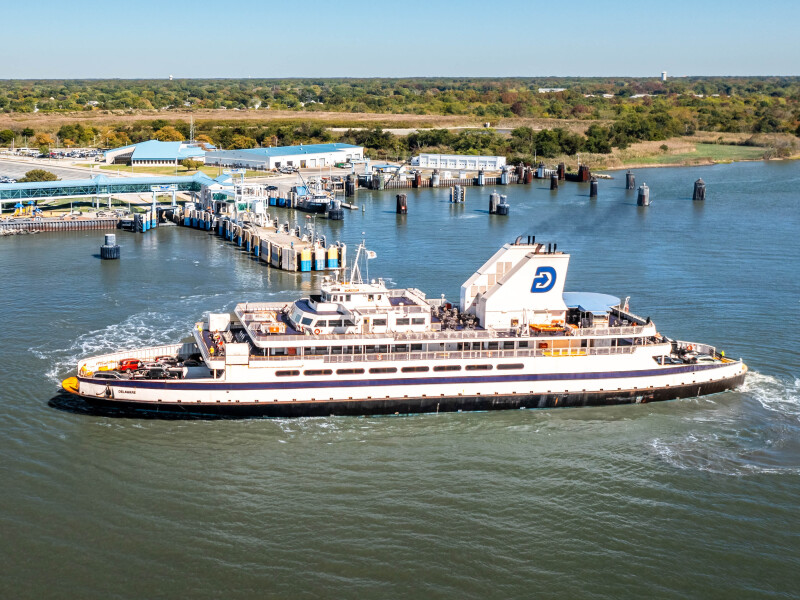
Among the awards, the Delaware River and Bay Authority (DRBA) received $20 million toward a new hybrid diesel-electric ferry for its Cape May, N.J. – Lewes, Del., service. On San Francisco Bay, the Water Emergency Transportation Authority (WETA) secured funding to build two fully electric ferries as part of its multi-phase zero-emissions transition plan.
While propulsion strategies vary by route length and operational profile, the underlying drivers are consistent across regions. U.S. ferry fleets built in the 1970s and ’80s are reaching the end of their service lives, the cost of maintaining legacy machinery continues to rise, and federal funding is increasingly aligned with emissions reduction goals. At the same time, operators are weighing how quickly, and how decisively, to move beyond diesel as technology, infrastructure, and policy evolve.
DRBA GOES HYBRID
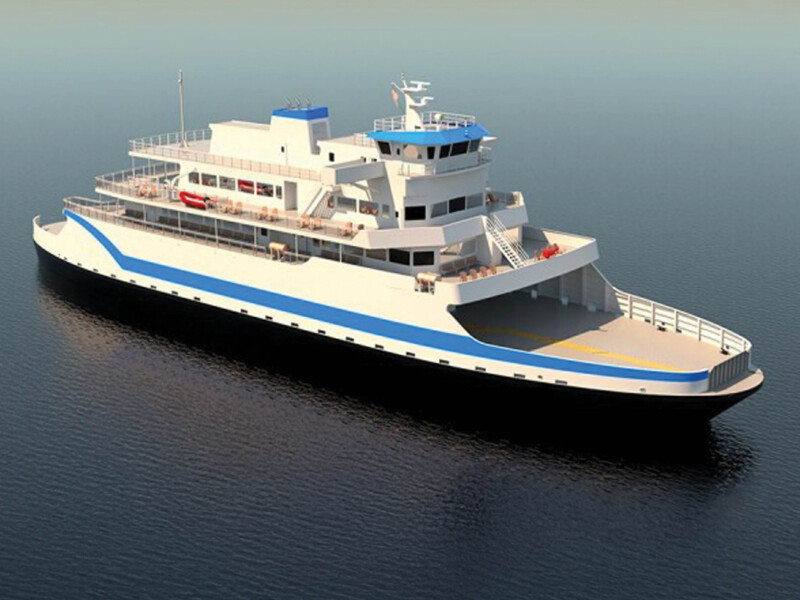
DRBA’s new Cape May ferry is to be built at Senesco Marine, North Kingstown, R.I. Supported in part by the $20 million federal grant, the diesel-electric ferry will replace the more than 40-year-old Cape Henlopen and introduce hybrid propulsion to the system.
DRBA’s ferry operations director Heath Gehrke said the project reflects years of mounting pressure from an aging fleet and the increasing difficulty of maintaining vessels that were built decades ago. “We haven’t built a new ferry since 1981, so let’s try to future-proof this thing,” he said, noting that the authority’s goal is not simply to replace steel, but to create a platform that can adapt as technology and infrastructure change.
Much of the “future-proofed” urgency stems from the condition of DRBA’s three-vessel fleet, which dates to 1975 and 1981. Gehrke said two ferries have been repowered with EMD engines, but the third is still “operating Fairbanks-Morse opposing piston engines, which are circa 1929 technology” and Tier 0 emissions standards. As parts become scarce, maintenance has grown increasingly complex.
“In the last two years, we’ve been buying parts off of eBay,” Gehrke said, referring to a potentiometer that is presumably the last on earth for a particular steering system. The agency also has parts fabricated for its vessels.
A recent drydocking at Caddell Dry Dock in Staten Island, N.Y., brought those challenges into focus. Repairs initially estimated at $11 million to $12 million ultimately came back in the low $20-million range, driven by generator replacement, new steering systems, and structural work. The experience reinforced a broader conclusion that midlife overhauls no longer deliver the value they once did.
With overhaul costs approaching newbuild pricing without delivering decades of additional vessel life, DRBA shifted its mindset toward replacement. Even at a $78.6 million contract price, the diesel-electric hybrid newbuild offered a clearer long-term path.
The agency hired Elliott Bay Design Group to conduct a comprehensive operational planning study. The effort examined traffic demand, seasonal peaks, vessel speeds, crew requirements, and terminal constraints.
Early concepts explored smaller, 55-vehicle Subchapter K ferries that promised lower operating costs and reduced crew requirements from nine crewmembers to five, but those designs reduced flexibility during peak summer demand and complicated fleet deployment. DRBA settled on a medium-sized 275’ design carrying about 75 vehicles.
The new hull fits existing terminals, improves fuel efficiency compared with the current 100-vehicle boats, and is designed to perform better in Delaware Bay’s challenging conditions. Gehrke said scale-model testing supported expectations for improved seakeeping, and the ferry will serve as a prototype for future fleet renewal. He said DRBA plans to operate the vessel for at least one full season before committing to additional vessels, with long-term plans calling for three or four ferries of similar design.
WHY HYBRID NOW?
From the outset, DRBA viewed hybrid propulsion as a practical bridge between today’s diesel operations and a future that may include full electrification. Its new ferry will initially operate as a diesel-electric hybrid using EPA Tier 4 engines paired with an ABB-supplied hybrid system expected to incorporate Corvus Energy batteries.
The battery system will support zero-emissions maneuvering and allow the vessel to operate on battery power while docked. Just as important, the hybrid configuration allows DRBA to move forward without waiting for full shoreside charging capability, as diesel operation will charge the batteries while underway.
Gehrke said designers were instructed early to plan for expansion as battery technology advances. “From the very beginning, [we were] using the words ‘future-proof.’ Let’s make this thing so that long after I’m gone, somebody can say, ‘Hey, let’s get more batteries in there,’” he said.
Shore power remains the primary constraint. Lewes lacks sufficient grid capacity for rapid charging, while Cape May has greater availability. Gehrke said DRBA expects early electrification efforts to focus on Cape May, potentially supported by battery-energy storage systems that charge during off-peak hours.
The authority has also secured grant funding from the Environmental Protection Agency (EPA) to support engineering analysis and develop a phased emissions-reduction roadmap.
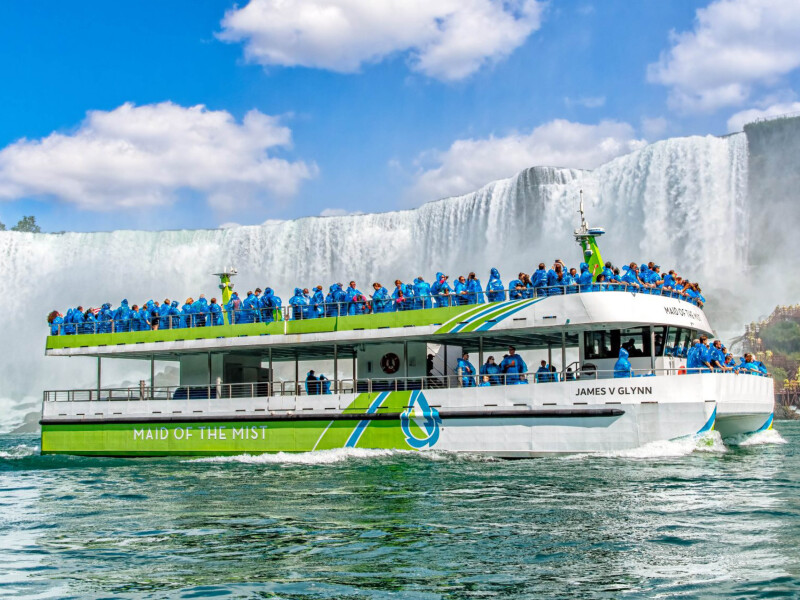
As part of its decision-making, DRBA looked to early adopters, including Washington State Ferries as well as the fully electric Maid of the Mist sightseeing vessels in Niagara Falls, N.Y., while also involving its staff throughout the process. “Everybody had a say,” Gehrke said. “[Our staff] have some ownership. They’re excited about it.”
If the prototype performs as expected, DRBA plans to replace its remaining vessels rather than retrofit aging hulls. “We’re already on borrowed time a little bit,” Gehrke said.
WETA’S FULL CHARGE AHEAD
In California, the San Francisco Bay Area Water Emergency Transportation Authority continues its multiphase plan to electrify San Francisco Bay Ferry service. Executive Director Seamus Murphy told WorkBoat the program is about more than emissions reductions, highlighting that it is increasingly tied to long-term financial sustainability, U.S. manufacturing growth, and expanding domestic shipyard capacity: trends he believes will shape the future of the ferry industry nationwide.
“I think a lot of… it’s just funding related,” he said. “You know the inflationary pressures are real in this industry. The cost of doing this work in the United States is… by itself more expensive than anywhere else. And so… our team’s been really creative in navigating some of that and figuring out how to maximize the service potential with the resources that we have.”
New ideas have revealed themselves along the way, Murphy said. “I think more than… just overcoming challenges, I think we’ve probably identified a lot more opportunities that our program will be helpful in addressing,” he said.
Those opportunities are framed within WETA’s four-phase Rapid Electric Emission Free (REEF) ferry decarbonization roadmap, which is backed by federal, state, and local funds.
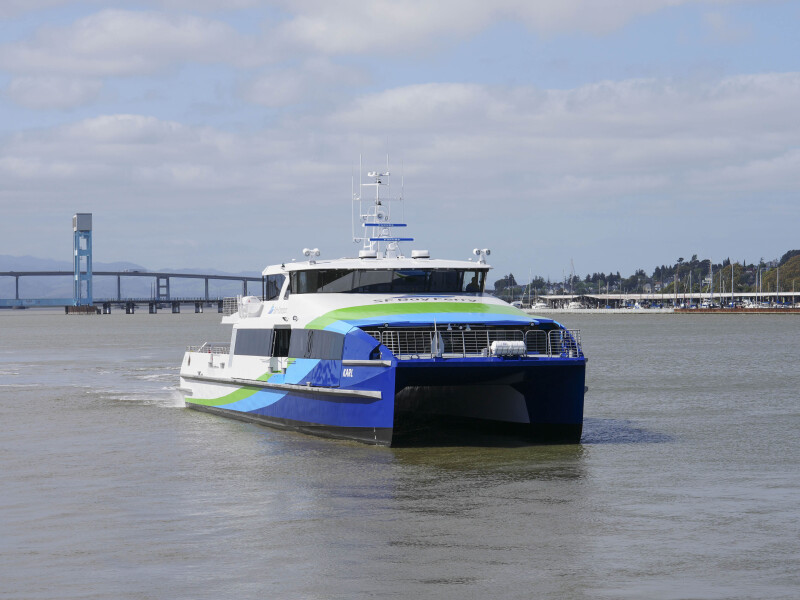
A WETA fact sheet lists more than $250 million secured for the program, including $131. 9 million in federal funding (EPA Clean Ports, FTA Passenger Ferry Grant Program, FTA 5307/5339 formula funds, Department of Transportation Carbon Reduction Program), $76.9 million in state funding (Transit Intercity Rail Capital Program, State Transit Assistance, Low Carbon Transit Operations Program, California Energy Commission Clean Transportation Program, Volkswagen Mitigation Funding), $42.8 million in regional funding (Regional Measure 1, 2, & 3 Bridge Tolls, AB 664), and $500,000 in local funding (Alameda County’s Measure BB program).
Phase one of the REEF program centers on a trio of 150-passenger electric catamarans being built under contract with All American Marine, Bellingham, Wash., designed primarily for short-run, high-frequency service, while a pair of larger, 400-passenger battery-electric vessels will be built by Nichols Brothers Boat Builders, Freeland, Wash. In addition, a project to convert the agency’s Hydrus-class vessels is expected to be completed by Dec. 14, 2028.
“We’re gonna move it forward as quickly as we can,” Murphy said, referring to the Hydrus-class repower project, “but we want to make sure that the rest of the program is on cruise control.”
Phase two will complete the transition to zero-emission service on all WETA routes under 10 nautical miles. Phase three will extend electrification to routes in the 13- to 15-nautical-mile range, where technology exists but program funding still needs to be secured.
“We can do the 13-to-15 [mile trips] with existing technology,” Murphy said. “We just don’t have that funded yet for phase three.”
Phase four is set to address longer-run, higher-speed commuter services approaching 23 nautical miles. Murphy said those routes remain outside the range of current battery-electric propulsion technology at the speeds required for mass-transit service. He said hydrogen propulsion remains a possibility, though the agency is waiting for someone to demonstrate its potential.
“We just need somebody to demonstrate… a hydrogen vessel can operate at 36 knots for… that amount of distance,” he said. “We don’t want to be the first ones to try it.”
Additionally, WETA is evaluating electric-foiling ferries capable of significantly reducing energy consumption.
As vessel delivery moves forward, charging infrastructure plans are advancing in tandem, with JT Marine, Vancouver, Wash., selected to build the charging floats that will support the new electric fleet. “We’re about to start that work,” Murphy said. “What we want to avoid is any significant amount of time where a vessel is delivered and we don’t have any way to operate it.”
Murphy said that the opportunities brought about by ferry electrification extend well beyond emissions reductions, particularly around domestic manufacturing and shipyard capacity. He pointed to the potential for “creating new U.S. manufacturing opportunities and jobs” as battery suppliers and technology firms respond to growing demand.
“This technology isn’t going anywhere,” Murphy said, given its operational and financial advantages. If executed deliberately, he said, the U.S. could “create a new industry… building technologies that are going to be used all over the world,” rather than exporting those jobs overseas.
DOMESTIC DEBATE
That long-term view mirrors comments from Washington State Ferries executive director Steve Nevey, who told WorkBoat that one of the most overlooked challenges in the U.S. transition is not technology but indecision.
Throughout his tenure, Nevey said, conversations with European ferry executives have often centered on how quickly those operators moved past debate and committed to decarbonization.
“The challenge that we face here is that in Washington state and the United States, decarbonization isn’t a decided upon path forward yet,” Nevey said, before noting that U.S. operators continue to revisit fundamental questions that other countries have already settled.
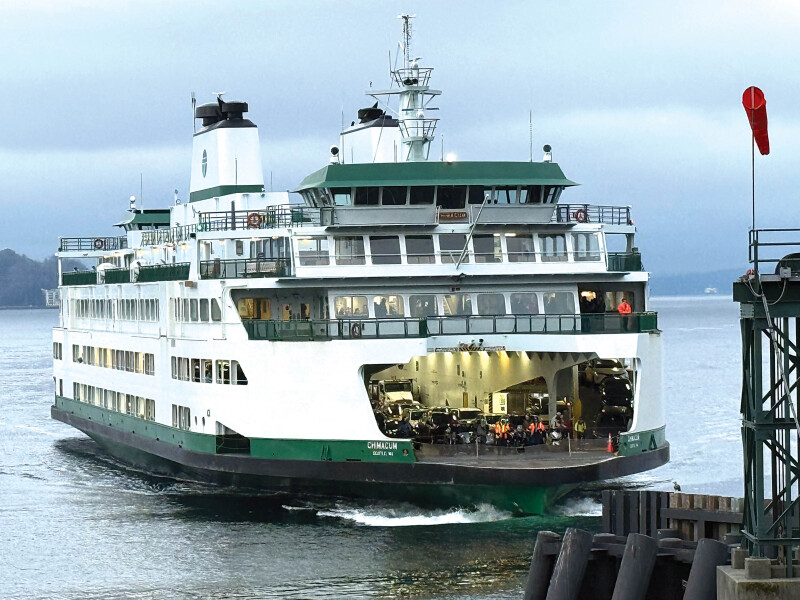
“We’re still having debates on should we use Tier 4 diesel engines and not decarbonize,” Nevey said. “It’s challenging when you’re out dealing with the rest of the world, and they’ve already made that decision to move on.
“Those things aren’t fully decided yet, and every legislative session we’re still called to answer questions about the path forward,” he said.
“I think it would be nice to just be the same as those European ferry operators that I talked to, where they’re confident that, ‘We’ve made this decision, we’re decarbonizing, this is our strategy, this is the best path forward.’ Whereas we’re still debating that.”
For DRBA, WETA, WSF, and ferry operators nationwide, federal funding is accelerating decisions already driven by aging fleets and rising maintenance costs. What is emerging is a generational replacement cycle that will shape ferry operations for decades. Hybrid and zero-emission propulsion are central to that transition, but equally important are clarity, consistency, and commitment factors that industry leaders say will determine how effectively the U.S. ferry sector capitalizes on the opportunity now taking shape.
