


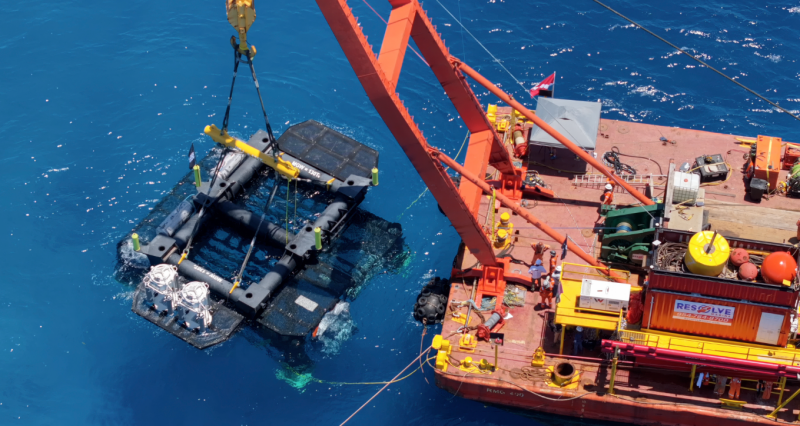
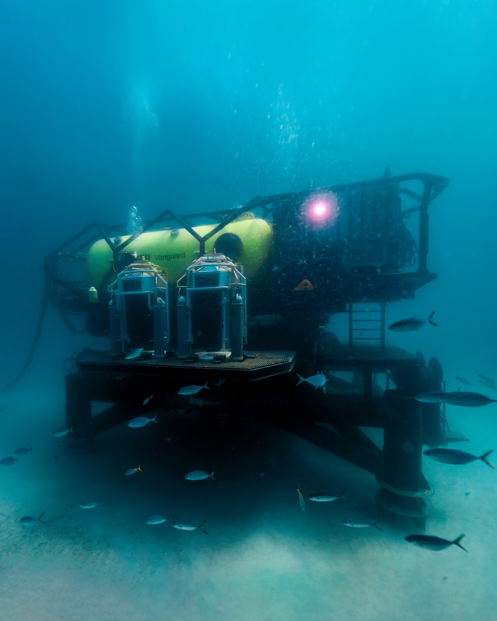
Ocean engineering company DEEP, Bristol, U.K., has completed installation of its Vanguard subsea human habitat at Tennessee Reef in the Florida Keys National Marine Sanctuary, marking a milestone in the company's effort to support long-duration underwater research and human operations.
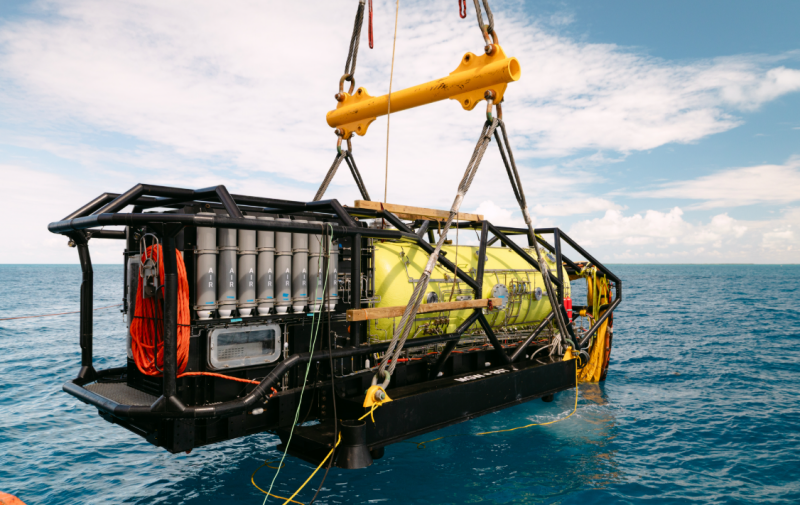
The habitat, installed on the seafloor at a depth of 56’, is the first open-ocean subsea human habitat built, tested, and deployed in the United States in approximately 40 years, according to the company.
Deployment involved placing a foundation on the seafloor, securing the habitat to the foundation, and installing a nearby tethered surface support buoy. The habitable module measures 35’x8’ and is designed to accommodate crews of up to four aquanauts for research missions lasting five days or longer.
The installation relied on Resolve Marine's RMG 400, a 165’ ABS load line deck barge equipped with a foldable 260-short-ton shear-leg crane. The four-point moored barge measures 165’x 54’x11.5’, draws up to 4’., and is fitted with 70’ spuds for station keeping. Its crane features a 140’ boom with a 225-short-ton main lifting block, while the foldable shear-leg configuration provides a maximum lifting capacity of 260 short tons. The vessel is powered by a fixed onboard generator and uses dual-drum Skagit RB80 mooring winches with up to 1,300‘ of 1 1/8" wire per drum and anchors weighing up to 8,000 lbs., enabling precise heavy-lift operations during offshore construction.
With installation complete, DEEP has begun sea acceptance testing and commissioning, the final steps before the habitat receives classification from DNV. The classification society has participated throughout the design and construction process by providing independent technical oversight, the company said.
Following commissioning, DEEP plans to train habitat support crews before launching the first research missions at Tennessee Reef.
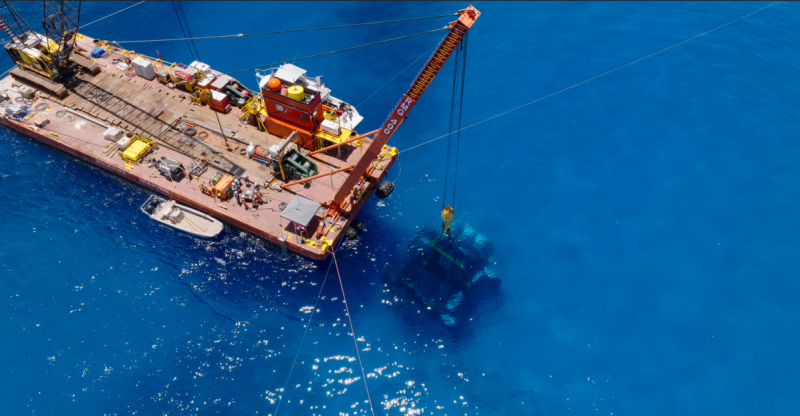
"Installing Vanguard at Tennessee Reef was a carefully choreographed marine operation with a lot of moving parts, and the culmination of 18 months of intense design, build, and testing efforts," said Norman Smith, DEEP's chief technology officer. "Successful deployment gets us closer to enabling a continuous human presence in the ocean and is a major step forward in DEEP's mission to make humans aquatic."
The habitat will provide a platform for scientists to live and work underwater for extended periods, allowing continuous observation and research that would be difficult to accomplish through conventional diving operations.
According to DEEP, initial missions are expected to support coral reef restoration, long-term monitoring of reef health and water quality, climate impact studies, marine ecology research, human physiology studies, testing of subsea sensors and sampling technologies, astronaut and extreme-environment training, and live educational outreach.
"For decades, NOAA has supported using subsea habitats as a platform to reveal ground-breaking discoveries that inform the sanctuary's management well into the future," said Eddie Kertis, superintendent of the Florida Keys National Marine Sanctuary. "The deployment of a new subsea habitat within the sanctuary creates additional opportunities for marine science and builds on research infrastructure, resource stewardship, and our long-standing collaboration with the scientific community."
DEEP said Vanguard serves as a pilot project for its broader subsea infrastructure program. Lessons learned from the habitat's operation will inform development of Sentinel, a larger modular habitat system intended to expand long-term human presence beneath the ocean surface.
Project partners on Vanguard include Unique Group, Bastion Technologies, Triton Submarines, and Resolve Marine.
WorkBoat reached out to each company to get a breakdown of all vessels involved with the installation.
