



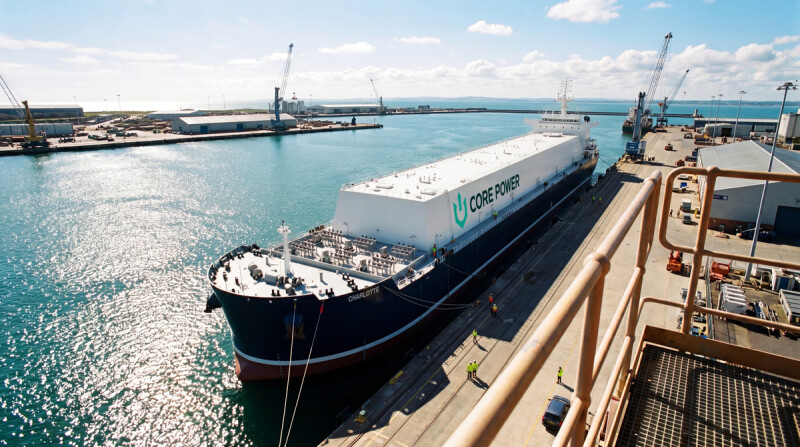
Core Power, Washington, D.C., is evaluating the use of BWX Technologies’ mPower small modular reactor technology for future floating nuclear power plants, the company announced June 17.
Core Power said in a statement that it has launched a feasibility study examining the technical, regulatory, and commercial considerations of integrating BWXT’s mPower SMR into floating nuclear power plants (FNPPs) designed for shipyard construction and deployment.
The study will assess how BWXT’s mPower reactor could be incorporated into modular floating power platforms built in shipyards and positioned near areas with high electricity demand.
Originally developed as a Generation III+ integral pressurized water reactor, BWXT’s mPower design has a generating capacity of 195 megawatts electric and 575 megawatts thermal per reactor.
Floating nuclear power plants are designed to be constructed in shipyards and deployed near end users, offering a potential alternative for regions constrained by grid capacity, land availability, or lengthy infrastructure development timelines. Supporters of the concept argue that shipyard construction could improve standardization, reduce project risk, and accelerate deployment compared with traditional land-based nuclear facilities.
According to Core Power, the feasibility study will include systems engineering, concept-of-operations development, product requirements, regulatory pathway analysis, marine integration, and techno-economic evaluation.
Core Power said the study will draw on its experience in marine systems integration, shipyard delivery, and deployment planning, along with BWXT’s reactor design expertise.
The initial assessment is being funded by Core Power and is expected to guide future decisions related to engineering scope, regulatory engagement, commercial structure, and potential project development.
The study reflects growing industry interest in shipyard-built nuclear power systems as demand rises for reliable baseload power, particularly in industrial markets and regions facing power supply constraints.
