


The public comment period has closed on a proposal that could lead to commercial mineral leasing in federal waters off Virginia’s Eastern Shore.
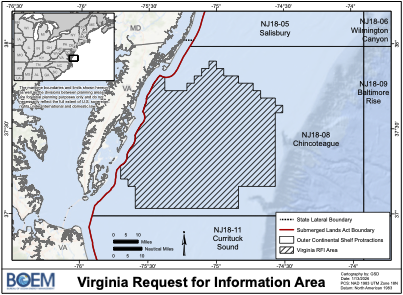
The Bureau of Ocean Energy Management accepted comments through Aug. 22 on a request for information and interest covering about 1.77 million acres, or 2,764 square miles, of the Outer Continental Shelf. The area lies three to 63.5 miles off the Delmarva Peninsula, seaward of Accomack and Northampton counties, in water depths ranging from approximately 30' to 410'.
The proceeding is an early planning step and does not authorize exploration, dredging or mineral production. BOEM will use the submissions to determine whether to identify areas for possible leasing and begin an environmental review. Any lease would be awarded through a competitive process rather than directly to the company that initiated the request.
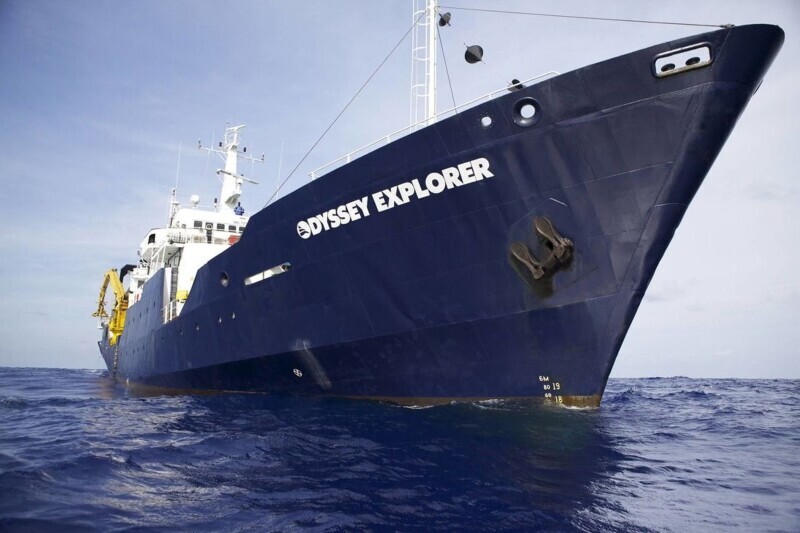
Odyssey Marine Exploration, Tampa, Fla., submitted the unsolicited lease-sale request in November 2025. The company is interested in exploring for heavy mineral sands containing titanium-bearing minerals, zirconium-bearing minerals and rare earth element-bearing minerals, including monazite. Odyssey has a collaboration agreement with Great Lakes Dredge & Dock Corp., Houston, which would serve as the dredging contractor if the project advances.
Unlike proposed mining projects targeting polymetallic nodules in deep ocean basins, the Virginia proposal involves comparatively shallow continental shelf deposits that Odyssey says could be recovered using conventional dredging and mineral-processing equipment.
“Development of domestic offshore mineral resources represents a practical opportunity to strengthen domestic supply chains for critical minerals using established marine technologies and existing regulatory authorities,” Odyssey said in its comments.
The company identified about 386 square miles, or 1,000 square kilometers, as its highest-priority area within BOEM’s broader planning area. If the project reached production, Odyssey predicted its dredging operations would affect less than 0.8 square miles, or 2 square kilometers, annually.
Those figures are company projections. The location, scale and duration of any mining operation have not been determined, and additional geophysical surveys, coring, sampling and resource characterization would be needed to evaluate the deposits’ grade, thickness, continuity and commercial viability.
Odyssey said it selected its areas of interest through a screening process intended to avoid sensitive habitats, protected areas, major navigation routes, military operating areas and other known ocean uses.
“The requested lease area was developed through a screening process intended to avoid, to the extent practicable based on available information, marine protected areas, environmentally sensitive habitats, major navigation routes, military use areas, and other known competing ocean uses,” the company said.
BOEM describes heavy mineral sands as sediment deposits in which waves and currents have concentrated dense minerals such as ilmenite, rutile and zircon. The agency’s request also covered phosphorites, marine deposits enriched in phosphate minerals that can contain rare earth elements. BOEM said it is evaluating possible leasing for minerals other than oil, gas and sulfur.
Other dredging and maritime interests supported continued study. Cashman Dredging & Marine Contracting Co. LLC said environmental and fisheries concerns warranted site-specific examination but should not preclude an evaluation of seabed mineral recovery.
“These concerns require serious, site-specific study, but they should not prematurely lead to the conclusion that all seabed dredging, or mineral recovery is inherently unacceptable,” Cashman said.
Cashman cited positioning, controlled excavation, material-handling and environmental-monitoring practices developed through navigation dredging, beach nourishment and contaminated sediment remediation. The company called for a phased review that includes coordination with fishermen and other ocean users.
The Responsible Battery Coalition also supported allowing Odyssey and GLDD to explore the area and assess its commercial potential, citing the use of critical minerals in batteries, defense systems and manufacturing.
The proposal drew opposition from fishing interests, state resource officials and local government. Commenters opposing the proposal included the New England Fishermen’s Stewardship Association, the New Jersey Marine Resources Administration and the Accomack County Board of Supervisors.
The New England Fisherman’s Stewardship Association urged BOEM to exclude areas that overlap fishing grounds and habitat used by summer flounder and black sea bass. The group said both bottom-dwelling species could be particularly vulnerable to dredging and sediment disturbance.
“NEFSA’s members recognize the strong interest in developing domestic critical mineral resources,” the association said. “At the same time, we request that BOEM balance these interests with the economic and environmental interests of the commercial fishing industry, particularly that of the valuable summer flounder and black sea bass fisheries, which would be directly impacted by large-scale seabed dredging proposal offshore Virginia.”
Citing NOAA Fisheries data, NEFSA said commercial fishermen landed 8.9 million lbs. of summer flounder valued at $28 million in 2024. Commercial black sea bass landings totaled 4.8 million lbs. and were valued at $12.6 million that year.
Adult summer flounder spend much of their lives on or near sandy seafloors, while black sea bass use reefs, wrecks, oyster beds, coarse substrates and sand-shoal features during important life stages. NEFSA said the 30' to 410' water depths within BOEM’s planning area overlap habitats used by both species.
“The type of mineral mining contemplated in the RFI has a much higher potential to negatively impact these fisheries than nodule-focused deep-sea mining, which traditionally involves the robotic extraction of polymetallic nodules composed of nickel, cobalt, copper, and manganese that sit atop the seabed,” NEFSA said. “In contrast, the heavy mineral sands and phosphorite mining contemplated along the Virginia coast involves large-scale sand and gravel extraction and handling, more closely resembling a dredging or beach nourishment operation than targeted mineral extraction.”
The association cited BOEM-sponsored research identifying potential effects from offshore sand dredging, including the removal of organisms, underwater noise, sediment plumes, changes to prey resources and the redeposition of sediment. NEFSA said those effects could alter the food supply and habitat available to summer flounder and black sea bass.
The group also said maps developed using information from the Mid-Atlantic Ocean Data Portal showed that an eastern portion of BOEM’s planning area overlaps historical landing areas for summer flounder, scup and black sea bass.
“For the reasons set forth below, BOEM should avoid leasing areas that overlap these important fishing grounds and habitat to limit potential risk to this valuable resource,” NEFSA said.
The Accomack board said seabed dredging could affect fisheries, tourism, maritime businesses, water quality and marine habitat. It also questioned whether mining vessels and support operations could conflict with the Mid-Atlantic Regional Spaceport, NASA’s Wallops Flight Facility and Navy testing and training areas.
“The Board of Supervisors opposes advancing this proposal,” the county said. “The proposed seabed mineral mining operation presents significant concerns and unacceptable risks for Accomack County's coastal communities, economy, environment, and national defense assets.”
County officials said BOEM had not provided enough information about the potential depth, frequency, geographic extent and duration of mining. They also sought details about the vessels and shoreside infrastructure that would be required and asked how BOEM would evaluate potential conflicts with fishing, boating, tourism, military exercises and space-launch operations.
“Without answers to these fundamental questions, the general public cannot reasonably assess either the potential benefits or the potential risks associated with this proposal,” the board said.
One commenter proposed another possible industrial use for the offshore area. The Spaceport Company expressed interest in evaluating a roughly 40-acre offshore launch platform that could accommodate large rockets, with integration, payload processing and other support functions remaining at Virginia port facilities. The proposal illustrates the range of competing uses BOEM may have to consider if it advances mineral leasing.
BOEM’s next step is to review the comments and indications of commercial interest. If the agency proceeds, it would identify specific tracts and conduct an environmental analysis of leasing and preliminary exploration activities. Later stages would include proposed and final leasing notices followed by a competitive lease sale. Separate BOEM approval and further environmental review would be required before a lessee could undertake delineation, testing or mining.
The offshore location could also create work for U.S.-flag dredges, tugs, barges and supply vessels. Jones Act requirements would depend on the configuration of the operation, including the points between which minerals, equipment and supplies are transported and whether offshore mining equipment constitutes a coastwise point. Those questions would require project-specific review once an operating plan and vessel spread are established.
BOEM has not announced when it will decide whether to advance the Virginia proposal. The agency’s Federal Register notice states that it may or may not offer the area for lease after consultations, environmental review and consideration of the public comments.
