



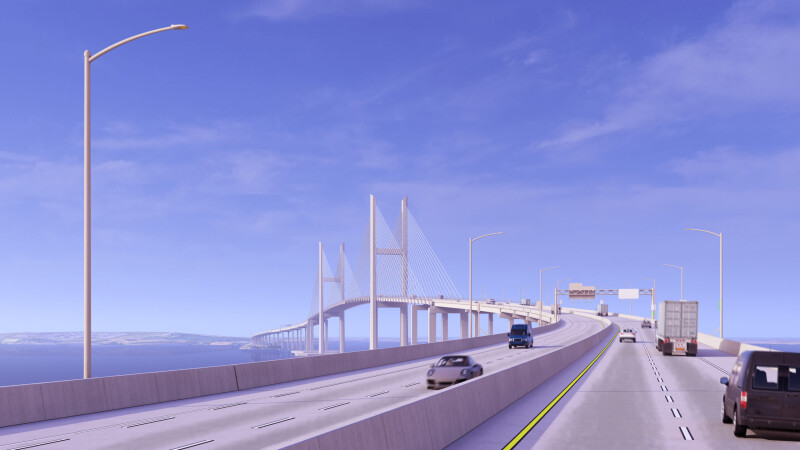
Building the replacement for Baltimore’s Key Bridge could cost in the range of $4.3 billion to $5.2 billion, with a completion date in late 2030, Maryland transportation officials said Nov. 17.
The estimate is more than twice earlier projections reported in 2024, after the Francis Scott Key Bridge collapsed March 26 that year after being struck by the 948’ containership Dali outbound from Baltimore.
As plans developed “it became clear that material costs for all aspects of the project have increased drastically since the preliminary estimates were prepared less than two weeks after the initial tragedy,” said Samantha Biddle, Maryland’s acting state Transportation secretary and the Maryland Transportation Authority chair.
“The updated cost range and schedule are directly correlated to increased material costs and to a robust pier protection system designed to protect the new Key Bridge and reduce the likelihood of a future ship strike to the bridge’s foundational piers,” Biddle said in a statement by the agency.
The announcement came on the eve of a National Transportation Safety Board hearing Tuesday in Washington, D.C., to summarize the NTSB’s investigation findings into the crash that killed six construction workers when bridge deck collapsed.
In March 2025 the NTSB faulted the Maryland Transportation Authority for not conducting a “critical vulnerability assessment” that could have warned of the old Key Bridge’s risk from ship strikes.
Besides the Maryland agency, the NTSB also warned that 30 agencies owning 68 bridges over navigable waterways “frequented by ocean-going vessels are likely unaware of their bridges’ risk of catastrophic collapse from a vessel collision and the potential need to implement countermeasures to reduce the bridges’ vulnerability.”
The early numbers were required to request federal emergency funding for the immediate clean up and recovery, according to the agency.
MDTA Executive Director Bruce Gartner. “Typically, a cost estimate would not be provided on a project of this size until much later in the design process,” said Bruce Gartner, the Transportation Authority executive director. “The Key Bridge Rebuild achieved 70% design in 14 months compared to other projects that have averaged seven years, while also progressing construction.”
The new bridge design calls for a main span of 1,665’ compared to 1,200’ on the old bridge. That “has resulted in an increase of the overall span of the bridge and the height of the main piers,” according to the authority. “The increased size accommodates today’s larger marine traffic and is needed to comply with current guidelines from the American Association of State Highway and Transportation Officials for new bridges.”
