



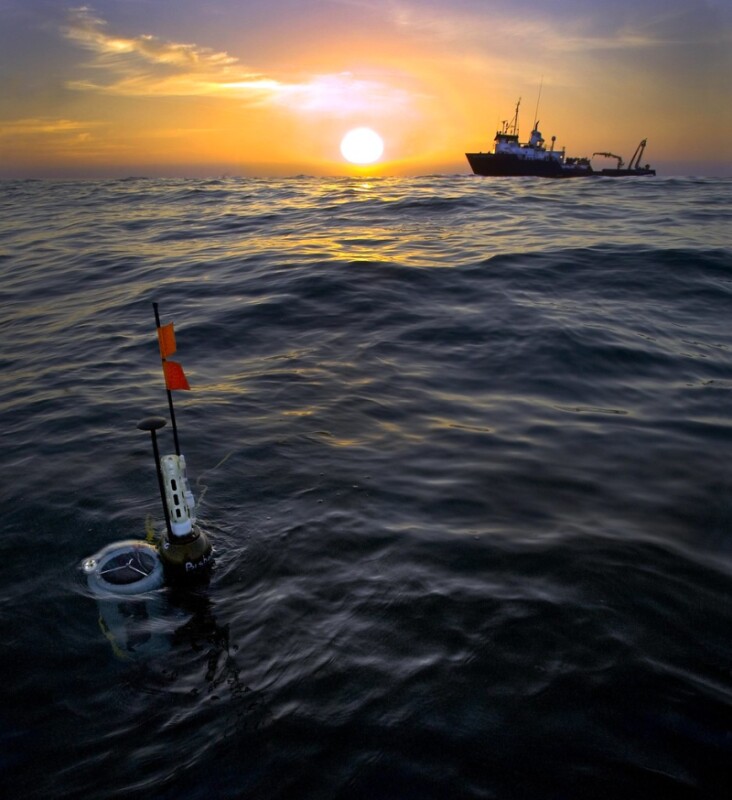
Chile’s ASENAV shipyard has signed a contract to build a hybrid coastal research vessel for the University of California San Diego’s Scripps Institution of Oceanography.
The Glosten-designed 124'8"x33'6" vessel will have a 9'10" draft, and accommodate up to 20 crewmembers, scientists and students during missions lasting as long as 11 days. Delivery is scheduled for summer 2028.
The new vessel will replace the research vessel Robert Gordon Sproul, which is being retired after nearly four decades of service. Operating from San Diego as part of the U.S. Academic Research Fleet, the vessel will support research along the eastern Pacific coast.
ASENAV, Valdivia, Chile, was selected through the university’s request for proposals process. The contract covers design, construction, testing and sea trials.
“The award of this project represents a new milestone for Chile and a tremendous opportunity, as it allows us to demonstrate our capabilities to export engineering, design and shipbuilding not only focused on the maritime industry, but also in the scientific field and for one of the most important academic institutions in the world,” Fernando Rodríguez, CEO of ASENAV, said in a statement.
The monohull will feature electric propulsion powered by a hybrid battery system. Two azimuthing L-drive stern thrusters and a bow thruster will provide propulsion and maneuvering, including dynamic positioning for low- and zero-speed operations.
The vessel will have a transit speed of 10 knots and a survey speed of 8 knots. It will be designed to tow scientific equipment at 2 knots and maintain position while deploying instruments and remotely operated vehicles.
“This new vessel will incorporate hybrid battery propulsion technology that will help reduce the environmental impact of its operations at sea and will meet a range of technical requirements mandated by U.S. regulations,” Rodríguez said.
Designed for more than 200 operating days and as many as 55 missions annually, the vessel will support research in biology, chemistry, geology, geophysics and physical oceanography. It will also be able to carry as many as 40 students during single-day educational trips.
The vessel’s acoustic equipment will include multibeam and sub-bottom systems for seafloor mapping, acoustic Doppler current profilers and multifrequency sonar for imaging fish and other biomass in the water column.
Deck machinery will include winches, a crane and an A-frame capable of lowering instruments to depths of approximately 13,123'. The vessel will also support ROV deployments and use an ultra-short baseline acoustic navigation system to deploy and track autonomous underwater vehicles.
An onboard computer network, satellite communications and internet connectivity will allow scientists and students to access instruments and transmit data during missions.
Noise Control Engineering LLC, a Glosten subsidiary, will lead airborne and underwater noise analysis. The vessel must meet performance requirements for speed, range, power quality, exhaust emissions and underwater radiated noise at survey speeds from 1 to 10 knots.
The vessel will be built to American Bureau of Shipping classification requirements and applicable Coast Guard and federal, state and local regulations.
