


New Jersey Gov. Mikie Sherrill warned port and terminal operators in her state not to accept import shipments of Russian diesel, threatening “serious civil and criminal consequences” if they allow those tankers into port.
“New Jersey will not stand by while Donald Trump supports Vladimir Putin at the expense of Americans,” Sherrill said in announcing the policy Nov. 2.
“Instead of lowering costs, he is helping finance Putin’s war against Ukraine and a global campaign of violence and terror that endangers U.S. servicemembers abroad,” said Sherrill. “As a Navy veteran, I cannot let that stand unchallenged, and New Jersey’s ports shouldn’t be complicit.”
In letters to terminal operators, Sherrill asserted “the Trump Administration’s authorization of Russian fuel imports directly conflicts with federal law. Specifically, in response to Russia’s invasion of Ukraine, Congress in April 2022 enacted the Ending Importation of Russian Oil Act (Russian Oil Act), which provides: “All products of the Russian Federation classified under chapter 27 of the Harmonized Tariff Schedule of the United States shall be banned from importation into the United States, in a manner consistent with any implementation actions issued under Executive Order 14066.”
Noting the Trump administration’s deal to allow some Russian diesel fuel imports to ostensibly ease prices to U.S. consumers, Sherrill cited an Oct. 9 license issued by the Office of Foreign Asset Control of the United States Treasury “which purports to authorize transactions prohibited by certain federal regulations ‘that are related to the sale, delivery, offloading, or importation, including importation into the United States, of diesel fuel of Russian Federation.’
"Russia has since dispatched multiple diesel oil tankers to the United States, including at least one that may be headed for the New Jersey coast.”
However, “the Russian Oil Act does not grant the President or Treasury Department blanket authority to waive these sanctions through licenses,” Sherrill objected. “Rather it provides a single avenue by which its prohibitions may be lifted short of repeal: the President must certify that, among other things, Russia has agreed to withdraw its forces from Ukraine.”
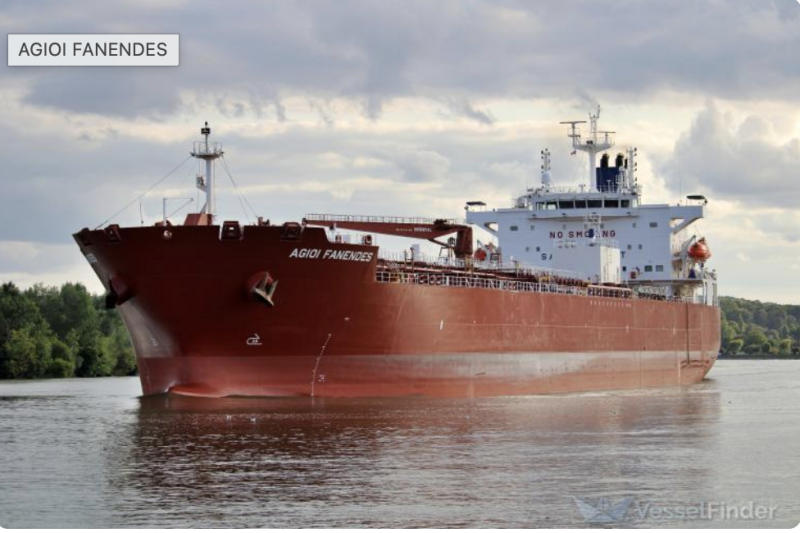
After the diesel import exception license was issued, he Malta-flagged 600’x105’ tanker Agiogi Fanendes sailed Oct. 23 from Russia’s Primorsk region with a first cargo of Russian diesel fuel. According to ship tracking services the Agiogi Fanendes’ destination was originally shown as New York on AIS data, but it has since been listed as “for orders,” indicating operators are awaiting direction from owners or charterers.
Sherrill’s letters to port operators concluded with pointed warnings.
“The consequences of allowing any vessel that contains Russian fuel are significant,” Sherrill wrote, citing federal law on import violations.
“The applicable statute of limitations for a violation of this provision is five years. Thus, you could be subject to millions of dollars in penalties long after Trump has left office and his corrupt administration has come to an end.”
“Any effort to profit from the illegal trade in Russian fuel will be met with harsh penalties,” she concluded. “I urge you to turn away any tanker that seeks to use your facilities in furtherance of such unlawful activity. New Jersey will look to use every available legal and regulatory tool to ensure that our ports, businesses, and infrastructure are not exploited to advance interests against those of the United States of America and New Jersey.”
