


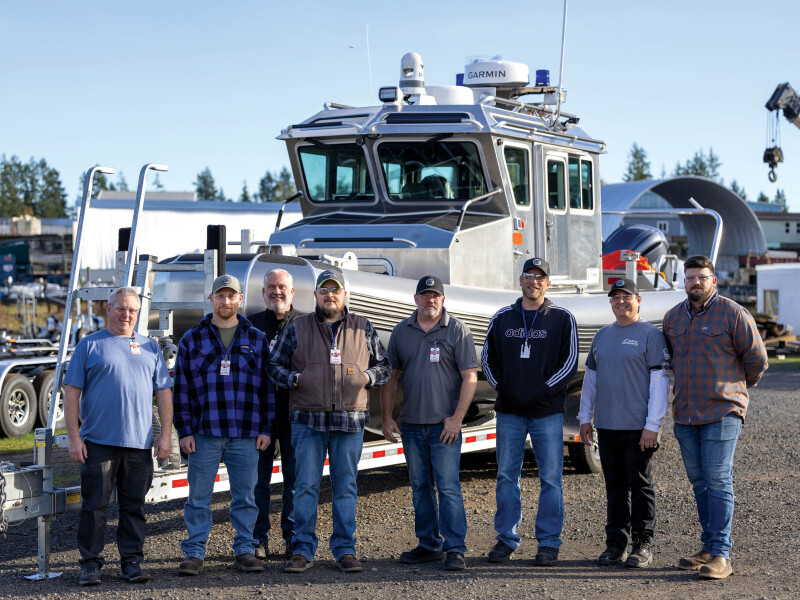
In 2023, boatbuilder SAFE Boats International, Bremerton, Wash., became 100% employee owned. For founder Scott Peterson, the transition was something he’d pursued for nearly 20 years: making sure the people who built the company got to share in what was created.
“See, I don’t have kids,” said Peterson, who now serves as SAFE Boats’ chairman of board. “What do you do with something you build?”
Peterson spoke of the many long-tenured employees who helped to grow the business. “Let’s make them part of it. This can’t be about an individual. It has to be about a community, and that’s the only way you become sustainable.”
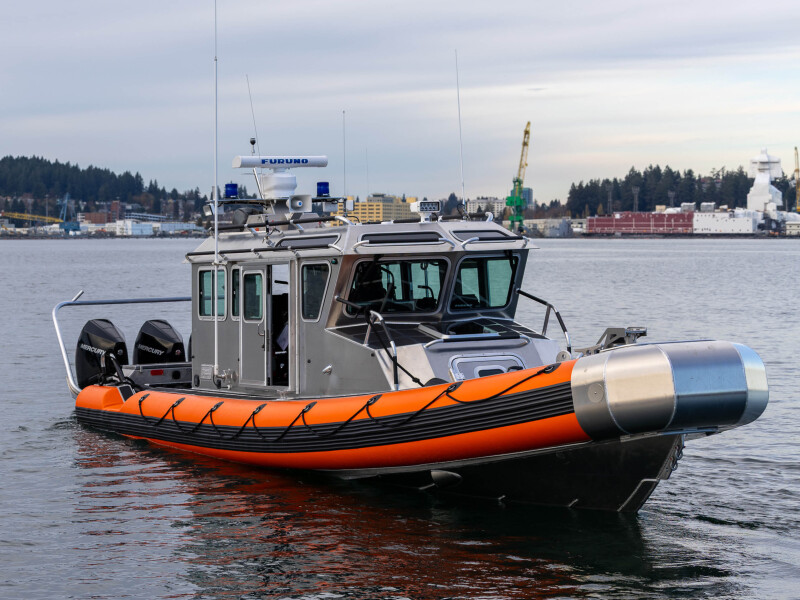
Founded in 1996, SAFE Boats International built its reputation on heavy-gauge aluminum, high-performance watercraft for government customers. What started as a company filling a gap in durable patrol boats for agencies like the Coast Guard and Navy has evolved into a builder delivering vessels to federal, state, local, and international customers.
The company now operates production facilities in Bremerton and Tacoma, Wash., employing more than 300 team members. Its backlog stands at more than 100 vessels — the highest in company history.
FOUNDATIONS FOR GROWTH
In the wake of the Sept. 11, 2001, attacks, the Coast Guard issued an urgent operational requirement to protect 361 U.S. ports, awarding SAFE Boats a contract for 100 response boats — then called Response Boat Homeland Security. That fleet preceded what became the 25' Defender-class Response Boat-Small Generation 1 program, which SAFE Boats won in competition.
“That’s what really put us on the map, building fleets of boats for the Coast Guard,” said Rob Goley, chief revenue officer and one of four leaders in the company’s collaborative leadership model. “Since then, we really have a strong mix of what we consider program opportunities or program builds, and then focusing on our state, local, and international customers.”
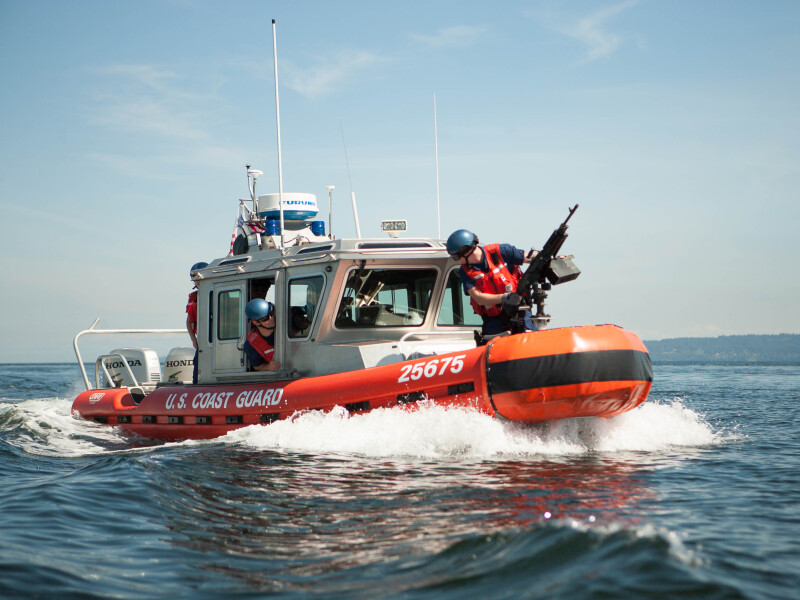
Major programs over the past three decades include the 38' Riverine patrol boat for the Navy, the 24.75' Over-the-Horizon Gen 4 interceptor, and the 41' Coastal Interceptor Vessel programs for Customs and Border Protection (CBP), and the ongoing 85' Mark VI patrol boat program for the Navy.
The Mark VI program encountered a setback in 2025 when a stop-work order temporarily halted production at the Tacoma facility. Recent Mark VI boats were being built for Ukraine, and the order was part of the Trump administration’s broader crackdown on foreign assistance programs.
The SAFE Boats team responded by relocating a portion of small boat production from Bremerton to Tacoma, building five boats in just over 30 days to maintain momentum.
“This team was not impacted by it,” said Christer Bradley, chief operations officer. “One of the reasons is because of our backlog. We were able to move boats here. This facility was thought of as large boat production. It’s not. It’s another production facility. We can build boats from 23 to 85-plus feet, and that’s the plan.”
CUSTOMER EQUALS MISSION
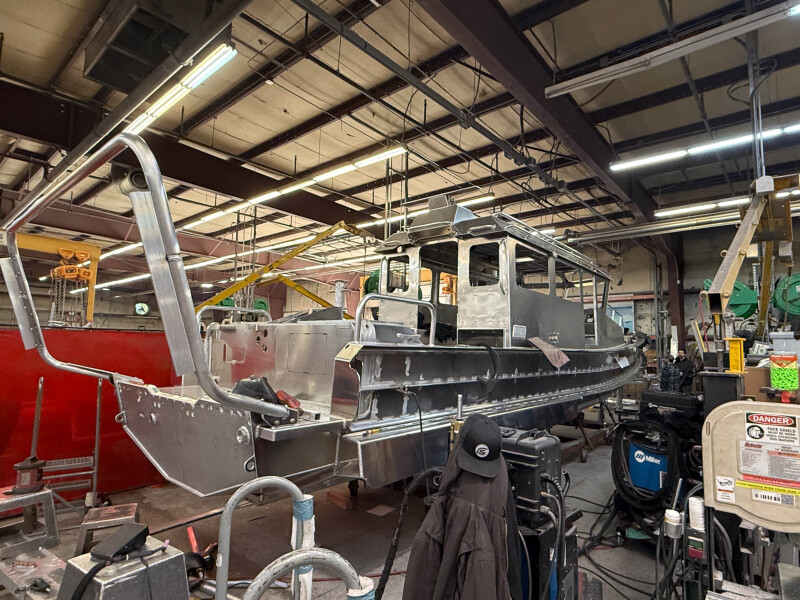
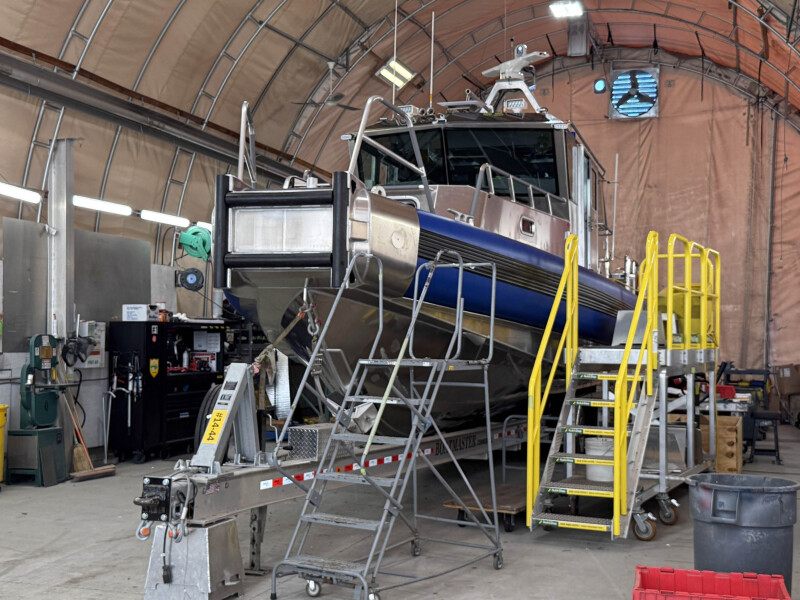
SAFE Boats doesn’t build stock. Every boat is built to order, and every vessel on the production floor carries the customer’s name and destination.
“Every boat on the floor has a purpose,” Goley said. “The team that’s working on that boat, they really, truly want to understand the purpose of that boat. They want to know the customer. They know that’s not just a hunk of metal. It’s not just a boat going out for a joyride. It is going out there to potentially save lives, protect property, and most importantly, bring those crews home. They take that to heart.”
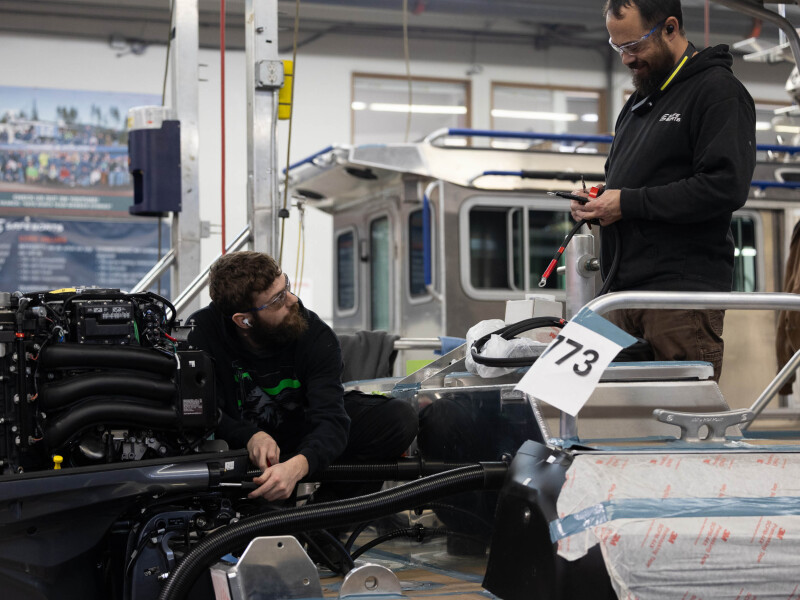
SAFE Boats serves federal agencies, including the Coast Guard, Navy, and CBP, along with state and local law enforcement, harbormasters, and international customers. The company also builds specialized platforms for applications ranging from fire suppression to hydrographic survey.
Geopolitical activity drives demand. Goley pointed to the Indo-Pacific, Europe, the Middle East, and, more recently, Venezuela and other parts of South America as regions where governments need capable patrol boats to combat transnational organized crime, drug smuggling, and other threats.
“Those are things we’ve been doing — providing boats for the Coast Guard, the Navy, and our international partners — for 30 years,” Goley said.
The company has also watched the autonomous vessel market evolve. Early efforts focused on converting existing boats to unmanned operation. Now, Goley said, autonomous technology is often the prime requirement, with the boat simply serving as a mode of transportation.
“Us being boatbuilders, it’s a different type of business,” he said. “If it’s completely unmanned and autonomous, there’s no human interaction. We put a lot of effort into designing our boats to protect humans.”
While SAFE Boats remains engaged in the autonomous space, the company’s focus stays on crewed vessels. “We still believe that there will be humans on boats for a very, very long time,” Goley said. “That’s what we focus on. That’s what we do really well, and we’re going to keep doing that.”
FUTURE LEADERSHIP
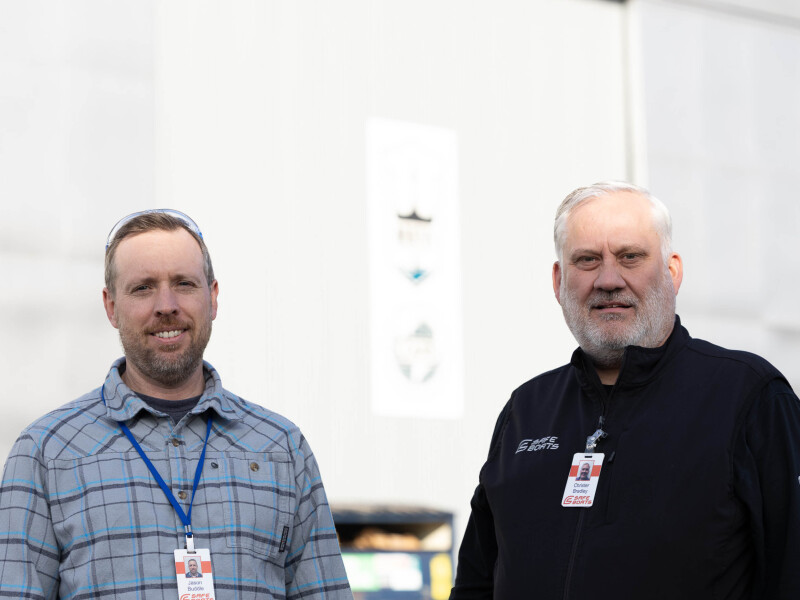
In December, SAFE Boats CEO Richard Schwarz transitioned into a consulting and advisory role, and the company implemented a collaborative leadership model with four co-equal executives: Goley as chief revenue officer, Bradley as chief operations officer, Cindy McFarland as chief people officer, and Tom Gumpert as chief financial officer. Each leader has a defined focus area but operates under unified company goals.
“What the collaborative model allows us to do is, it’s not just one single decision point anymore,” Goley said. “While we operate under a unified organization in terms of goals, objectives, and vision, we can make decisions faster for our team and ultimately for our customers.”
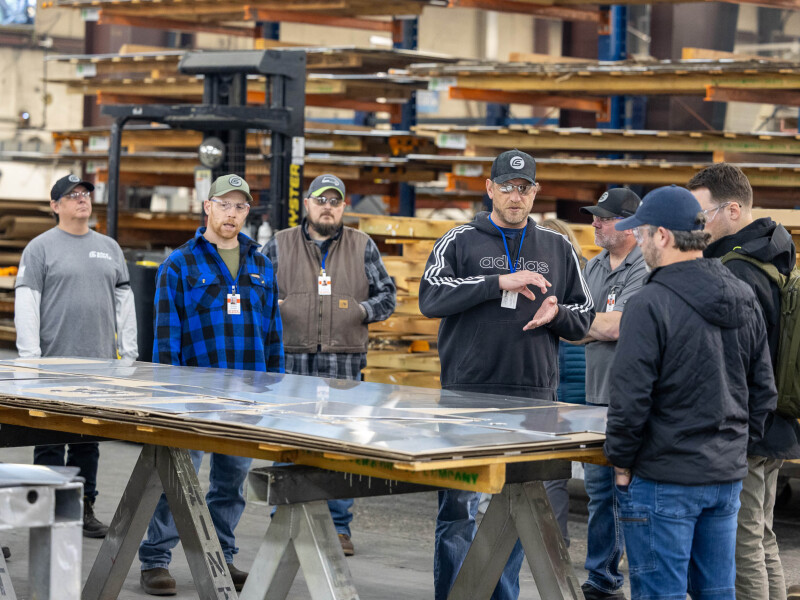
The structure requires constant communication — weekly meetings, daily coordination via email and messaging, and a standing rule that any of the four leaders will make themselves available when needed.
“We all are very like-minded,” Goley said. “We spend a lot of time talking about our unified goals for the company, and we agree on them.”
SAFE Boats’ priorities for 2026 include implementing a new enterprise resource planning system to improve efficiency across operations. The company is also expanding its in-house training programs, particularly for aluminum welding — a skillset in short supply.
“We’re pretty picky on skills and welders specifically,” Goley said. “What we’re also looking at is more attitude instead of necessarily aptitude. If you’ve got the right attitude, we can train you to be a welder.”
The company has created a professional development program that covers both technical skills and leadership training. Bradley said SAFE Boats has capacity to add up to 36 new team members.
Workforce remains a persistent challenge. “We’ve got jobs. We just need that workforce,” Goley said, adding that investments in robotic welding and automation don’t make economic sense for a builder producing custom vessels in relatively small quantities.
Another challenge: inconsistent demand signals from the federal government. “If they want industry to invest, we need to have the confidence that the business is going to be there,” Goley said, pointing to course corrections and program changes that make long-term capital investments difficult to justify.
Still, Goley said he’s encouraged by efforts, including the Navy’s Maritime Industrial Base program and the Coast Guard’s Tiger Team initiatives. “I think it’s still going to take maybe another year or so to actually see something tangible,” he said.
30 YEARS AND COUNTING
Reaching the 30-year mark is a significant milestone in any sector, let alone in boatbuilding, where companies tend to fall off due to founder retirement or succession challenges.
For SAFE Boats, the Employee Stock Ownership Plan (ESOP) structure provides continuity. An ESOP is a tax-advantaged retirement plan that allows employees to become company owners without purchasing shares directly.
Peterson saw employee ownership as a way to preserve what they built while rewarding the team that made it possible. “Our founder and some of our senior board members saw that over time, the company’s done so well for them personally and professionally, and they really wanted to give back to the team,” Goley said. “An ESOP was the perfect way to do it.”
The structure also changes how employees think about their work. “Instead of just being an employee or a number, they’re an employee/owner,” Goley said. ‘They own a share of SAFE Boats, and it changes the way you think about coming to work every day.”
Tom Norton, a member of SAFE Boats’ board of directors and former director of CBP Air and Marine Operations, said he walks the production floor regularly, asking team members two questions: What drew you to SAFE Boats, and do you feel content or is there something you’d like to see changed?
“I probably talked to 40 people this morning, and with the exception of one person, every single one of them, the first thing out of their mouth was ‘people,’” Norton said. “That’s pretty remarkable.”
Norton described Peterson’s character in straightforward terms: “You’re sitting with a guy that has more character and honor and integrity than anyone I know in the boat business.”
For Peterson, people, not financials, must always be at the heart of the business. “As soon as you lose focus on that, things will start to erode,” he said. “That’s what this organization is about. It’s about the community. It’s about everybody out there, and now they’re all shareholders.”
Looking ahead, the company’s formula for success remains unchanged. “It’s very simple for us,” Goley said. “Success is taking care of our customers and taking care of our people. At the end of the day, if we focus on those two things, everything else will fall in place. That’s been our success for the last 30 years, and we look for it for the next 30 years.”
