



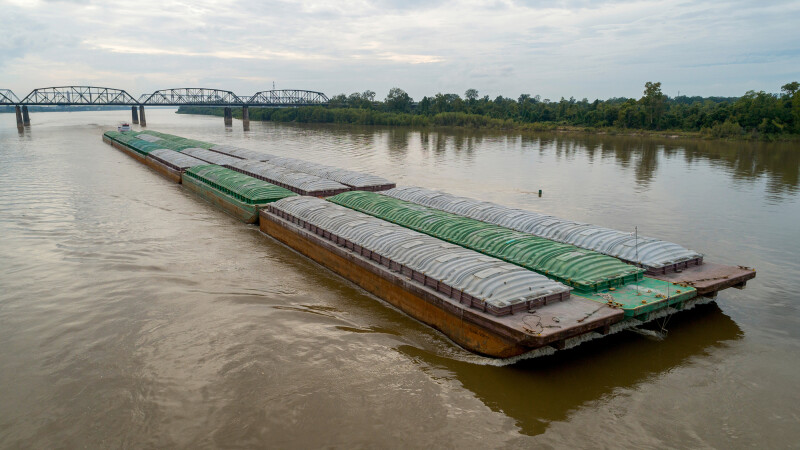
One of the unique features of maritime law is the concept of salvage. The basic idea is that when you drop what you’re doing to save someone else’s vessel from peril, you may deserve some form of compensation. This is usually a percentage of the vessel saved. A recent federal 5th Circuit case from the Eastern District of Louisiana involving the rescue of 23 breakaway barges illustrates how this works.
The story begins on Aug. 29, 2021, in Louisiana with the approach of Hurricane Ida. Two captains with Lower River Services LLC and several fellow mariners were manning two company tugs on the Mississippi River to safeguard their fleet. Upriver, ARTCO operated a fleet of around 500 barges.
Later that evening, some of ARTCO’s barges broke loose, hitting both tugs. One of the tugs used its wheel wash to “catch” breakaway barges and beach them. The salvors (rescuers) saved 23 barges and filed a salvage claim. The district court awarded them $3,761,500, which was 20% of the fair market value of 23 barges. ARTCO appealed, arguing that the salvors lacked the “specific intent” to save the barges.
On appeal, the higher court ruled in favor of the salvors and upheld the award. The higher court found that the salvors met the three elements of a successful salvage: (1) a marine peril, (2) a voluntary act (where there is no preexisting duty to act), and (3) a successful outcome. ARTCO argued that the award was excessive. The court referenced an 1869 case (the Blackwall, 77 U.S. 1), which outlined factors considered in salvage awards. These are: (1) labor expended by salvors, (2) promptitude, skill, and energy in rendering service, (3) value of property employed by salvors, (4) risk incurred by salvors, (5) value of property saved, and (6) degree of danger involved.
The court also referenced the 1989 Salvage Convention, which adds the factor of preventing environmental damage. Salvage law has evolved through the years, but the basic idea has remained steady. If you change course to assist a stricken vessel, you risk delay, cargo spoilage, and harm to your crew and vessel. Therefore, you deserve something for your troubles.
