



A bipartisan group of lawmakers has introduced legislation to significantly increase federal funding for ferry systems nationwide.
The FERRIES Act (Federal Enhancement and Revitalization of Reliable Infrastructure for Essential Seaways Act), introduced last week by Reps. Nicole Malliotakis, R-N.Y.; Emily Randall, D-Wash.; Nick Begich, R-Alaska; and John Garamendi, D-Calif., would increase funding for ferry programs through the Highway Trust Fund, advanced appropriations, and authorized appropriations.
The bill would increase funding for the Federal Transit Administration's Passenger Ferry Grant Program to up to $550 million annually. Over the next five years, the bill would authorize $300 million, including $100 million directly from the Highway Trust Fund, and would provide $200 million in advanced appropriations each year.
The legislation would boost funding for the Federal Highway Administration's Ferry Boat Program through the Highway Trust Fund to $160 million annually with a $2 million annual increase for each subsequent year, in addition to $100 million per year through advanced appropriations.
The bill would expand funding for the FTA Rural Ferry Grant Program to up to $550 million per year, with $300 million authorized (including $100 million directly from the Highway Trust Fund) and $250 million in advanced appropriations.
The legislation would establish the Ferry Fleet Modernization and Shipyard Job Creation Grant Program to increase funding for operators who want to electrify and modernize their fleets by switching to alternative fuels. The program would provide $100 million in advanced appropriations and $140 million in authorized funding annually.
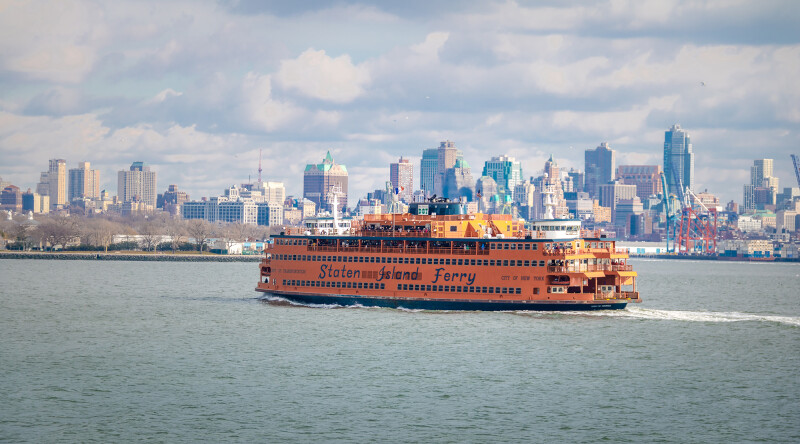
"As the Representative of a district that depends on maritime transportation, including the Staten Island Ferry and NYC Ferry for daily commuting and travel, I know how essential these ferries are to our community," said Malliotakis. "This legislation increases federal investment in ferry systems nationwide to ensure long-term, reliable funding for infrastructure upgrades and system improvements."
"As a ferry commuter myself, I know that our ferry system is in desperate need of improvements," said Randall. "When boats are taken off service routes, this creates significant challenges for the 20 million+ annual ferry commuters in Washington state. We need to significantly boost investments in ferry services across the country, and the bipartisan FERRIES Act is an important step in that direction."
"In Alaska, many communities are not accessible by a road system and depend on a marine highway," said Begich. "That reality makes ferries a critical part of our transportation system and essential infrastructure. The bipartisan FERRIES Act delivers long-term, predictable funding so operators can modernize fleets and ensure safe, dependable service for the communities that rely on our marine highway transportation routes."
"With increasing congestion on our bridges and roads, it's becoming clear that people want an affordable, easy, and stress-free way to get into the city," said Garamendi, noting that the FERRIES Act "would provide more consistent and sustainable funding for ferry operators working to connect our communities."
The bill would clarify that ferry operators serving both urban and rural communities are eligible for both the FTA Passenger Ferry Grant program and the FTA Ferry Service for Rural Communities program. It would create a set-aside for 20% of Rural Ferry Grant Program funds to be available to routes serving any two rural areas, regardless of the distance between them.
The Public Ferry Coalition praised the legislation. "Ferries are more than just a mode of transit — they are lifelines that connect communities, reduce highway congestion, support local economies, and strengthen regional resilience," the organization said. "At a time when federal investment is critical to modernizing infrastructure, expanding service, and building more sustainable vessels, we thank the Public Ferry Caucus and Representatives Randall, Begich, Garamendi, and Malliotakis for prioritizing ferry funding in the Surface Transportation Reauthorization process."
The legislation was introduced ahead of the Bipartisan Infrastructure Law's expiration on Sept. 30, 2026. Congress will need to reauthorize and extend the programs included in the law.
