



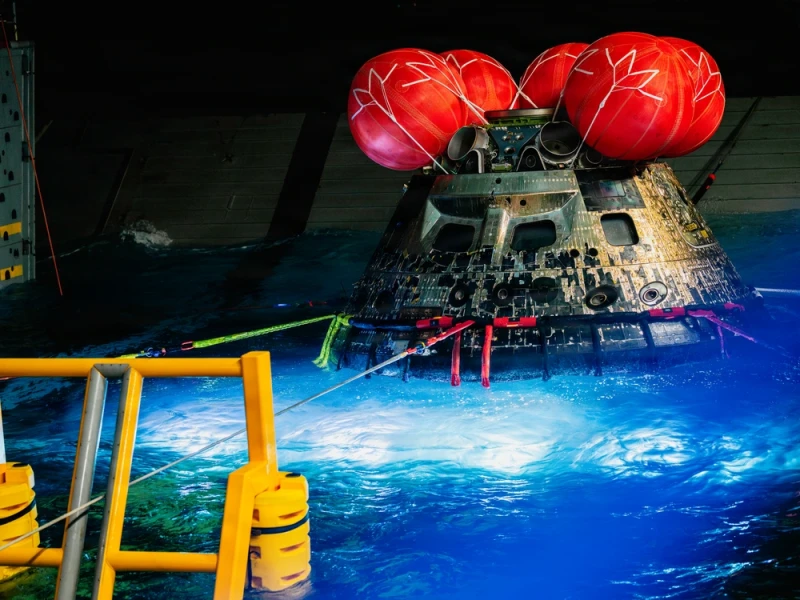
Medical teams and Navy divers worked in close coordination April 10 for the recovery of NASA’s Artemis II crew and securing their Orion space capsule.
Immediately following the 5:07 p.m. splashdown, dive medical personnel from Explosive Ordnance Disposal Group (EODGRU) 1 made initial contact with the “Integrity” capsule and crew to conduct medical assessments.
Once the astronauts were cleared for transport, they were hoisted into MH-60S Sea Hawk helicopters and flown to the 684’x104’ amphibious transport dock USS John P. Murtha for further evaluation. Simultaneously, Navy divers, experts in mobile diving, salvage, towing, and open-water small boat operations, rigged the Orion space capsule for recovery from the ocean to the ship’s well deck.
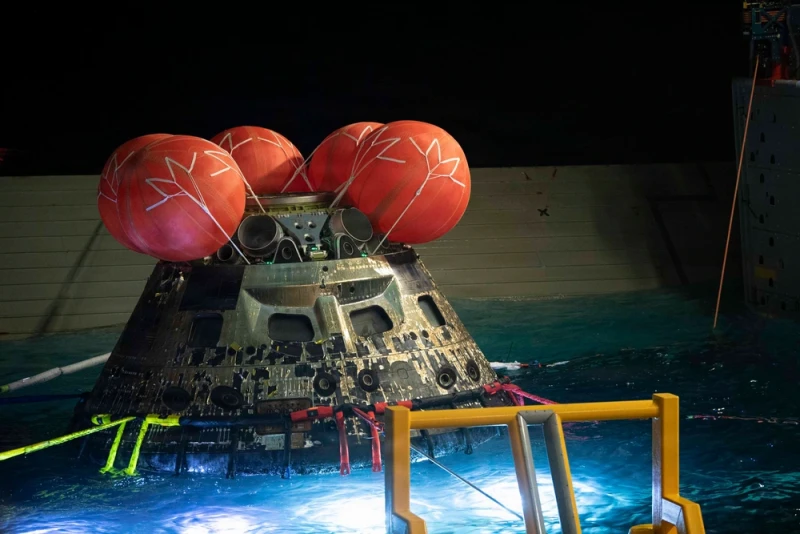
Rear Adm. Brent DeVore, commander, Expeditionary Strike Group 3, said the recovery reflected the team’s extensive preparation and operational readiness.
“This recovery was a direct result of hours of training and the exceptional dedication of this team of teams,” DeVore said. “Our sailors are trained to be ready for any mission, and they executed this historic task with the precision and professionalism that defines our naval service.”
The Murtha, assigned to Expeditionary Strike Group 3, served as the primary recovery ship for the astronauts and spacecraft. “I could not be more proud of the skill and professionalism the crew demonstrated,” said Capt. Erik Kenny, commanding officer of John P. Murtha. “Our team executed this complex recovery with pride, showcasing the unique capabilities of our naval forces. Being able to play a vital role in this operation is a testament to the strength of our team.”
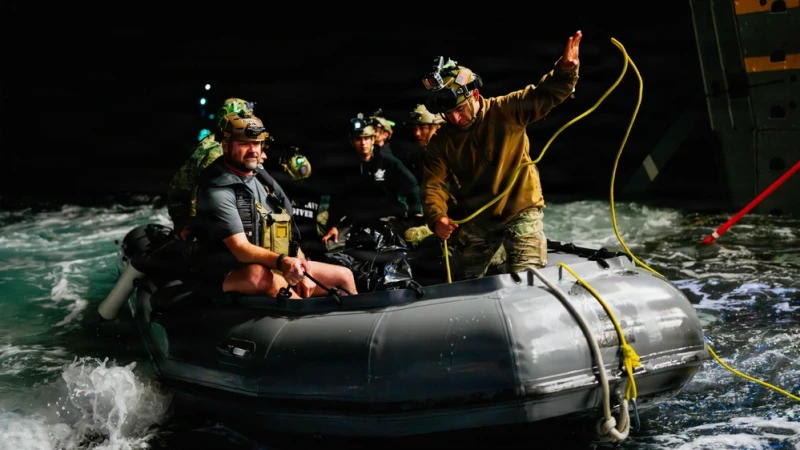
NASA launched Artemis II from Kennedy Space Center, Florida, April 1. The mission served as a critical flight test for future crewed missions to the lunar surface and is part of NASA’s broader effort to prepare for eventual human missions to Mars.
For the Navy, the mission also represented a homecoming for its own. The crew included mission commander retired U.S. Navy Capt. Reid Wiseman and pilot U.S. Navy Capt. Victor Glover, both former Navy test pilots and Naval Postgraduate School alumni, alongside NASA astronaut Christina Koch and Canadian Space Agency astronaut Jeremy Hansen.
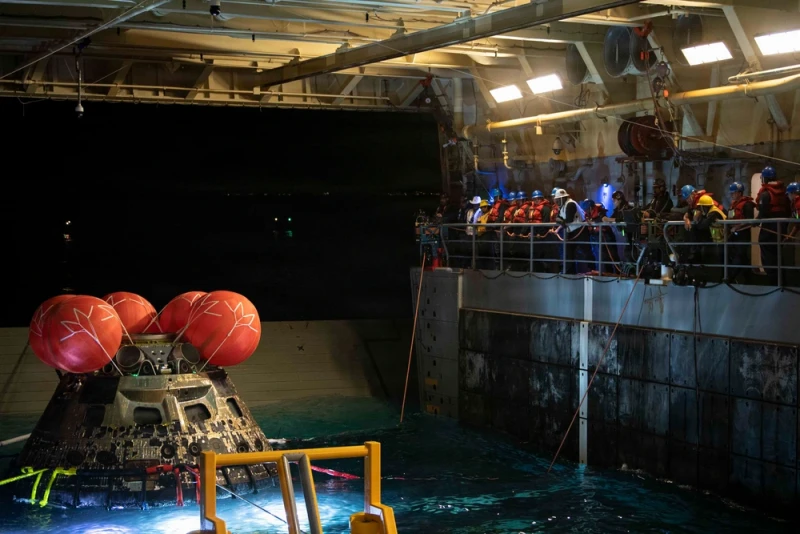
Working in support of U.S. Space Command, additional Navy units included Fleet Surgical Team 1; Fleet Surgical Team 9; En-Route Care System teams from Naval Medicine Readiness and Training Command (NMRTC) San Diego, Twentynine Palms, and Guam; and an Expeditionary Resuscitative Surgical System team from NMRTC Camp Pendleton, which provided critical expeditionary medicine expertise and advanced capabilities to respond, treat, and save lives.
The Naval Health Research Center also provided 24-hour access to specialized facilities and highly trained personnel for the analysis of biological material and technical support.
Supporting joint partners included U.S. Air Force First Air Force, Detachment 3; and U.S. Space Force’s 45th Weather Squadron.
