


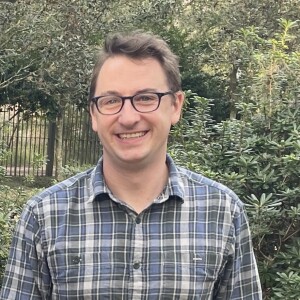
For most of his career, Jamie Sangster served as a marine systems officer in the Canadian navy. The job involves solving problems and keeping the nation’s technically challenging but critically important warships operating smoothly at sea.
The skills he acquired during 20 years in the navy have served him well with Leeway Marine, which is based in Halifax, Nova Scotia. Sangster founded the marine surveying and logistics company nearly a decade ago with other retired navy officers. Each brings a unique set of skills and expertise that includes naval architecture, engineering, navigation, and robotics.
In a few short years, the company has earned a reputation for its willingness to embrace new tools and methods for getting things done.
“There is a broad spectrum of this sector that is ripe for growth and innovation and technology. You don’t have to be a rocket scientist to pick that up,” Sangster, Leeway’s CEO, said in an interview.
“It is not super complicated. But it can be difficult for people who have been in the industry for 20 or 30 years to appreciate and latch onto the idea that you are going to make a significant change to the way you do business, or the technology you use in business,” he continued.
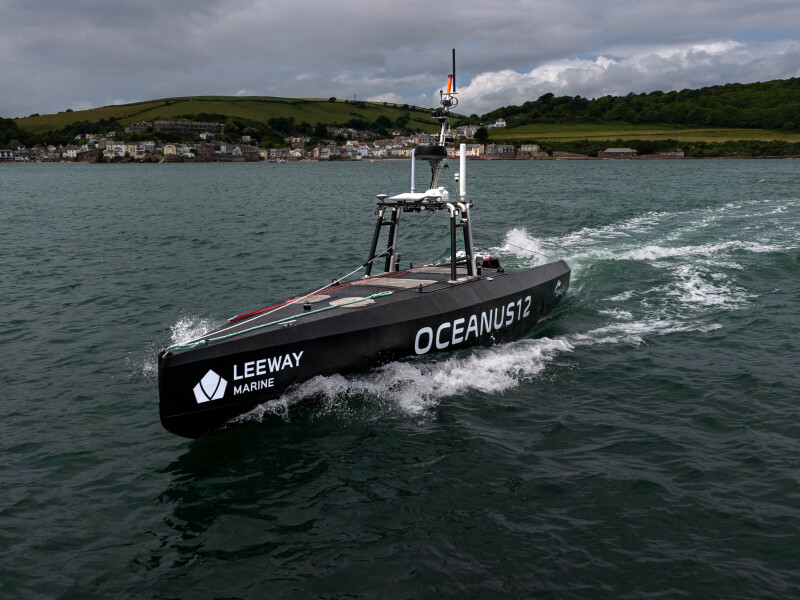
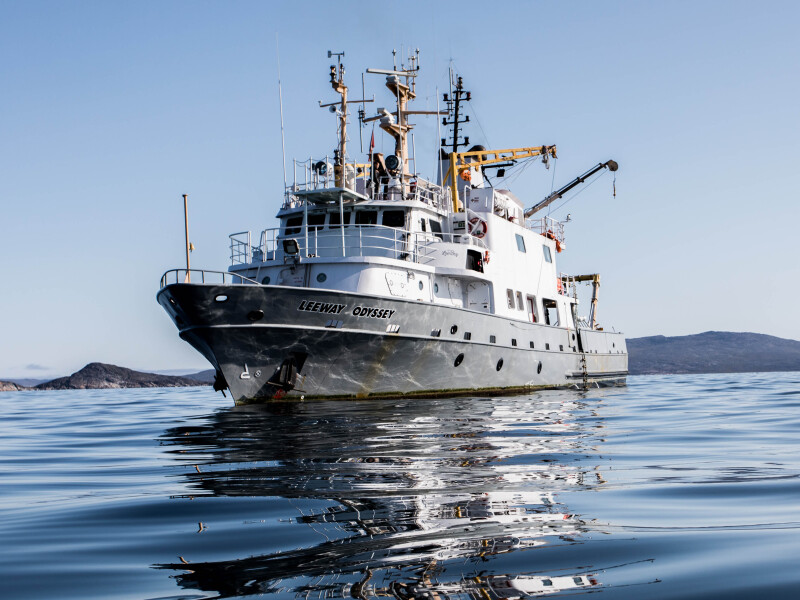
Marine surveying is a primary focus for Leeway Marine, which owns five vessels and manages two more. Its survey fleet consists of five ships ranging from the 121' Leeway Odyssey to its newest acquisition, the 38' autonomous surface vessel (ASV) Viper, one of the first uncrewed survey vessels operating in Canada.
Leeway has also branched into vessel management. In 2024, it won a contract to manage the 211' exploration vessel Nautilus for the Ocean Exploration Trust, which was founded by the legendary oceanographer Robert Ballard.
Current and past projects have taken the company’s 60 or so mariners to the Canadian Arctic, the South Pacific, and South America. Its crews also have worked south of the Canadian border in U.S. waters. In 2020 and 2021, Leeway provided survey support for the Vineyard Wind project. Subsequent jobs followed at potential offshore wind sites off New Jersey and Maryland.
Meanwhile, Sangster and his partners have maintained close ties to the Canadian navy. Those connections have given the firm a chance to explore technologies still in their infancy. The company is also connected with a growing ocean technology startup scene in Halifax, giving it a front-row seat to new tools and approaches before they hit the broader market.
“Innovation is such a ubiquitous term these days,” Sangster said. “There are so many new products out there and potentially new ways of doing business. But through our work with the navy, it gives us exposure to new and interesting ways to attack a similar problem in ways we hope introduces efficiencies to the client.”
As one might expect for a nation surrounded on three sides by water, Canada has a vast commercial maritime industry. Foreign and domestic shipping, natural resources, and fisheries are a big part of that industry. Canadian mariners frequently operate in harsh, unforgiving conditions in the Arctic or Atlantic Maritime provinces.
And much like in the U.S., Canada’s maritime space is crowded, competitive, and often traditional in its methods. It can be challenging for newcomers to break in. Leeway’s team found success by leaning on their navy backgrounds and embracing new approaches, according to Greg Veinott, Leeway’s chief commercial officer.
He likened the culture to a “startup mentality” that has allowed the company to consider alternative approaches and lean into emerging opportunities.
“We are not a bunch of people who have been in this industry for many years with set ways of doing things,” he said. “That has allowed us to come at problems and solutions from a bit of a different angle, and that has allowed us to be a little more nimble than some of our competitors.”
One clear example is the way Leeway Marine has built its fleet, which has the versatility of a Swiss Army knife. Leeway Odyssey is a former Canadian coast guard ship outfitted for ocean research and survey voyages lasting up to 21 days. Leeway Striker, a 180' near-to-midshore research vessel, cruises at 30 knots and has a top speed of 55 knots, with a 500-nautical-mile range.
The ultra-stable research vessel Novus is designed and equipped to gather accurate survey data even in challenging weather and sea states. It is one of the few small-waterplane-area-twin-hull (SWATH) vessels operating in North America and is equipped with a suite of Furuno and Kongsberg instruments.
ASV Viper is Leeway’s second smallest ship and possibly its most versatile. The uncrewed vessel was built to ZeroUSV’s Oceanus 12 platform and equipped with MarineAI’s GuardianAI infrastructure, allowing for fully autonomous voyaging. Leeway expects to use it for hydrographic and geophysical surveys, offshore wind and cable surveys, and Arctic ice observations, among other tasks.
The company received its Transport Canada certification last fall to conduct fully autonomous operations in Canadian waters with Viper. Leeway has already secured multiple contracts to put the vessel to work.
“ASV Viper is the pinnacle of where we have been headed for the last few years,” Veinott said. “We have watched the autonomous space for some time and looked at a lot of different products in different sizes and capabilities that have come across our desks.
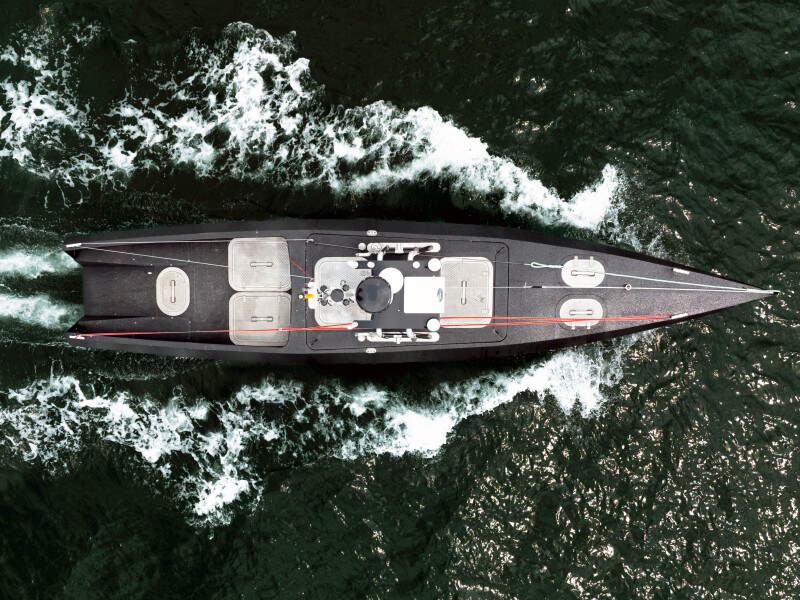
“The Oceanus 12 is really something that ticked all the boxes for us in terms of reliability and endurance, and it does exactly what our clients need,” he went on.
Sangster sees Viper as a complement to the company’s crewed survey assets. Each has its strengths, and having both types of ships gives the company the unique ability to complete challenging projects with greater efficiency.
“The market share for [uncrewed surface vessels] will steadily increase in certain sectors. We wanted to be in the front end of it,” he said.
Matthew Ratsey, the managing director of ZeroUSV, first met Sangster more than two years ago at an industry trade show. ZeroUSV, based in Plymouth, England, is a sister company to MarineAI and its parent company, Msubs, which supported the Mayflower Autonomous Vessel project earlier this decade.
Ratsey said he and Sangster hit it off over discussions around autonomous vessel technology.
“We’re both from small companies where the whole philosophy is, if someone asks us a question, the answer is yes, and then we figure out how in the hell we are going to do it,” Ratsey said.
“In this day and age, that is relatively unusual. A lot of companies are so wrapped up in process that it takes ages to get things done,” he continued. “That is why we need these small companies that are innovative and on the bleeding edge.”
IIC Technologies is another one of Leeway Marine’s longtime industry partners. Derrick Peyton is CEO of the India-based company, which is focused on collecting, processing, and interpreting global geographic data. Its first project with Leeway happened in the late 2010s, not long before the Covid-19 pandemic.
“We presented them with a challenge to map the Canadian Arctic using autonomous technology. It’s one thing to even accept the challenge to work with an autonomous vessel. It’s another kettle of fish to take on the challenge in the Arctic,” Peyton said. “Leeway had no issues with the challenge.”
“Those guys don’t stop,” Peyton added. “They think out of the box. Their team is innovative, productive, and effective.”
Veinott, who focuses on Leeway’s business development and partnerships, sees many more opportunities on the horizon. These include continued work in the Arctic, where Leeway has spent time building a network of partners to support sustained operations in harsh, remote locations. Offshore wind development also is showing promise in Canada, as is vessel management.
All options are on the table to grow out the company’s existing business lines. That includes buying or chartering additional ships if necessary.
“We are very focused on building the business to the opportunity,” Veinott said. “We are very good at listening to what our clients’ needs are and fitting to that need. We are not in the business of buying a ship and hoping work comes to us.”
