



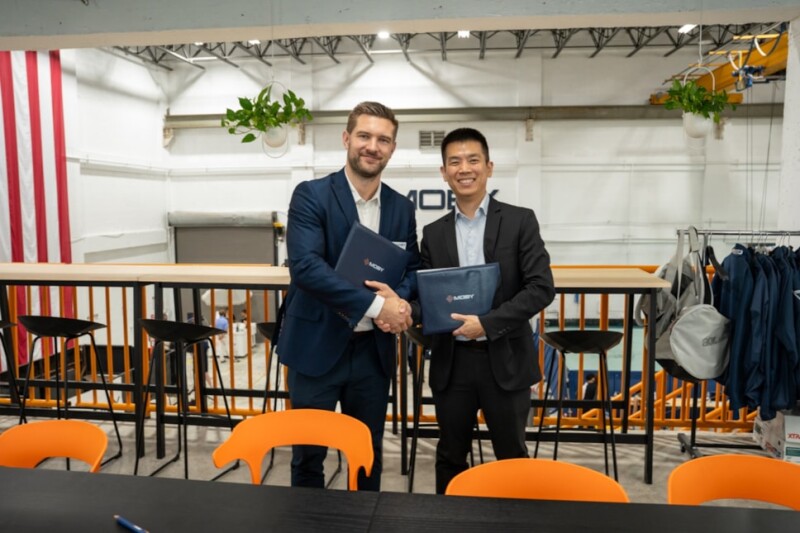
The American Bureau of Shipping (ABS) and MOBY Robotics Inc., Miami, Fla., have signed a memorandum of understanding aimed at advancing technologies for subsea mining and offshore mineral transport, the organizations announced.
Under the agreement, ABS will support the development, certification, and eventual classification of autonomous robotic systems and related technologies being developed by MOBY for subsea mineral recovery operations.
The collaboration will focus on several components of the emerging subsea mining sector, including subsea and surface robotics, vertical lifting systems, ocean-surface production, storage and offloading platforms for recovered minerals, and vessels designed to transport minerals from offshore sites.
According to the companies, MOBY will submit technical documentation and design packages to ABS for review as part of efforts to evaluate system maturity and pursue approvals in principle and other classification-related assessments where appropriate.
Michael Kei, ABS vice president of technology, said autonomous systems are expected to play an increasing role in future subsea mining operations and that the industry will require established pathways to assess new technologies.
“Robotics have the potential to play an important role in the future of subsea mining,” Kei said. “The industry will need clear pathways to assess novel systems with safety and technical rigor at the forefront. By working with MOBY, ABS can help support the development of these technologies through class, certification and technical review.”
The agreement also calls for the two organizations to work together in identifying standards and guidelines for autonomous subsea and surface robotic systems intended for mineral recovery operations.
Alexander Petersen, co-founder and CEO of MOBY Robotics, said the company views classification and engineering oversight as an important component as it develops autonomous platforms for offshore applications.
“As we scale our autonomous platforms for deployment across critical minerals, defense, and offshore infrastructure, meeting the highest engineering and operational standards is non-negotiable,” Petersen said. “This partnership is an important step in that direction.”
ABS said it has been active in developing guidance for the subsea mining sector and previously published what it describes as the industry's first classification guide for subsea mining systems. The organization currently provides classification, certification, and technical review services for emerging subsea mining technologies.
While commercial-scale deep-sea mining projects remain limited, interest in offshore mineral extraction has grown in recent years amid increasing demand for critical minerals used in batteries, renewable energy systems, and advanced technologies.
