



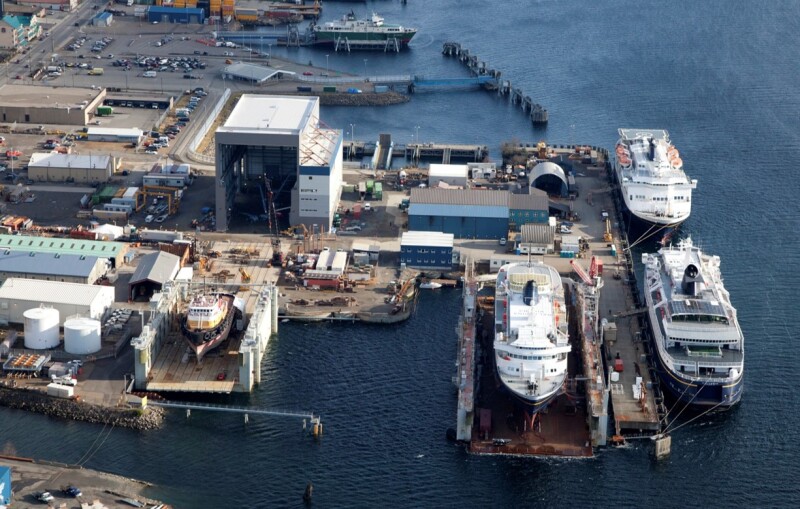
The City and Borough of Wrangell, Alaska, and JAG Marine Group have expanded a public-private partnership aimed at developing a new large-vessel shipyard at Wrangell’s deep-water port.
On Jan. 28, the borough and JAG Marine Group executed a memorandum of understanding outlining a framework for collaboration on the proposed facility. On Feb. 10, the Wrangell Assembly approved moving forward with jointly funding 30% design, detailed cost estimates and a feasibility analysis for the project.
According to the city, completing the 30% design will refine site planning, engineering concepts, infrastructure requirements and cost projections, positioning the project for potential state and federal funding.
The proposed shipyard is intended to expand Alaska’s capacity for shipbuilding, fabrication, repair and maintenance of large commercial and government vessels. Project backers say the facility would help support the operational needs of the U.S. Coast Guard as its presence in the Arctic and Pacific regions grows.
Wrangell was recently designated a “Coast Guard City” by borough resolution, a move local officials say underscores the community’s role as a maritime hub between Seattle and Anchorage.
“This is about Alaska stepping into its role as a maritime powerhouse,” Mason Villarma, borough manager for the City and Borough of Wrangell, said in a statement. “By advancing 30% design and feasibility, we are demonstrating to our state and federal partners that this project is real, actionable, and aligned with both economic development and national security priorities. Wrangell is ready.”
JAG Marine Group operates the Ketchikan Shipyard and said a Wrangell facility would complement existing shipyard capacity in Southeast Alaska.
“Alaska has an opportunity to capture a greater share of fabrication and maintenance work that too often leaves the state,” Doug Huff, president and co-owner of JAG Marine Group, said in a statement. “A Wrangell shipyard strengthens the entire maritime ecosystem. Together with Ketchikan, we can expand capacity, support federal assets operating in the Arctic, and create high-quality jobs for Alaska’s workforce.”
Project proponents say the new yard would increase in-state capacity for large-vessel construction and repair, support federal and state Arctic operations, expand fabrication capabilities and create maritime and skilled trade jobs in Southeast Alaska.
City officials said community engagement and coordination with state and federal stakeholders will continue as the design and feasibility phase advances.
