


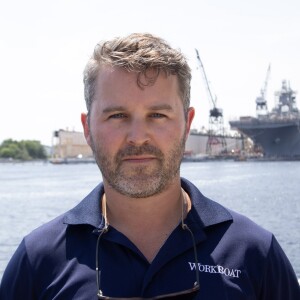
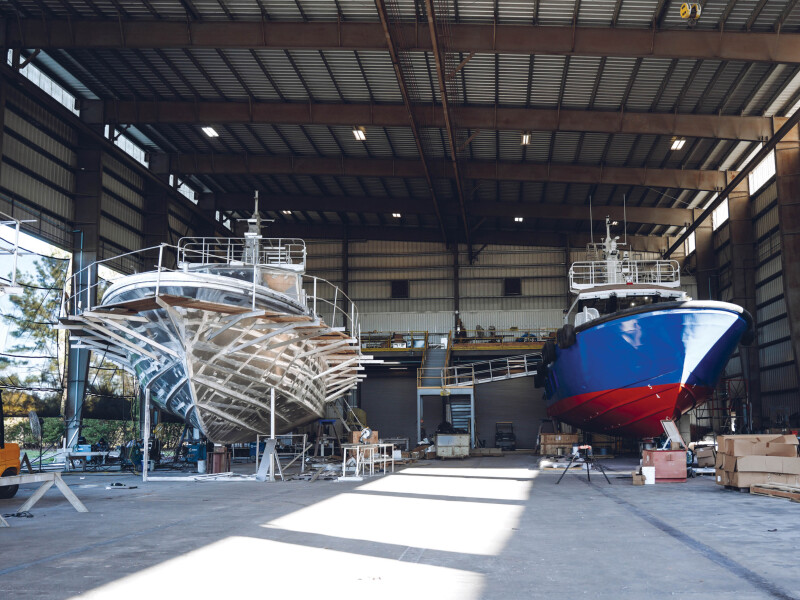
Breaux’s Bay Craft President Roy Breaux Jr. discusses the vision, craftsmanship, and family-driven values behind the Loreauville, La., company founded by his father in the 1940s. He describes what sets a Breaux-built vessel apart, how the company maintains its reputation, and where he sees opportunities in a shifting market. He also shares the challenges of today’s workforce landscape and explains why family involvement remains central to the company’s success.
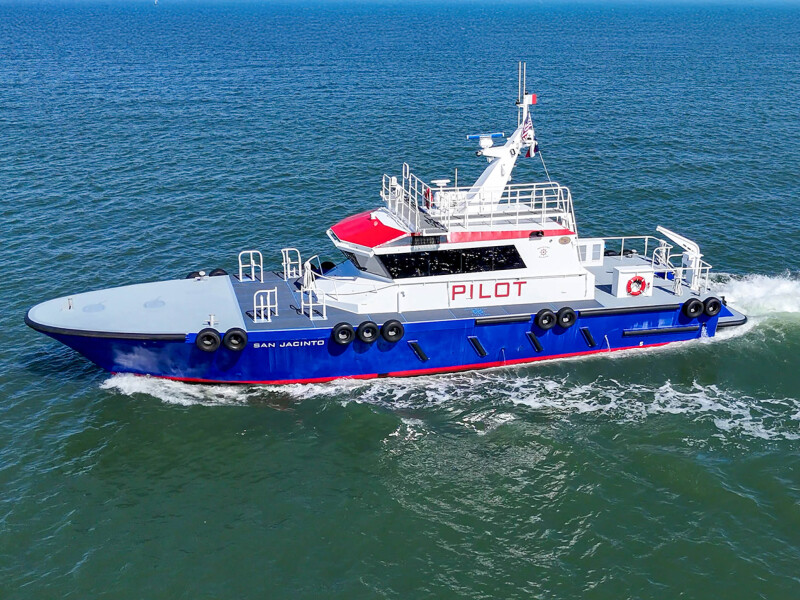
What makes the San Jacinto and Juan Seguin builds stand out as Boat of the Year?
I think it had a lot to do with the fact that it’s a series. We’ve built a lot of crewboats in the past, but when it comes to pilot boats, you usually build one. They’re always custom, and every customer makes a little change. In this case, they came to us and said they wanted to build a pair of boats that would work in their operation and that they could rotate back and forth as they build their fleet up. That was different for us, building two identical pilot boats designed specifically to be interchangeable. Without the vision of the Houston Pilots and the boat committee, none of this would have been possible.
How do you define the core values of Breaux’s Bay Craft?
When it comes to the integrity of the vessel, the strength and structural design, that’s my design. We work in conjunction with naval architects, but it’s my father’s reputation and design that we base everything off of. Service, dependability, and reliability are nonnegotiable. We can only do so much when we’re buying engines, gears, and jets. But the hull itself, we stand behind it.
I never really put a warranty timeframe on our boats. I’ve always looked at it as, as long as I have air in my lungs, I will help you in any situation possible. Whether you did it or I did it, whatever. We’ll take care of it and figure the rest out later. Serviceability matters. We’re there 24 hours a day, 365 days a year.
Will you please describe your order book? How do you see shifts in market demand, and where do you see opportunities?
Currently, newbuilds are about 80% of our work. On average, I’ll pick up one or two pilot boats a year and refurbish them. I refurbished two Sabine pilot boats completely — one was a Kvichak, and one was our boat. One of them was built in 1984, and we completely gutted it, rebuilt it, and repowered it.
Right now, all our work is pilot boats. Over the last year, we turned over three new vessels and have three more under construction.
I think moving forward, it’s going to be about a 50-50 deal. I expect more pilot boats. I also want to concentrate more on passenger vessels — Coast Guard, ABS, private — it doesn’t matter. We’re qualified for all of it.
I think the market is really in custom-built vessels — passenger boats, pilot boats, and individual specialty vessels. I don’t think the oilfield is going to come back as fast as people expect. There are still quite a few vessels that could be put back to work, but regulatory issues with the Coast Guard could stop some of that. Right now, our focus is on custom work. That’s where the opportunity is.
What are the biggest challenges facing your business today?
Our biggest hurdle right now is the workforce. We try to draw from local schools and get people involved early. We lost a lot of good, quality people during Covid and when the oilfield crashed. People moved on, and it’s been hard to get them back.
We offer on-the-job training. You can come here with little to no experience. All we ask is that you have a good work ethic. We’ll teach you aluminum welding, fitting — a trade. The downside is that once they learn, it’s on their resume that they worked at Breaux’s Bay Craft and learned aluminum work [making those workers attractive to other boatbuilders].
How do you define success at Breaux’s Bay Craft?
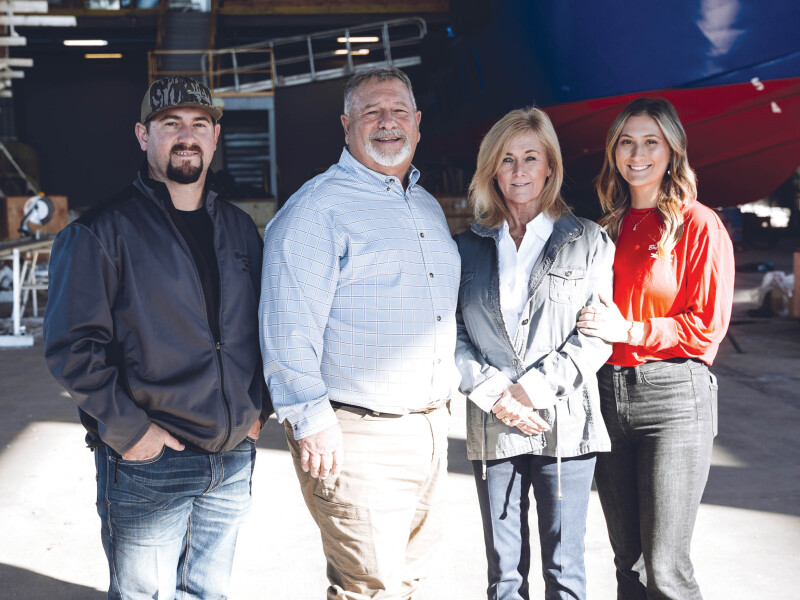
My biggest goal is family comes first. Getting family involved in the business is hard today with regulations, changes, the pace of the industry, but it’s something we love to do. That’s why it works. We’re family-owned.
My daughter works here, and my son works here. Nobody was forced into it, just like I wasn’t. My dad said, “You do whatever you want to do in life, but I can tell you this: if you enjoy doing it, you will have no problem going to work.” I love nothing more than building boats.
That matters to customers. I’m 64 years old, and I have no problem getting in an engine room, doing an engine alignment, making repairs, hands-on work. My whole family thinks the same way. That means a lot to boat operators today, knowing they can call somebody and get real help.
There’s a downside. When a customer isn’t happy, you take it personally. You have to learn it’s not personal; it’s about making the boat better. That actually makes you work harder. I think we’re losing that in this industry. Too many people just build it, sell it, and once it’s out the door, they’re done.
That’s not how we operate. I won’t get into government or military contracts. I’m not interested in cookie-cutter production. Our name has been here since 1946. You don’t stay in business that long without treating customers properly.
Final thoughts?
There’s something my dad always said: “When you think you have a boat perfected, and you think it’s perfect, you’re wrong.” You can always make improvements on a vessel. If anyone ever tells you they’ve built the perfect boat, they’re mistaken. In the long run, you’ll always find ways to make it better.
The interview has been edited for length and clarity.
