


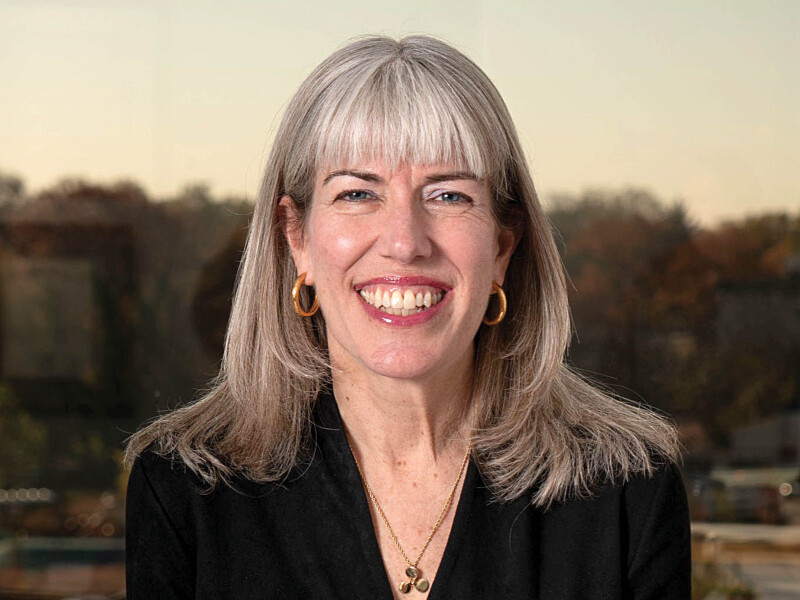
In March, WorkBoat interviewed Jennifer Carpenter, president and CEO of the American Waterways Operators, about the state of the tugboat, towboat, and barge industry, including workforce challenges, regulatory priorities, and collaboration with the Coast Guard. Carpenter also outlined AWO’s advocacy work in Washington and what success would look like for the organization in the year ahead.
What operational challenges are your members facing right now?
There is so much that is uncertain in the world, whether we’re talking geopolitics or weather. And so we’re really trying to focus on what we can be really good at, no matter what else is going on out there.
And I’d highlight three things there. One is Coast Guard service delivery, where the rubber meets the road… This is an area we’re going to be really focused on this year, working with the Coast Guard to make sure that we’re working as well as we can together so that vessel turnaround time for inspections is efficient, so that the credentialing process does not result in mariners losing work or not being able to crew a vessel. Really trying to improve that service delivery.
Similarly, working with the [U.S. Army] Corps of Engineers and the Coast Guard to collaborate as we deal with the whole sequence of things that can happen throughout the year. We’ve had ice, we’re going to have high water, we’re going to have hurricanes, we’re going to have low water. So again, in the spirit of, we can’t control the weather, but we have a lot to say about how well we work together, how we learn lessons from past events.
And then the third thing I’ll mention is safety. That’s a thing we drive. Regardless of the conditions, regardless of the economy, we want to take care of the people. We want to take care of the environment. We want to take care of our assets.
Are there improvements still needed in Subchapter M implementation?
I would say that there are areas for improvement that we see — just service delivery generally.
So, flexibility in inspection scheduling. It’s a dynamic operating environment, so being able to very nimbly shift paperwork from one unit to the next, reschedule, or take advantage of windows that come open to schedule vessel inspections, that’d be thing one.
Thing two: making sure that we are fully realizing the benefits of the towing safety management system [TSMS] option by refining the Coast Guard and TPO [third party organization] division of labor. We are still hearing too many examples — as far into Sub-M implementation as we are — of conflicting approaches to TPOs clearing deficiencies.
There’s an opportunity, I think, for real improvement around Coast Guard oversight of TPOs — which is very important — in a way that is as seamless as possible to the vessel owner.
And then I think Coast Guard inspector training. The Coast Guard is in the midst of an expansion. There are a tremendous number of new folks, younger folks who did not come of age during the pendency of Subchapter M. They quite literally don’t know the history, the background, the point of the TSMS option, and how we got here.
And that’s not on them alone to know that. That is really on the system to make sure that they are being turned loose with the level of background and information that they need.
What regulatory issues are top of mind this year?
Implementation of the Coast Guard’s cybersecurity regulations is an area that we are working very hard to facilitate and streamline compliance for our members.
Candidly, we would have liked to see the Coast Guard make more thoroughgoing changes between the proposed rule stage and the final rule stage to better reflect the fact that one size doesn’t fit all.
The cyber-risk profile of a small operator at an inland fleet is different from a global shipping company with operations in the Middle East and South America and everywhere. We would have liked to see more tailoring there.
We were happy to see the Coast Guard recognize the role of alternative security programs as a compliance mechanism.
And so, we are working really hard with member subject matter experts to develop a cybersecurity annex to AWO’s ASP [alternative security program] with the goal of helping to do some of that tailoring ourselves.
What are your 2026 priorities on Capitol Hill?
Strategically, we want to make sure that we are not only dealing with the challenges and taking advantage of the opportunities that are right in front of our face now, but also that we’re positioning our industry for durable success.
We are working very hard continually to build and strengthen relationships, bipartisan relationships on the Hill.
But similarly, defending, advancing, spreading the gospel of the Jones Act. It is the foundation of our industry. It is the foundation of every job that our members provide to American men and women. It is the foundation of every dollar that they invest in American vessels. We can take nothing for granted with respect to the Jones Act. We need to be constantly telling that story.
How is AWO working with regulators and industry partners?
Partnership is just so key. We’ve got our Coast Guard AWO quality partnership for safety and environmental protection, which has now been going strong for 31 years.
And that continues to be an extremely important vehicle for getting together with the Coast Guard in a non-regulatory way to say, how do we look at what the trends are telling us, get ahead of anything that looks problematic, and jump on it before it causes harm to people or the environment or property?
What would success look like for AWO this year?
If we got to the end of 2026 with bipartisan consensus around the importance of the Jones Act, and if the centrality of the Jones Act was growing and growing. If we had continued to build and strengthen our list of champions and supporters in Congress across all sides of the aisle. If we’d seen tangible improvements in Coast Guard service delivery, and if we had strong collaboration across all the seasons, high water, hurricane, low water. That would be a good year.
This article can be found in the May issue of WorkBoat magazine. This interview has been edited for length and clarity.
