



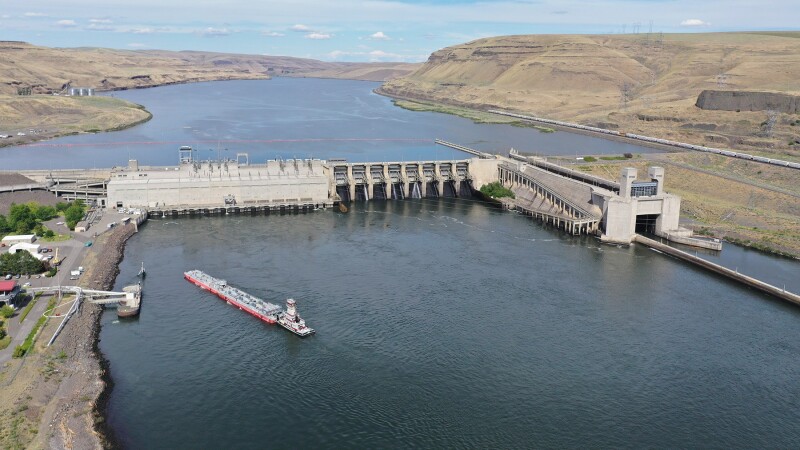
A September 2023 presidential memorandum of understanding (MOU) from the Biden administration called for the elimination of four Snake River dams that the MOU said contributed to the near extinction of 13 salmon and steelhead fish populations that return each year to the Columbia Basin from the Pacific Ocean to spawn.
Supporters of the Biden MOU say the fish are important to local tribal health and sovereignty and to basin ecosystems, and the declines are affecting southern resident orcas off the coasts of British Columbia, Washington, and Oregon. The orcas eat the salmon.
The 2023 agreement was between the federal government and four Lower Columbia River tribes — Confederated Tribes and Bands of the Yakama Nation, Confederated Tribes of the Umatilla Indian Reservation, Confederated Tribes of the Warm Springs Reservation of Oregon, and the Nez Perce Tribe, as well as the states of Oregon and Washington. The tribes want the dams removed.
Opponents argue that the dams support river navigation for maritime barge operations, passenger vessels, irrigation, and emissions-free hydropower for nearby communities and should be maintained.
On June 12 of this year, President Trump issued his own MOU on the subject that reads in part, “…I hereby revoke the Presidential Memorandum of September 27, 2023. Further, within 15 days of the date of this memorandum, the Secretary of Energy, the Secretary of the Interior, the Secretary of Commerce, and the Assistant Secretary of the Army for Civil Works under the direction of the Secretary of the Army (heads of departments) shall take all appropriate steps to withdraw from the Memorandum of Understanding filed on December 14, 2023, in the Columbia River System litigation, National Wildlife Federation v. National Marine Fisheries Service, 3:01-cv-640-SI (D. Or.), Dkt. 2450-1 (MOU).”
The order cancels the Biden administration’s “Restoring Healthy and Abundant Salmon, Steelhead, and Other Native Fish Populations in the Columbia River Basin” presidential memorandum from less than two years ago.
“This move by the Trump administration to throw away five years’ worth of progress is shortsighted and reckless,” Idaho Conservation League salmon and energy strategist Mitch Cutter, said in a post he wrote on the league’s website following the president’s MOU. “The Resilient Columbia Basin Agreement was a landmark achievement between the federal government, states, tribes, and salmon advocates to find solutions for salmon and stay out of the courtroom. Now, it’s gone thanks to the uninformed impulses of a disconnected administration that doesn’t understand the Pacific Northwest and the rivers and fish that make our region special.”
Not surprisingly, the Inland Ports & Navigation Group (IPNG) supports Trump’s executive action to rescind the Biden MOU, saying that it’s a significant step toward ensuring the continued prosperity of the Pacific Northwest.
The Columbia Snake River System is a critical transportation route for the region, as well as for agricultural producers in the upper Midwest, supporting tens of thousands of jobs and contributing billions of dollars to the economy each year. It’s the largest wheat export gateway in the U.S.
“Dams and salmon can coexist,” said IPNG co-chair Patrick Harbison, who is also a member of the Port of Kalama’s (Wash.) Planning Commission. “In fact, salmon runs have actually increased since the construction of the dams due to state-of-the-art bypass systems and fish ladders that were installed at each of the dams on the system.”
Another champion of Trump’s MOU is the Washington Association of Wheat Growers, an organization that has been fighting the proposed removal of the dams for years.
“We appreciate the efforts of the Trump administration to ensure that the dams remain intact while protecting the integrity of the river system and salmon populations. Washington’s wheat industry relies on the continued operation of dams along the Columbia-Snake River System,” said Michelle Hennings, WAWG executive director, in a statement following the president’s announcement. “Over 60% of Washington wheat exports utilize the river system, which is essential for supporting a thriving overseas export market along with providing nearly 4,000 jobs in the region.”
