



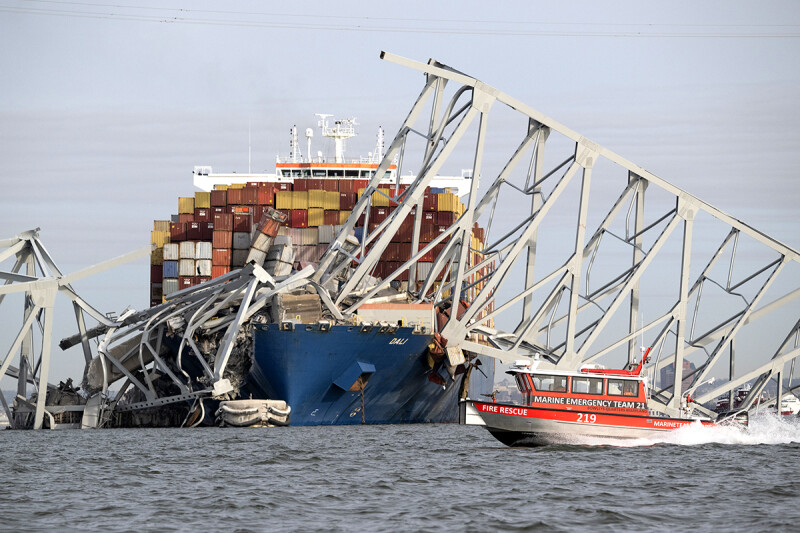
Limitation of liability is a maritime law concept that commonly arises in serious accidents on the water. It came up in the 1912 sinking of RMS Titanic, the 2003 accident involving the Staten Island ferry Andrew J. Barberi, and more recently, the containership Dali hitting the Francis Scott Key Bridge near Baltimore in 2024. Here is a somewhat simplified outline of maritime limitation law. If a vessel owner is sued for damages after a collision, crew injury, passenger injury, or similar event, it may be possible to limit the claimant’s award to the post-accident value of their vessel. To succeed, they must show they didn’t have control over the factors causing the incident.
Limitation law recently arose in a Fifth Circuit case involving a tankerman injured while attempting to throw mooring lines to secure barges during docking in Mt. Airy, La. He filed a lawsuit in state court in December 2021. Three years later, in December 2024, the vessel owner/employer filed a limitation lawsuit in federal court, attempting to limit liability to the $12.5 million value of the tug and two barges.
The tankerman’s attorneys argued that the attempt to limit liability was late under 46 U.S.C. § 30529(a), because maritime law allows a vessel owner six months to file for limitation after receiving written notice of a claim. However, the employer argued that the December 2024 limitation action was timely because it was made within six months of receiving the plaintiff’s demand for $22 million in August 2024. The district court ruled in favor of the plaintiff, holding that the vessel owner had more than six months’ reasonable notice that the claim could exceed the vessel value. On appeal, the decision was upheld in favor of the tankerman.
In 1851, Congress introduced limitation of liability to promote a strong mercantile fleet by protecting shipowners from ruinous claims. If shipowners knew a loss could be capped at the value of their vessel, they would be more likely to engage in trade. Critics of limitation law argue that shipowners today no longer face the uncertainties that square-rigged clipper ships rounding Cape Horn faced in the nineteenth century.
