



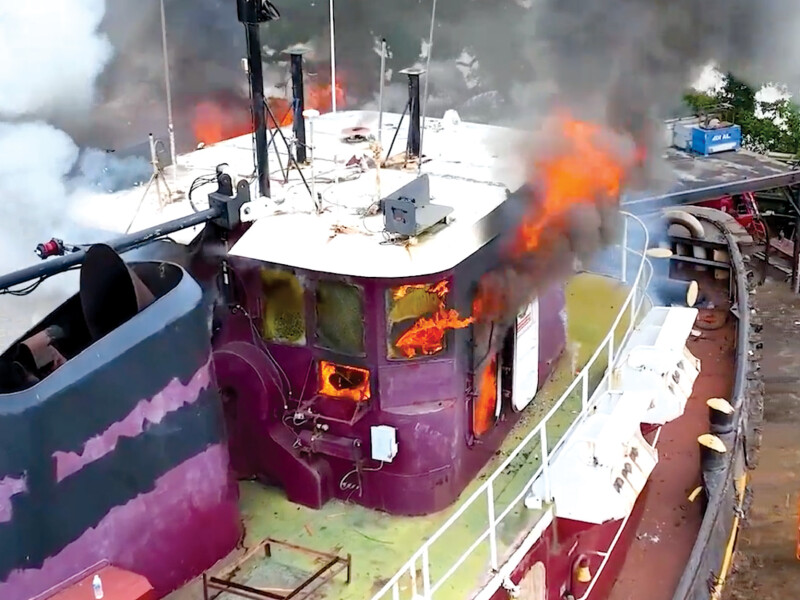
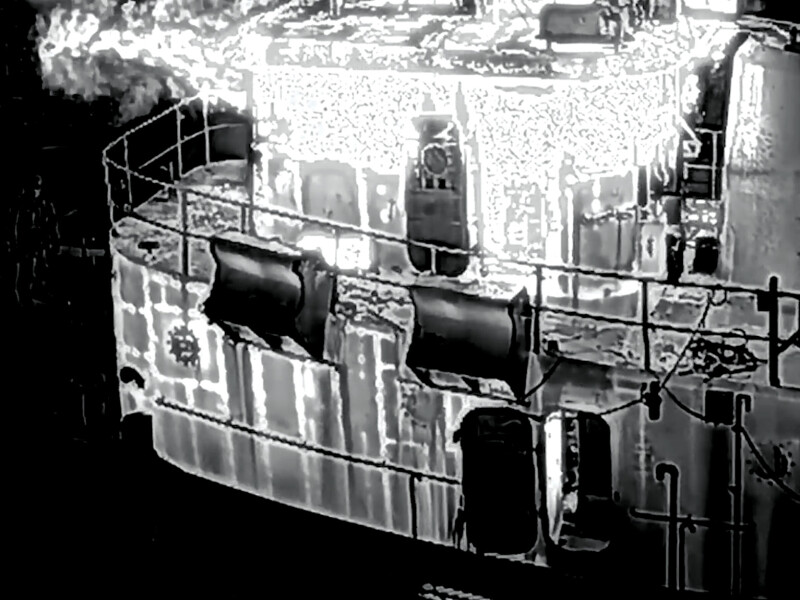
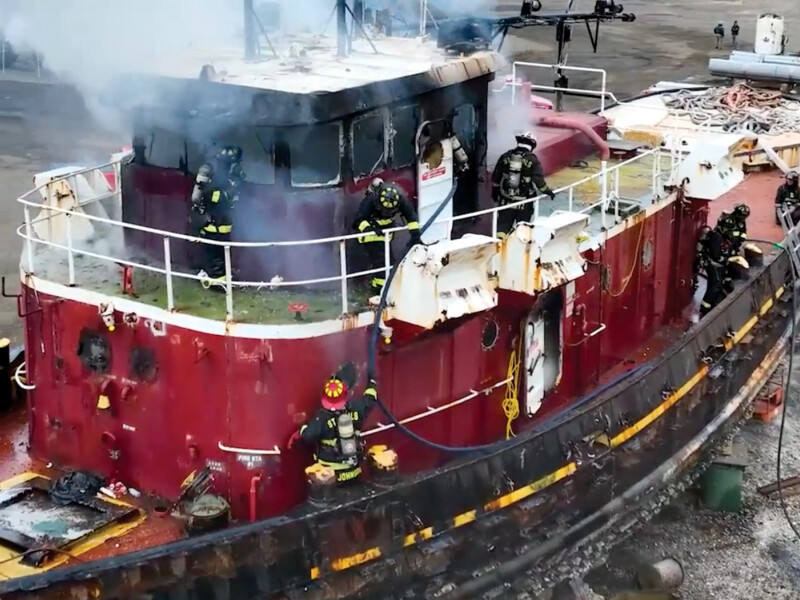
The sight of a tugboat on fire, with thick smoke and bright orange flames billowing from the wheelhouse windows, might have caught a passerby by surprise one day this summer on the Wadmalaw Riverfront in Yonges Island, S.C.
But this fire was no accident. Rather, it was a training exercise for Yonges Island-based Stevens Towing Co. personnel and members of the nearby St. Paul’s Fire District.
Stevens Towing operates a pair of shipyards and a fleet of inland, coastwise, and oceangoing towing vessels, barges, and cranes that serve every U.S. coast and some international ports. The company’s Yonges Island base of operations is southwest of Charleston, S.C., and 25 to 30 miles away from the North Charleston Fire Department, which serves the Port of Charleston and has confined-space and rope-rescue experience.
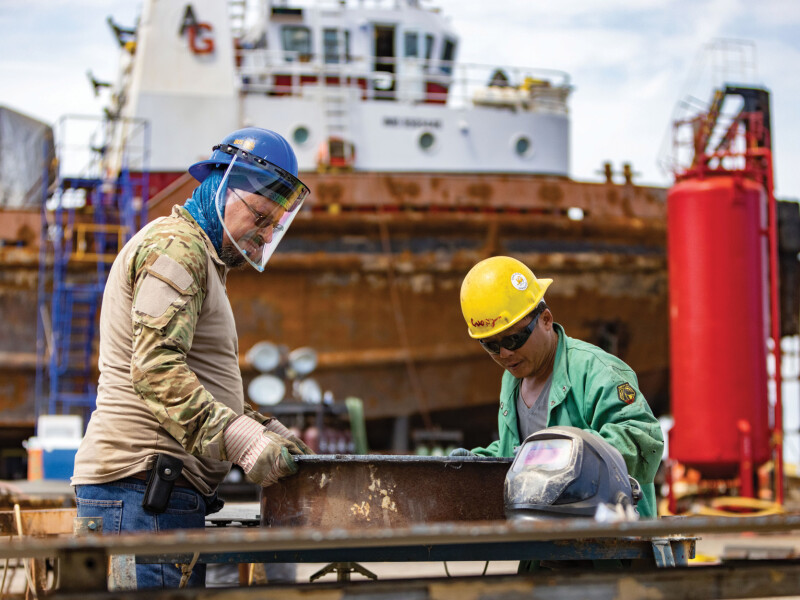
And while that distance may not seem that far, time is critical when it comes to first responders arriving on the scene of an emergency in an engine room, fuel tank, or cargo hold of a vessel at Stevens Towing’s shipyard.
“They’re 45 minutes away from us,” Johnson Stevens, president and CEO of Stevens Towing, said of first responders traveling from North Charleston. “St. Paul’s is five minutes away, so to get anyone with an injury downtown, we want St. Paul’s to be the premier first responder.”
In early 2024, though, as Stevens and Tyler DeLisle, safety manager at Stevens Towing, began engaging with leaders at the St. Paul’s Fire District, they quickly identified equipment and experience gaps.
On the gear side, much of what the fire district had on hand that would be deployed in a confined space or waterborne emergency was either out of date or required a forklift to be brought on board a vessel.
Working together, the two organizations were able to address the gear issue in short order.
“We had those conversations with Stevens, and they graciously donated to us funds to purchase some brand-new, top-of-the-line equipment,” said St. Paul’s Fire District Chief Truss Johnson, who has been with the district more than 25 years. Johnson became the chief in March 2023.
Gear included compressed air tanks that could fit into confined spaces, equipment small enough to be carried up gangways, tripods and harnesses for retrieving incapacitated workers from tight spaces, and a basket for lifting a stretcher with a forklift.
“With the investment [Stevens] made into the fire district, all that stuff can fit into maybe the size of five or six backpacks,” DeLisle said.
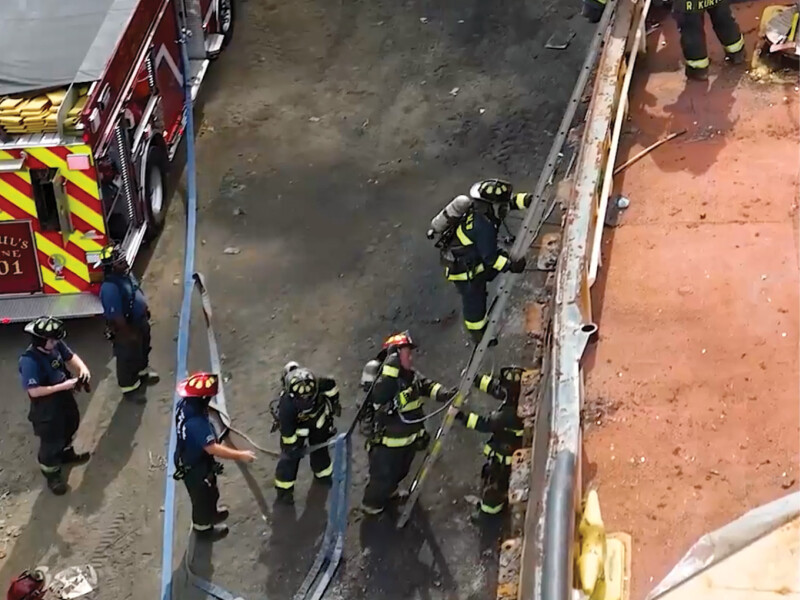
With the gear component addressed, the two organizations set out to work on the experience aspect. That started with terminology and geography — the layout of the Stevens Towing shipyard and the differences between a barge, tugboat, dump scow, and dredge, and so on. Next, the teams began collaborating on drills.
“We are land-based firefighters,” Johnson said, “so the maritime industry, for us, is unique. They’re becoming more familiar with the equipment out there and the types of boats.”
From a fire-drill standpoint, Stevens Towing’s shipyard serves as a great training ground, Stevens said.
“A lot of fire departments have training facilities,” he said, “but it’s the same facility. Our landscape changes every 30 days, so the drill never gets stale. When they pull in, they don’t see the exact same crane blocking the road or a tugboat here or a barge there. [They may see] a chemical barge, ferry, dredge, dump scow, ship, or tractor tug. The landscape changes so frequently that the drills keep them on their toes, and they can take that experience somewhere else.”
Leaders at Stevens Towing and St. Paul’s Fire District aim to conduct two drills every quarter.
DeLisle said he assesses what vessel is in the shipyard, then he works with a marine chemist on site to see what work is going on and what type of drill that would allow. He coordinates the time and exercise with the fire district. Then, on the morning of a drill, he places a dummy somewhere in a void or cargo hold of a vessel.
“At the start of the drill, I’ll call the fire department and set a timer to see how long it takes them to get to the yard,” DeLisle said. “As soon as they arrive, I stop that time and start a second timer to see how long it takes them to get set up on the vessel. Then, I stop that timer and start another to see how long it takes them to retrieve the victim from the space.”
For the dramatic vessel fire drill in the summer, a tugboat was on site to be scrapped.
“We’ll get one or two a year that needs to be cut up,” Johnson explained. “That allows us to expand our drills, because there’s no risk to a customer’s vessel. It’s a game changer for them.”
DeLisle has also worked with the fire district to establish a system of mailboxes at the shipyard, one at the front gate directing first responders to the correct gangway, then boxes at each workstation where an emergency might occur.
“Pre-incident planning for these types of calls is very instrumental in what we do there,” Johnson said.
The steady practice, planning, and partnership between Stevens Towing and St. Paul’s Fire District have produced impressive results, shaving more than 17 minutes off the district’s initial response time.
“We’re down to 28 minutes,” Stevens said. “That’s a huge improvement from where we started.”
Johnson attributed that improvement to his team’s buy-in and consistent practice.
“We’ve got a good group now of talented folks who have taken the bull by the horns and dived deeply into the confined space/technical rescue aspect,” Johnson said. “It’s just muscle memory. The more they use it and the more familiar they are with it, the better prepared they are in case they have to go out and use it in a real-world scenario.”
And while the training partnership benefits Stevens Towing, there are clear benefits for the wider community. The same maritime first-response skills St. Paul’s Fire District personnel are developing with Stevens Towing can be applied to other water-based facilities, such as marinas. The confined space skills are applicable to any location, on land or on the water.
What’s next for the partnership? Stevens said the two organizations are planning to tackle high-angle rescues, such as retrieving an incapacitated crane operator.
Johnson said his group is pursuing a grant to help fund the construction of a new fireboat. That would be huge for the St. Paul’s Fire District, Johnson said. Only two fireboats are available locally, and those are 10 and 15 miles away.
Johnson said the fire district has sent some personnel to Texas A&M’s shipboard firefighting classes, and he hopes to send more to a maritime firefighting school in Florida soon.
Ultimately, Johnson said, his team’s maritime emergency-response training is a big part of what it takes to be a well-rounded, skilled firefighting force today.
“It used to be that the fire department just responded to fires,” he said. “Now, it’s all hazards — medical calls, technical rescue calls, industrial calls, water and nature [rescue] calls. It’s a vast array of things in our basket. When we come to work in the morning, we never know what the day will hold, so we have to be prepared for all of it.”
