


SpaceX President Gwynne Shotwell joined Louisiana Gov. Jeff Landry and a host of other state leaders August 25 in Abbeville, La., to officially announce the company’s plans to build a new $100 billion launch facility in Vermilion Parish.
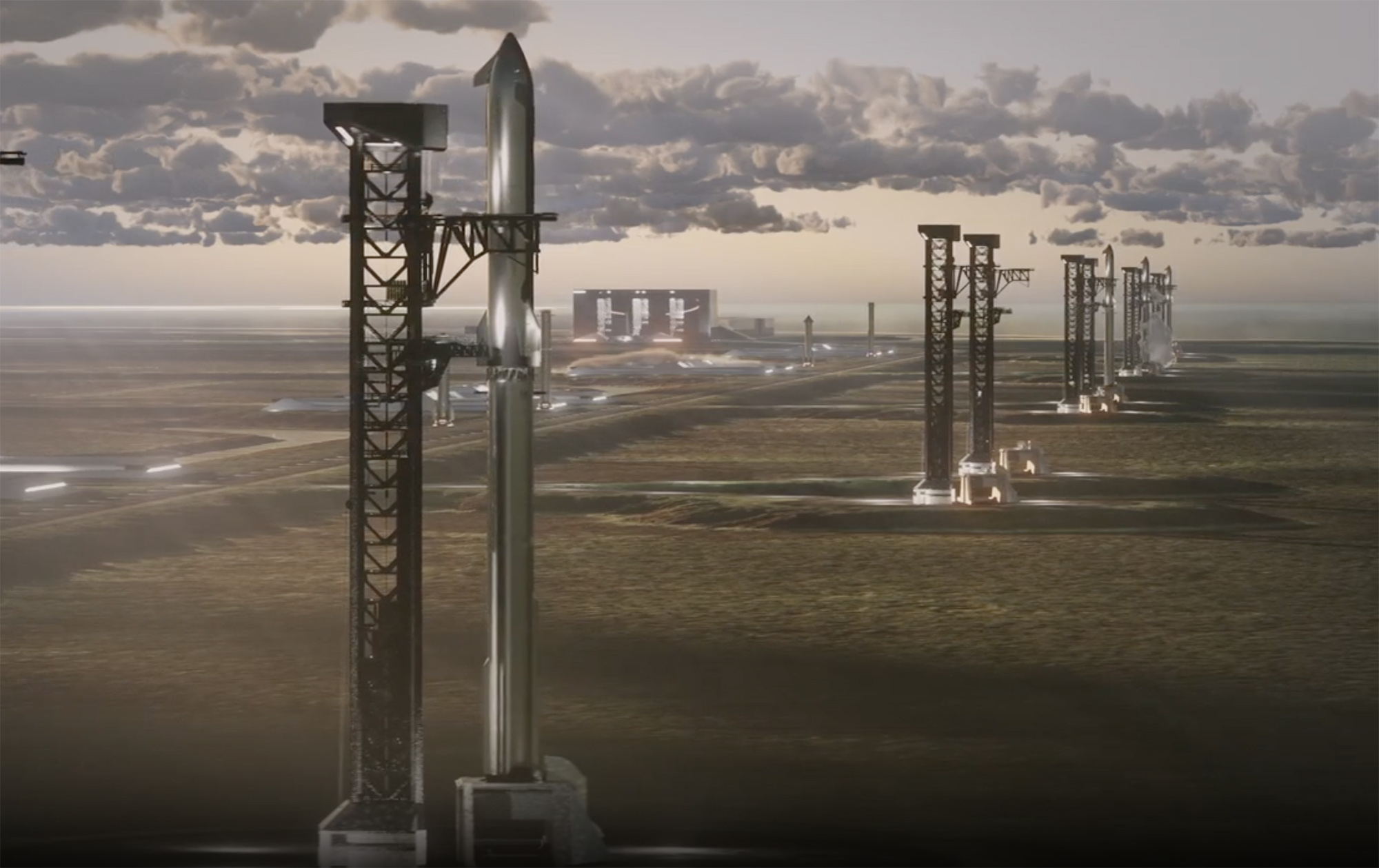
The project will see SpaceX take about 125,000 acres of marshland just south of Pecan Island — land the state acquired earlier this summer from a legal settlement with ExxonMobile — and build what’s being called Starbase Louisiana. SpaceX, which reportedly bought the land for $100 million, hopes to start construction on the facility early next year, with launches beginning in 2029.
The event began with a video of SpaceX founder and CEO Elon Musk arriving in a helicopter at the Pecan Island site for a meeting with Landry. Launch activity at the site will revolve around SpaceX’s Starship, the largest rocket with the highest payload capacity ever built. Musk, who has long touted the ultimate goal of making humanity “multiplanetary,” said the key to getting there is payload.
“You need serious tonnage,” he told Landry. “If you want to go up there and make life truly multiplanetary and not just be a tourist, if you want to go there and build a self-building civilization, you need serious tonnage.”
Starship is SpaceX’s vehicle for that “serious tonnage,” both with its size and its capacity for rapid reuse. And to ramp up Starship flights, SpaceX needs more launchpads.
“We currently have one active launchpad for Starship in Starbase Texas, with a second one in active build,” Shotwell said. “We’ve got three different stages of pads in construction in Florida, part of the most active launch complex on the planet. But for the missions we have ahead of us, we need more, and we want to do it here.”
SpaceX is developing Starship to send astronauts back to the moon, to establish a permanent base on the moon, to boost deployment of the company’s Starlink satellites, and to build datacenters in space.
“Put all of this together, and these tasks will require thousands of launches,” Shotwell said. “Starbase Louisiana is being designed from day one to support this dramatic increase in launch cadence. By starting with a clean sheet design, we’re planning to build a self-sustaining spaceport with its own propellant production, power generation, deepwater shipping capabilities, vehicle processing facilities, and probably an airport.”
The Louisiana coast offers SpaceX a ready supply of natural gas, ample land with a low population density, and the right trajectory for missions. The site will also offer deepwater access to the Gulf and connection to the Gulf Intracoastal Waterway via the adjacent Freshwater Bayou Canal.
“There’s really few places on earth you can do this, and Louisiana happens to be a perfect candidate for that,” said Sheila McCorkle, SpaceX vice president, Starship legal and regulatory.
The new facility, which at full buildout will include five launch complexes with two launchpads each, will create at least 3,000 direct new jobs, with an additional 8,100 indirect new jobs, according to estimate from Louisiana Economic Development. And those won’t be only rocket scientist jobs, said Bobby Peden, vice president of Starbase test and launch for SpaceX.
“When people think of SpaceX, they think of a lot of engineers and scientists and things like that, but actually, the most common job at SpaceX is technician or welder or tube bender,” Peden said. “These are actually the people who add the most value, going from raw material in the door to finished rockets out the other door.”
Shotwell said SpaceX isn’t just building a launch facility, though. A big part of developing Starbase Louisiana will be partnering with the state to rebuild and restore coastal wetlands in Vermilion Parish.
“The work includes thousands of acres of marsh creation to reconnect fragmented wetlands and help restore the natural storm buffer that this coast has lost,” she said. “Pecan Island and the surrounding wetlands are high value habitat for migratory waterfall, shorebirds, wading birds, and other coastal wildlife. Now, the birds might fly away during a launch, but I guarantee they come back, and they come back right away.
“SpaceX is committed to keeping very large portions of these 125,000 acres untouched so that high value wetlands stay habitat and don't become infrastructure,” Shotwell added. “We will help fund protection, restoration, and stewardship while we build.”
SpaceX will begin hosting and taking part in community meetings throughout Vermilion Parish. The company has also committed to providing steep discounts for Starlink service to Vermilion Parish residents.
All taken together, Starbase Louisiana will be a generational project for a state long plagued by industry and residents moving out of state and fragile land disappearing below the water line.
“For generations, industries came to Louisiana, not to build lasting prosperity, but to extract wealth,” Landry said. “They cut our forests, mined our minerals, drilled our oil and gas, plowed our fields, and then they shipped those resources elsewhere. Too often, Louisiana was left with the scars while others enjoyed the profit.
“Today,” Landry added, “what Elon Musk and his team is offering Louisiana is different. They are offering us a permanent future and lasting prosperity.”
Landry compared the impact of Starbase Louisiana to that of the Thomas Jefferson’s Louisiana Purchase in 1803.
“Jefferson did not buy empty land,” Landry said. “He bought a future that had not yet been named, and that’s what SpaceX is doing here. These acres will not be stripped and shipped away. These acres will be home to SpaceX, and it will be built by Louisiana hands on Louisiana soil.
“In 1803, Louisiana gave America a continent,” he added. “Today, Louisiana and SpaceX will give America the stars.”
SpaceX is now working with federal, state, and local agencies to secure the needed permits and regulatory approvals for the project. That process could be expedited thanks to recent legislation at the state level and policy changes within the Trump administration.
The timeline from initial discussions to a signed agreement was incredibly fast. Landry and SpaceX officials had an initial phone call on February 5, with the project agreement signed just before the August 25 event.
