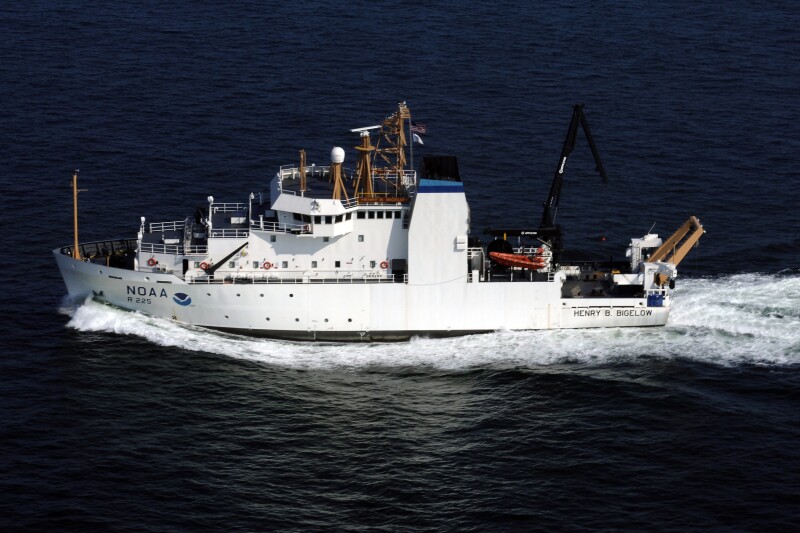
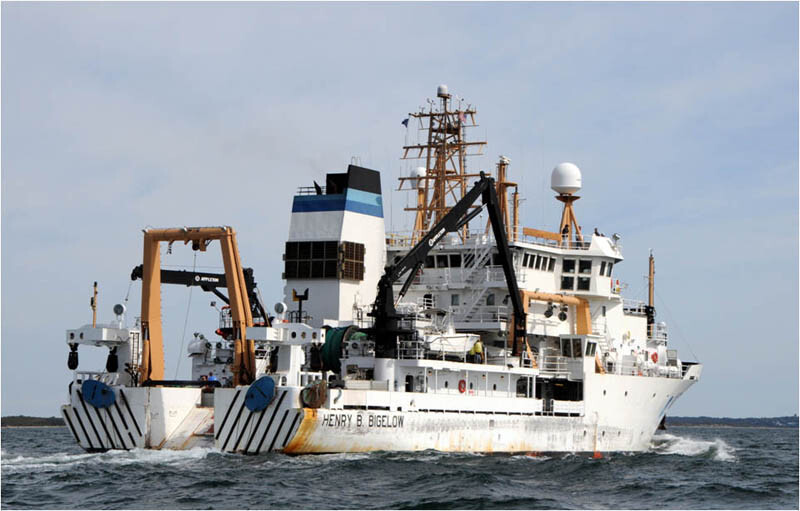
The National Oceanic and Atmospheric Administration (NOAA) is seeking shipyard proposals for a wide-ranging midlife modernization of fisheries survey vessel Henry B. Bigelow, with responses to its request for proposals due March 12.
The work is part of NOAA’s broader effort to extend the operational life of its research fleet through structured long-term maintenance and system upgrades. “NOAA is working to maximize the service life of each of its vessels through long-term maintenance planning and tracking. The goal of this forward-looking maintenance is to provide up-to-date, dependable vessels for NOAA’s scientists and science partners,” the agency said in a social media post.
The 208.5’x49’x29’fisheries survey vessel, delivered in 2006 and built by VT Halter Marine, Moss Point, Miss., is constructed with a welded steel hull and aluminum superstructure. Displacement is listed at 1,840 metric tons light and 2,479 metric tons at full load.
The availability centers on the Henry B. Bigelow Midlife Modernization and Revitalization Program and includes both major propulsion upgrades and a wide range of structural, mechanical and electrical work.
A key component of the project is repowering the vessel with Tier 4 Caterpillar 3512 ship service diesel generators. That includes the need for installation of a new diesel exhaust fluid storage and delivery system, including conversion of part of an existing ballast tank into an internal DEF tank with stainless steel construction, corrosion-resistant piping, protective coatings and new vent, fill and transfer arrangements. A new DEF day tank and associated distribution equipment will also be installed in the lower engine room.
The repower project also includes major electrical modernization, with conversion of much of the ship’s distribution system from 600 VAC to 480 VAC. This involves the removal and replacement of switchboards, the installation of new transformers and associated cabling and foundations, and integration with a new DC propulsion switchboard. Contractors will be responsible for the detailed design of the new equipment and systems.
Propulsion work extends beyond the generators. The work package calls for removal and inspection of the tail shaft and shaft seal assembly, inspection and servicing of thrust and line shaft bearings, and replacement of the propeller blades and hub with new government-furnished material. The bow thruster will be removed and overhauled, including servicing of underwater components.
Hull and structural repairs are also included, covering steel and aluminum work to address deficiencies uncovered during the availability. Additional structural modifications include drainage improvements in the wet lab to better handle washdown water and fish debris, as well as removal and replacement of the vessel’s main mast with a unit matching that on the sister ship Reuben Lasker. That work will affect antenna and radar arrangements and cabling in the pilothouse.
Numerous shipboard systems are slated for renewal or overhaul. The dynamic positioning system will be replaced, along with the fire and alarm detection system to meet ABS and SOLAS requirements. A new Furuno S-band radar will be installed, and all VHF and HF antennas and associated cabling will be replaced. The project also includes removal of unused cabling, servicing of ROXTEC cable transits, inspection and servicing of sliding watertight doors, and overhaul of the emergency generator.
Electrical work includes inspection and servicing of transformers, motor controller centers, and the emergency switchboard. Mechanical systems work covers replacement of ship service pumps, renewal of through-hull piping penetrations, replacement of tank and void vent valves, and installation of new corrosion-resistant HVAC intake ducting. The work package also calls for an overhaul of the emergency generator and extensive inspection and servicing of auxiliary systems.
Henry B. Bigelow is one of NOAA’s primary fisheries survey platforms operating in the North Atlantic, and the modernization is intended to ensure the vessel can continue supporting stock assessments and ecosystem research while meeting evolving environmental and regulatory standards. Shipyards responding to the RFP will be competing for a complex, multi-discipline availability that touches nearly every major system on board.
Shipyards can find the Henry B. Bigelow Midlife Extension Program RFP here, and work specification information here.