



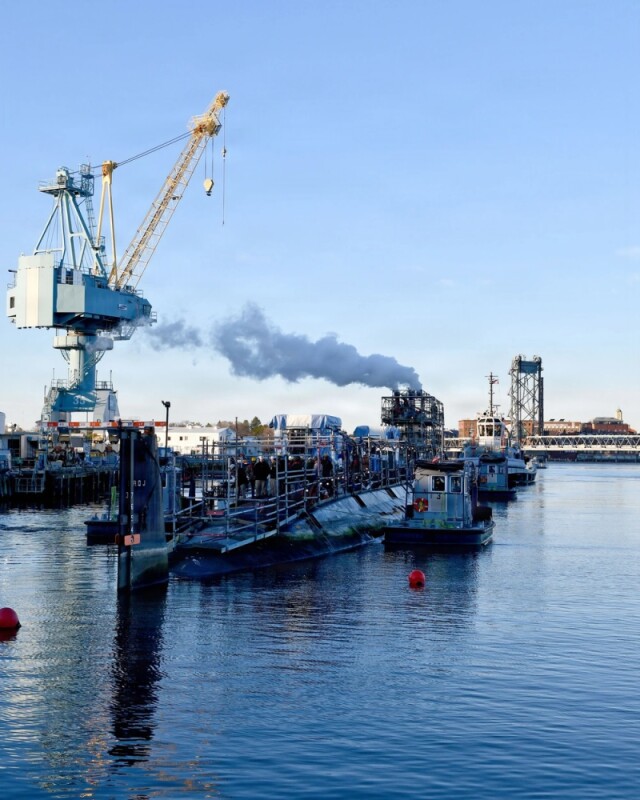
Portsmouth Naval Shipyard, Kittery, Maine, has inspected, tested, and installed a welded additive manufactured copper-nickel flange aboard the attack submarine USS Washington (SSN 787), marking a milestone for additive manufacturing applications in the submarine fleet.
The flange was inspected and tested March 9 and installed aboard the submarine March 18. According to the shipyard, the project represents the first time an additively manufactured copper-nickel flange has been welded at a public shipyard and one of the first uses of a welded 3D-printed component on an in-service submarine.
The effort followed a directive to accelerate additive manufacturing implementation across the submarine force. Portsmouth Naval Shipyard’s engineering and planning material support division identified the flange as a potential application where additive manufacturing could meet an operational need aboard Washington. The shipyard worked with maritime industrial base partners to procure the 3D-printed component and route it through inspection and certification.
Shipyard personnel conducted testing and inspections to verify the component met technical requirements while engineering and trades teams completed weld qualification for the new material. The work required coordination across engineering, planning, inspection, and production teams to certify the component for submarine service.
Portsmouth Naval Shipyard officials said additive manufacturing could help reduce lead times for certain submarine components and improve fleet readiness by allowing parts to be produced more quickly than through traditional manufacturing methods.
The installation aboard USS Washington represents an early step in expanding the use of additive manufacturing for submarine maintenance and modernization work within the Navy’s public shipyards and the broader maritime industrial base.
