



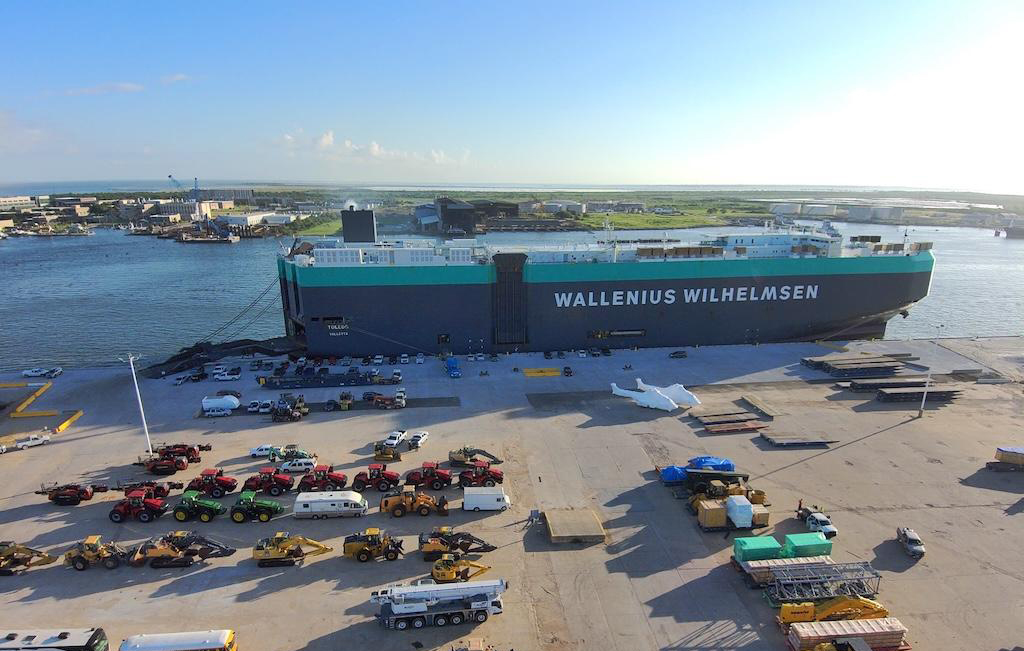
The Port of Galveston, Texas, opened a new cargo berth July 2 at the West Port Cargo Complex. The 654-foot-long MS Toledo, part of Wallenius Wilhelmsen’s roll-on/roll-off fleet, was the first vessel to use the new berth when it offloaded heavy construction equipment from Brazil and Asia. That equipment will now be transported by truck to destinations in Texas and beyond.
Dock workers then loaded the MS Toledo with heavy construction and farm equipment bound for Brazil and Australia.
The new 1,410-foot-long berth, located at Pier 39-40, is part of the port’s $106 million cargo facility expansion project that got underway in 2024 and wrapped up earlier this year. Besides work to repair and expand the cargo handling area, the port also enclosed two outdated slips, filled another slip, and demolished a decommissioned grain elevator.
The project, which grew the Port of Galveston’s cargo facility from 60 acres to almost 90 acres, was funded with port operating revenues and a $36 million Texas Department of Transportation grant. A future phase will include filling a second slip and adding another 6 acres.
“This is the first time in decades that the port has made a significant investment in its cargo business,” said Galveston Wharves Port Director and CEO Rodger Rees. “Driven by cargo tenant demand, the expansion paves the way for major cargo growth to generate hundreds of new jobs and tremendous economic growth for the region. Additional land also allows us to consider other types of cargo not previously handled.”
Rees thanked the Galveston Wharves board of trustees for supporting the project and both the Texas legislature and the Texas Department of Transportation for critical funding. Galveston’s growing cruise business, Rees said, generated much of the revenue for the project.
Geir-Eilif Kalhagen, director of the Texas Department of Transportation’s maritime division, said the project was about more than just building infrastructure.
“This $36 million state investment added capacity and will help the Port of Galveston operate more efficiently as demand continues to grow,” Kalhagen said. “When the state partners with seaports on projects like this, we’re not just improving infrastructure, but strengthening the supply chain, supporting job growth, and ensuring Texas remains competitive nationally and globally.”
Located on Galveston Harbor near where the Houston Ship Channel meets the Gulf, the Port of Galveston moves around 3 million tons of general and breakbulk cargoes per year, supporting close to 20,000 jobs and generating a $6.5 billion economic impact statewide. The port ranks fourth in the nation for passenger cruises, with 446 sailings and 3.9 million passenger movements anticipated in 2026.
