



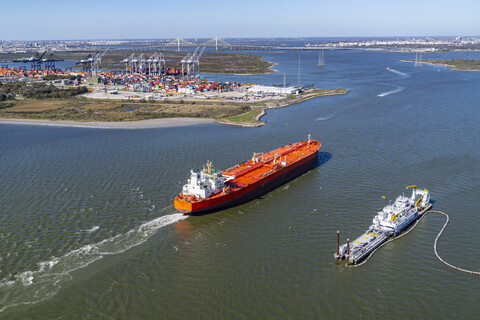
Port Houston, working alongside the U.S. Army Corps of Engineers (USACE), announced the completion of its portion of the Houston Ship Channel Expansion, known as Project 11, aimed at improving two-way vessel traffic through Galveston Bay.
Construction began in 2022, and dredging is now complete from Bolivar Roads to Morgans Point, widening the key Galveston Bay reach of the channel from 530’ to 700’. The Port said the expansion improves maneuverability for larger vessels and enhances navigational safety through one of the nation’s busiest waterways.
“The completion of Port Houston’s portion of Project 11 underscores the importance of this gateway to U.S. trade,” said port commission chairman Ric Campo. “It represents years of collaboration among our partners and reinforces the channel’s role in supporting our economy and maritime safety.”
Widening the 52-mile-long channel, which serves more than 200 private facilities and eight public terminals, allows the Houston Pilots to increase operational efficiency and adjust navigation safety guidelines, the Port said. Port Houston noted that with the improvements, daylight-restricted vessels now have up to an additional two and a half hours for daily transit, easing congestion and allowing for more flexible inbound and outbound scheduling.
Larger vessels, including 15,000–17,000-TEU containerships comparable to those passing through the Panama Canal, can now safely call at Bayport Container Terminal, the Port said. The Port also noted that the enhancements also provide measurable benefits to tug and dock operations through greater predictability and reduced traffic bottlenecks.
Port Houston said environmental considerations were integrated into the dredging work, noting all material from the Galveston Bay area was used to build beneficial-use features such as marsh areas, bird islands, and oyster reefs. Upon completion, Port Houston said the project will have created roughly 10 acres of bird habitat, 276 acres of marshland, and 324 acres of oyster reef. The use of Tier 3 and Tier 4 dredge engines and scrubbers is also expected to reduce nitrogen oxide emissions by 3–7%, they said.
While Port-led dredging is complete, USACE will lead remaining work through 2029, including additional channel deepening and expansion. Environmental restoration efforts are also ongoing in the Galveston Bay area.
