



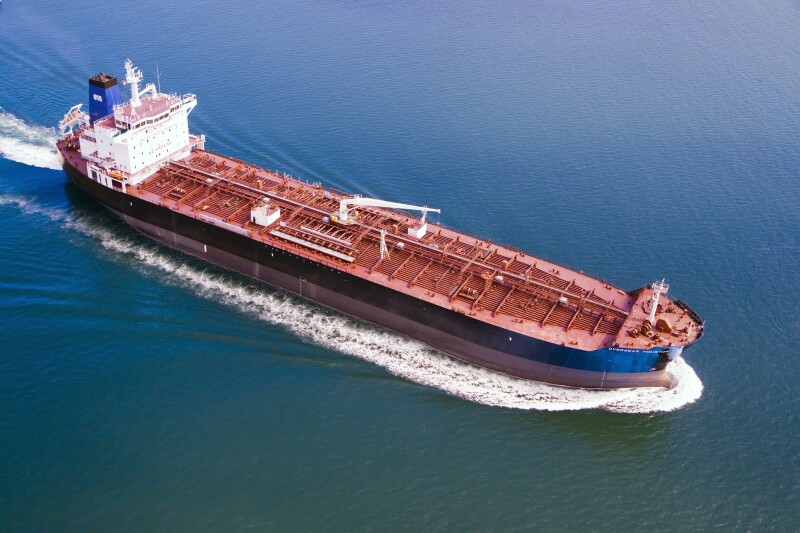
Overseas Shipholding Group (OSG), Tampa, Fla., and Alaska Tanker Company (ATC), Beaverton, Ore., are appealing National Labor Relations Board (NLRB) rulings requiring the companies to recognize and bargain with licensed deck officers represented by the International Organization of Masters, Mates & Pilots (MM&P).
The dispute stems from separate union elections involving bargaining units of chief mates, second mates, and third mates in the OSG and ATC fleets, but not captains. MM&P won the elections and was certified as the bargaining representative for the officers.
OSG and ATC challenged the certifications, arguing in part that chief mates should be considered supervisors under federal labor law and therefore should not be included in the bargaining units. The NLRB rejected that argument and later found that both companies violated federal labor law by refusing to bargain with MM&P.
The companies are now asking the 11th U.S. Circuit Court of Appeals to review the rulings. OSG and ATC said their appeals are focused on whether the bargaining units approved by the NLRB are legally appropriate, including the board’s interpretation of chief mates’ supervisory responsibilities.
OSG and ATC told WorkBoat that refusing to bargain, sometimes referred to as “testing” a certification, is the procedural route available to obtain federal court review of an NLRB certification.
The companies said the appeals are not intended to oppose union representation. OSG and ATC said they employ nearly 800 unionized workers and have longstanding relationships with several maritime unions, including the American Maritime Officers, Seafarers International Union, and Marine Engineers’ Beneficial Association.
At the center of the dispute is whether chief mates exercise enough authority over other licensed officers to qualify as supervisors under the National Labor Relations Act.
OSG and ATC told WorkBoat that chief mates participate in recommendations involving discipline and discharge, formally evaluate other licensed officers, assign and direct work, and often serve as relief masters.
The companies also pointed to language in an MM&P industry agreement describing licensed deck officers as performing supervisory and professional duties. Among the provisions cited by OSG and ATC is language identifying the chief officer as head of the deck department and providing additional compensation when licensed deck officers perform nonsupervisory work.
MM&P rejects the companies’ interpretation.
“Because the Chief Mates are ‘employees’ within the meaning of the National Labor Relations Act and entitled to union representation like the Second and Third Mates,” Capt. Thomas Larkin, MM&P vice president for Atlantic Ports, said in a written response to WorkBoat.
Larkin said the NLRB regional directors reached that conclusion after evidentiary hearings and that the full board subsequently upheld the determinations.
He also disputed OSG and ATC’s assertion that the appeals concern bargaining-unit structure rather than opposition to union representation.
“Once the employees voted for MM&P representation, however, the companies reneged on that promise,” Larkin said, referring to what he described as assurances before the elections that the companies would honor the employees’ choice.
Larkin also alleged that OSG and ATC had previously recognized another labor organization in bargaining units that included chief mates and only objected to their inclusion after employees elected MM&P. Asked to respond specifically to Larkin’s assertion, OSG and ATC referred WorkBoat to their previously issued statement.
MM&P said the companies continue to refuse its demands to bargain while the appeals are pending.
“MM&P has repeatedly demanded to bargain while the appeals are processed, as the law requires,” Larkin said. “The companies have repeatedly refused.”
The union is asking the 11th Circuit to uphold the NLRB decisions and order OSG and ATC to bargain, Larkin said.
MM&P said the two bargaining units cover approximately 150 licensed deck officers aboard 17 vessels.
OSG and ATC have not asked the appeals court to stay the NLRB orders while the cases proceed. The companies told WorkBoat they saw no reason to seek a stay because the orders do not include a monetary judgment and instead require bargaining.
The companies also said they proposed consolidating the related OSG and ATC cases. The NLRB subsequently asked the 11th Circuit to consolidate them so the overlapping issues can be reviewed together, according to the companies.
Combined, OSG and ATC own and operate 21 U.S.-flag vessels, including crude oil tankers, articulated tug-barges, shuttle and conventional product tankers, and vessels participating in the U.S. Tanker Security Program, according to the companies.
