



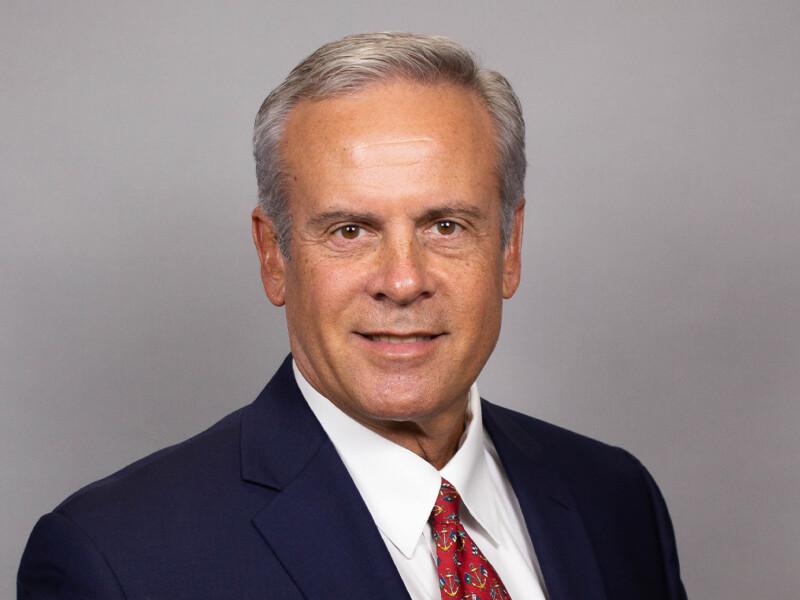
WorkBoat sat down with Otto Candies III, CEO and chairman of the board at Otto Candies LLC, to discuss how the Des Allemands, La., company has evolved over more than eight decades from a small bayou operation into a diversified offshore marine services provider. Candies reflects on the family values and operational discipline that have guided the company through multiple industry cycles and shares his perspective on the Gulf market and the future of offshore wind.
Can you walk through the history of the company and how it’s evolved?
My grandfather, the original Otto Candies, started the company in 1942, doing simple work, clearing water lilies and bringing supplies on the local bayous in South Louisiana. Over the generations, it developed through several different types of equipment. We had tugs and barges, crewboats, offshore supply vessels (OSV), and now inspection, maintenance, and repair (IMR) vessels. We’ve evolved with the industry.
I’m third generation, and we now have seven members of the fourth generation here in the company. Our approach has always been to compete at the upper end of the industry with new technology and bigger boats. At that end, you tend to have more disciplined competition and higher barriers to entry. That’s always been our focus.
No matter how the industry changes, the basic principles of having good equipment, good people, and being straightforward and honest with clients and vendors, that’s always been our philosophy. When your name is on it, you take pride in that. You want the industry to equate your name with quality and dependability. My grandfather only went to the seventh grade. Back then, people had to go to work and times were tough. But he always had core principles of honesty and integrity. That’s the core of what we do today.
Can you give an overview of your fleet and the markets you serve?
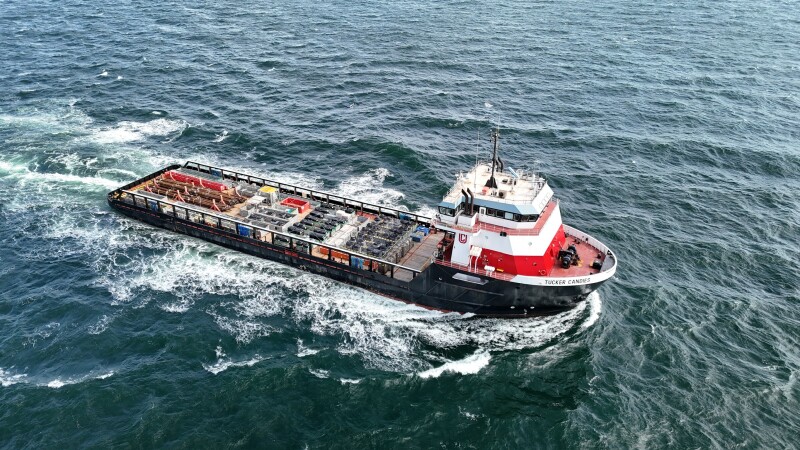
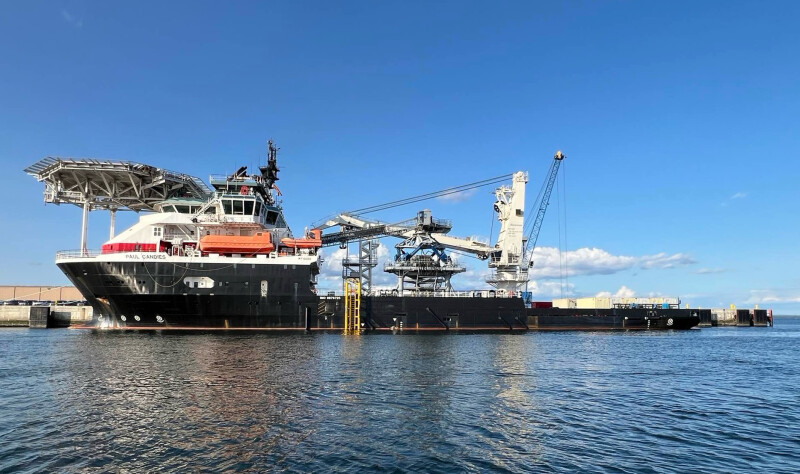
We have two main lines of business. Our OSV fleet — six vessels — services clients here in the U.S. Gulf. Then we have our 10-vessel IMR fleet, with crane capacities ranging from 100 to 250 tons. We’re servicing the traditional oil and gas market in the Gulf, and we’re also active in offshore wind development on the East Coast. At any given time, three or four vessels are working in the wind market, with the balance in oil and gas. We also own one large 400'x126' oceangoing deck barge.
How do you see the Gulf market right now?
Demand has been pretty steady the last couple of years in both segments. The OSV side is showing a bit softer in ’26, but still steady. The IMR market is tighter; there’s not as much equipment in that space, and several boats from competing companies have gone to work in renewables, which has tightened things up. We have several IMR vessels with contracts extending into ’28 and ’29, so our clients clearly see the trend as steady for some time to come. We felt confident enough to spend a lot of money acquiring new equipment, and we feel good about that market going forward.
How close are we to a newbuild period in the Gulf?
The Jones Act fleet is aging, definitely, across both IMR and OSV categories. There’s been no real fleet replacement in quite some time, and honestly, I think that’s a good thing. Our industry has a tendency to overbuild when the market is good, and then you end up with big surpluses and a lot of problems. I’m quite happy that we’ve shown some discipline there.
The problem with any newbuild program right now is cost. When you get quotations and compare them to today’s rate structure, it just doesn’t support new construction. Until that ratio changes, I don’t see it making sense for us or our competitors to pursue major fleet replacement. We’d need to sit with clients and work out longer-term charter commitments that give you enough security and the financing basis to build. We’re not at the point where we need to start fleet replacement yet, but those conversations will need to start.
When assessing vessel acquisitions, what do you look for?
We’re always keeping our eyes and ears open. With our recent acquisition, we saw an opportunity to pick up high-quality existing tonnage that had solid contracts already in place — contracts with clients we had already done business with — so we were able to transfer over and keep those arrangements pretty seamlessly.
Our number one criterion is asset quality. We’ve always prided ourselves on maintaining a modern, dependable fleet. We’re not looking to acquire things that are at the end of their life. Second is contracts — either ones already in place or ones we’d be confident putting in place going forward. We don’t have anything currently in the works, but we’re always looking.
You were early movers in U.S. offshore wind. How do you see that market?
The current administration is not a fan and is putting up as many obstacles as possible. But speaking with our clients, they’re taking a long-term view. The infrastructure already in place has to be maintained regardless, and the vessels we have are largely working on that maintenance and upkeep side. We’ve been able to keep those boats on their contracts without issues.
I’m a supporter of an all-of-the-above approach to energy. Oil and gas is our bread and butter and will be for quite some time, but our country should be looking at whatever sources are available to diversify energy supply. We’ve demonstrated that you can take existing tonnage and, with relatively minor modifications, put it to work in the wind industry. If that market stabilizes and continues to develop, it would be great to have the additional avenue for our assets.
How would you describe your leadership philosophy?
Integrity and honesty are fundamental. Beyond that, we’re not a big company, so we can’t afford people who say, “That’s not my job.” We need flexibility. We like people who buy into our philosophy. While the owners are all family by blood, we consider everyone who works here part of that family. We do our best to treat them that way and, in turn, we get loyalty back. We’ve kept people here for a long time because of that.
We’re collaborative, not dictatorial. I’m not the type who lays down five things you have to do today. We set big goals and empower our people to go accomplish them.
What keeps you up at night?
We work in markets where events beyond our control can drive things overnight; that’s what’s difficult to plan for. What keeps our whole management team focused is making sure we manage the business in a way that we can navigate whatever comes. We’ve had a lot of cycles over 80-plus years, some extremely good, some extremely bad, and we’ve never had a default, a bankruptcy, or a missed payment in that entire history. Our goal is to stay structured so that not everything has to go perfectly for our plan to succeed. There have to be fail-safes.
Honestly, though, I sleep pretty well. I’m not a worrier. If you come in and address your business and do things the right way, you can go ahead and sleep at night.
This interview has been edited for length and clarity.
