



Officials with the federal Marine Minerals Administration announced July 22 that they have signed a memorandum of understanding with the Nuclear Regulatory Commission “to strengthen cooperation between the agencies regarding potential nuclear projects on the Outer Continental Shelf.”
The announcement comes amid growing interest in using next-generation nuclear technology along the U.S. coast.
The memorandum is to ensure future offshore nuclear energy projects “are developed in a safe and environmentally responsible manner by fostering interagency communication and cooperation, clearly delineating areas of expertise and jurisdiction, and helping the regulated community understand applicable regulations,” according to agency officials.
With the MOU in place Minerals Management and the NRC can “responsibly respond to industry requests, supporting novel offshore energy production,” they said.
“Submerged reactor systems have been safely deployed in naval applications for decades, demonstrating their potential as a reliable source of energy in demanding marine environments. While no commercial deployment on the Outer Continental Shelf is planned or approved at this time, it could greatly strengthen America's energy security in the future,” said Matt Giacona, the MMA acting director.
“With nearly 3.2 billion acres of the Outer Continental Shelf under federal jurisdiction, this MOU is an important step toward building the technical expertise, regulatory clarity, and interagency coordination needed to assess whether and how this technology could be responsibly implemented in the years ahead," said Giacona.
“We are pleased to formalize our cooperation with the Marine Minerals Administration as we strengthen federal coordination on licensing and oversight of potential Outer Continental Shelf nuclear projects,” said Jeremy Bowen, director of the NRC’s Office of Advanced Reactors.
“This agreement creates a clear framework for how our agencies will work together and ensures our processes remain efficient, transparent, and technically robust. By combining expertise, we can provide clarity and confidence to potential future applicants and enable the safe, secure, and efficient deployment of emerging nuclear technologies,” he said.
The new nuclear movement harkens back to the 1960s and ‘70s when the U.S. civilian nuclear power industry was in full swing.
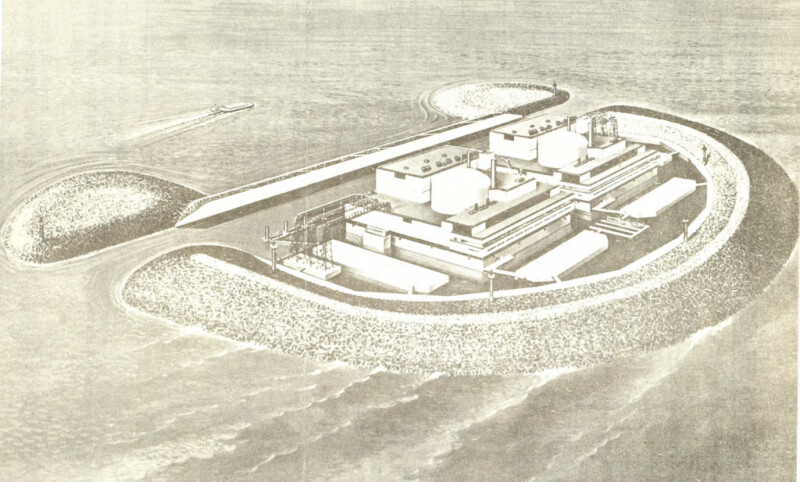
Public Service Electric and Gas Company (PSE&G) proposed the project in the 1973 with developer Offshore Power Systems, to use four Westinghouse 1,150 megawatt pressurized water reactors.
PSE&G had looked to have the Atlantic Nuclear plant operational in the mid-1980s. The proposed site faced challenges from running power transmission cables to shore around the dynamic Little Egg Inlet.
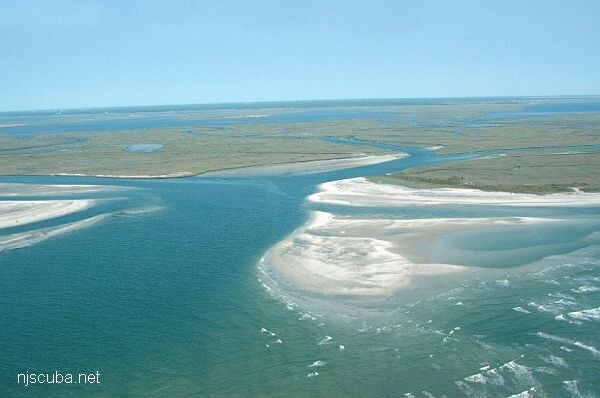
Escalating cost estimates and environmental opposition – including objections from the Mid-Atlantic beach resort and fishing industries – led to the proposal being cancelled in 1978. Homeowners on neighboring Long Beach Island protested then, as they have with the ill-fated Atlantic Shores offshore wind project, deep-sixed for now by the Trump administration.
The year before, the nuclear accident and partial core meltdown at the Three Mile Island reactor site near Harrisburg, Pa., triggered widespread U.S. public skepticism of nuclear energy and new government regulations on the industry.
Now the agreement between federal nuclear and offshore energy regulators is hewing to the Trump administration policy of “accelerating U.S. deployment of nuclear technologies for national security, industrial competitiveness and energy resilience, as directed in executive orders Deploying Advanced Nuclear Reactor Technologies for National Security, Reforming Nuclear Reactor Testing at the Department of Energy, and Reinvigorating the Nuclear Industrial Base,” the agencies declared.
