


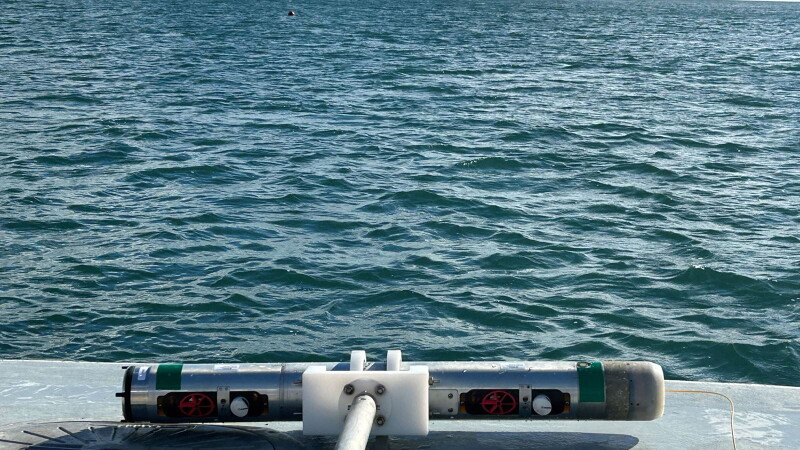
Defense contractor Raytheon, part of RTX Corp., Arlington, Va., said it has successfully conducted the first untethered, semiautonomous test of its Barracuda mine neutralization vehicle during recent open water trials in Narragansett Bay in Rhode Island.
In the demonstration, Barracuda operated independently underwater, showcasing its ability to autonomously navigate, communicate, detect, and identify targets.
"This recent testing demonstrates the significant strides we've made in advancing mine countermeasure technology," said Barbara Borgonovi, president of Naval Power at Raytheon. "Barracuda's capabilities will dramatically improve safety and efficiency for the U.S. Navy, keeping sailors out of harm's way while effectively addressing underwater threats."
Barracuda is the Navy's newest program of record for mine neutralization and is the first system of its kind to operate untethered with semi-autonomous capabilities. The vehicle can locate and track bottom, volume, and near-surface mines, with a human operator making the final decision to neutralize a threat.
Developed by Raytheon's Advanced Technology business segment, Barracuda builds on innovations also used in other company programs, such as the LTAMDS and SPY-6 radar systems. Barracuda is scheduled to reach initial operational capability and low-rate initial production by 2030, Raytheon said.
The company noted that it is also investing in a larger, more advanced version of Barracuda to support expanded mission sets, including subsea and seabed warfare.
