



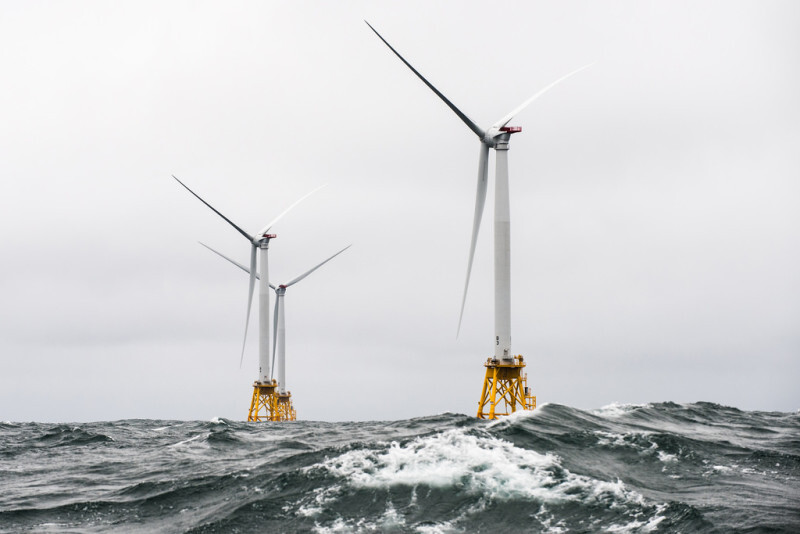
JERA Nex BP, the offshore wind joint venture between BP and Japan’s JERA, announced it will wind down its U.S. operations after determining there is “no viable path for development” of the Beacon Wind project.
The decision marks the end of BP’s high-profile entry into the U.S. offshore wind market, which began in 2020 and has since been derailed by policy shifts under President Donald Trump and broader market challenges, the company noted.
“The U.S. is a market with significant long-term potential for offshore wind, which we still believe can play a key role in the country’s energy transition,” the company said in a statement. “Unfortunately, in the present environment we see no viable path to the development of our Beacon Wind project and have concluded that we cannot continue our investment in the market.”
The Beacon Wind project was initially developed by BP and Norway’s Equinor, before BP took full control and later folded it into the JERA Nex BP partnership in 2024. Located south of Nantucket and east of Long Island, the lease area spans 128,000 acres with an estimated capacity of 2.5 GW, BP said.
The state’s energy regulator, NYSERDA, awarded Beacon Wind 1 a 1.2-GW power offtake contract in 2019, but BP said that agreement was later terminated when inflation and supply chain pressures made it financially unworkable.
JERA Nex BP said it will retain the Beacon Wind lease “and wait for a more favorable moment to resume project development,” though the company will dissolve its operational presence in the U.S. and lay off its entire domestic team in the coming months.
The move underscores the mounting challenges for offshore wind in the United States. While federal and state agencies had once promoted large-scale offshore wind as a pillar of clean energy strategy, many developers have paused or cancelled projects amid shifting political winds.
For vessel operators, contractors, and port developers, the retreat of a major player like BP signals another setback for offshore wind construction activity along the East Coast, particularly for service vessels, turbine installation ships, and supporting maritime infrastructure.
