



The House voted 214-208 on Sept. 16 to approve a Congressional Review Act resolution that would overturn federal authorization of California’s Commercial Harbor Craft emissions requirements.
H.J. Res. 213 targets the Environmental Protection Agency’s January 2025 decision granting California partial authorization to enforce amendments to its Commercial Harbor Craft regulation. The House vote included 210 Republicans, three Democrats, and one independent in favor, with 207 Democrats and one Republican opposed.
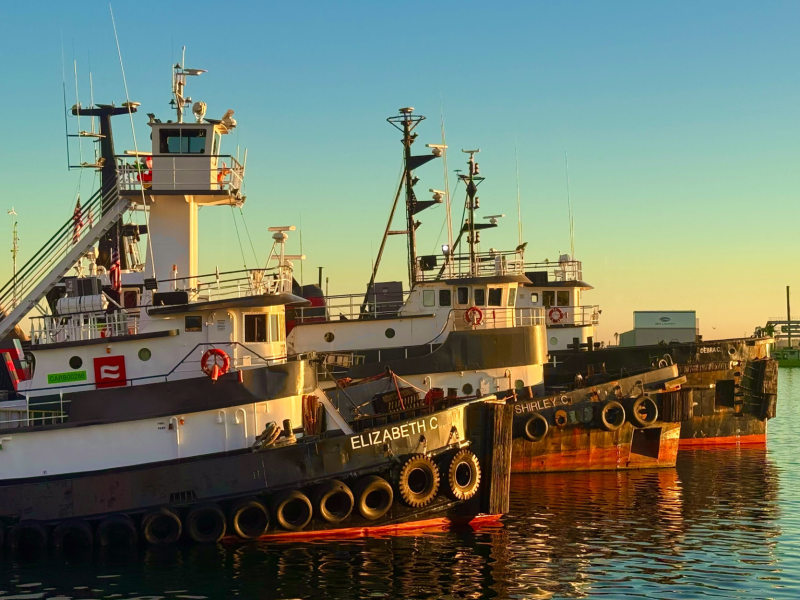
The California Air Resources Board adopted the amendments in 2022, expanding the regulation to additional vessel categories and establishing new emissions requirements and compliance dates for commercial harbor craft. Covered vessels include tugboats, ferries, crew and supply boats, barges, dredges, workboats, research vessels, and other commercial vessels operating in California.
The amendments call for cleaner Tier 3 and Tier 4 engines on covered vessels and zero-emission technology in certain applications. They also include requirements involving diesel particulate filters, or DPFs. In April 2025, WorkBoat reported that CARB said no marine retrofit DPFs had yet been verified to meet the agency’s Level 3 emissions-reduction standard, although manufacturers were working toward verification.
Rep. James Gallagher, R-Calif., who introduced H.J. Res. 213, said after the vote that the California requirements would raise operating costs that could ultimately affect the broader supply chain.
“When Sacramento drives up the cost of operating them, those costs don’t stay in California,” Gallagher said in a House Republican Conference statement. “They work their way through our supply chains and ultimately hit American families.”
The American Waterways Operators also backed the House action. The trade association has opposed portions of the Commercial Harbor Craft amendments over costs, technology availability, implementation timelines, and safety concerns.
“AWO strongly supports Congressman Gallagher’s CRA resolution disapproving the Commercial Harbor Craft (CHC) regulation under the Congressional Review Act (CRA) and applauds the swift action taken by the House of Representatives,” Craig Montesano, AWO vice president of legislative affairs, told WorkBoat. “We are working with Senate leaders to expedite consideration of the resolution in that chamber so that CHC will finally be brought to a halt.”
AWO’s concerns predate the current congressional action. WorkBoat reported in 2023 on industry objections involving DPF availability, installation deadlines, and potential safety issues, and in February 2025 on AWO’s request that Gov. Gavin Newsom withdraw the 2022 amendments.
Montesano also cited California Assembly Bill 1122, legislation Newsom vetoed in September 2024. The bill would have made several changes to the Commercial Harbor Craft regulation, including delaying certain compliance dates and establishing an override system for diesel particulate filters with monitoring and reporting requirements. In his veto message, Newsom said the legislation would undermine the balance CARB had established between emissions reductions and compliance flexibility.
“Given that Gov. Newsom vetoed state legislation that had near-unanimous support in the California legislature and would have brought common sense changes to the CHC regulation, we view the CRA process as the best way to put regulatory discussions back on a level playing field so that the tugboat, towboat and barge industry can continue serving California’s economy,” Montesano said.
Pacific Environment criticized the House vote, saying the California standards have driven investment in cleaner vessels, port infrastructure, and maritime technology.
“At a time when the U.S. wants to lead the shipbuilding industry, Congress has just voted to kill American competitiveness of the industry by overturning California’s clean shipping waivers,” Teresa Bui, senior climate campaign director with Pacific Environment, said in a statement. “We call on the Senate to uphold the waivers and protect the hundreds of millions of dollars in public and private investments made under these protections.”
CARB estimates that the 2022 amendments will reduce diesel particulate matter emissions from covered vessels by 89% and nitrogen oxide emissions by 54% by 2035. The agency’s regulatory analysis estimated 531 avoided premature deaths, 161 avoided hospital admissions, and 236 avoided emergency room visits from 2023 through 2038, with approximately $5.25 billion in estimated health benefits compared with $1.98 billion in statewide costs.
On the same day as the House vote, Newsom certified the City of Berkeley and San Francisco Bay Ferry’s Water Transportation Pier Ferry Project for expedited judicial review under California law. The project is in the design and environmental review stage and calls for reconstruction of the Berkeley Municipal Pier, a new ferry terminal, a 1,080' pier, a 400' breakwater, and charging infrastructure for zero-emission vessels. Planned ferry service would connect Berkeley with San Francisco and Larkspur.
The ferry project is part of San Francisco Bay Ferry’s broader effort to expand zero-emission operations. The agency’s Rapid Electric Emission Free program includes electric-vessel construction and shoreside charging projects around the Bay.
The congressional action is also unfolding amid a dispute over EPA’s decision to treat California Clean Air Act waiver and authorization decisions as rules eligible for review under the Congressional Review Act.
When EPA granted partial authorization for the Commercial Harbor Craft amendments in January 2025, the agency’s decision document stated that the action was not a rule for purposes of the CRA. In July 2026, EPA reversed that position and transmitted the Commercial Harbor Craft authorization and a separate At-Berth authorization to Congress, saying it had determined they were rules subject to congressional review.
California is challenging EPA’s reclassification approach in federal court. A Sept. 2 ruling from the U.S. District Court for the District of Columbia granted California a preliminary injunction in its challenge involving four earlier waiver reclassifications. The court’s opinion also records EPA’s subsequent July 22 submission of the Commercial Harbor Craft and At-Berth authorizations while the litigation was pending.
H.J. Res. 213 now awaits Senate consideration. A Senate companion, S.J. Res. 210, introduced by Sen. Bernie Moreno, R-Ohio, on Aug. 6, was referred to the Senate Committee on Environment and Public Works. AWO said it is working with Senate leaders to expedite consideration of the issue.
