



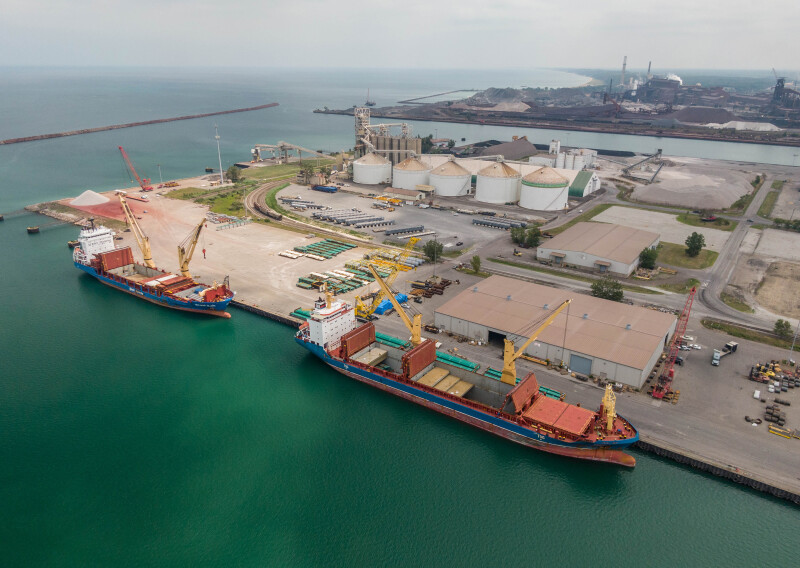
A group of Great Lakes ports and federal partners are launching a market study aimed at increasing cargo movements between the Great Lakes and the U.S. Inland Waterways system.
The American Great Lakes Ports Association (AGLPA), working with Great Lakes St. Lawrence Seaway Development Corporation (GLS), said in a Feb. 3 press release that the effort will examine how to better link the two inland marine networks through expanded waterborne trade.
Participating ports include Ports of Indiana, the Illinois International Port District, and Port Milwaukee. Together, the Great Lakes and Inland Waterways systems handle nearly 700 million tons of cargo annually, serving industries such as steel, agriculture, energy, and manufacturing. Despite their geographic connection, only a limited share of cargo currently transfers between lake vessels and river barges, AGLPA noted.
The study will analyze potential cargo flows, market demand, and the infrastructure and operational requirements needed to support increased transloading and vessel interchange between the two systems.
Mike McCoshen, administrator of GLS, said strengthening the river–lake connection could help improve supply chain resilience and expand freight options for U.S. exporters and manufacturers.
AGLPA President Paul C. LaMarre III said the project is intended to identify cargo types, markets, and facility needs that could make combined river–lake shipping more commercially viable. He said the association and its member ports are taking a data-focused approach to evaluating future maritime trade opportunities.
The local cost share for the study is being provided by the three Lake Michigan ports involved. Indiana, Illinois, and Wisconsin account for a significant portion of Great Lakes maritime economic activity and also support barge traffic moving through the Chicago Area Waterway System and the Mississippi River network, AGPLA said in the release.
“We’re excited to join this unprecedented partnership to explore how we can better connect two of the busiest inland shipping corridors in the world,” said Ports of Indiana CEO Jody Peacock. “Maritime transportation can be further leveraged in the megaregion formed by Chicago, Milwaukee, and Northwest Indiana to improve freight transportation, lower emissions, reduce highway congestion, and grow economies throughout the Great Lakes and inland waterways systems.”
The study will be conducted by CPCS Transcom Inc. in coordination with AGLPA, GLS, and the participating ports. It will assess transloading strategies, infrastructure needs, and operational considerations tied to moving freight between barges and lake vessels. Researchers will also evaluate how expanded service could affect supply chain reliability, employment, and freight congestion on land-based corridors.
