



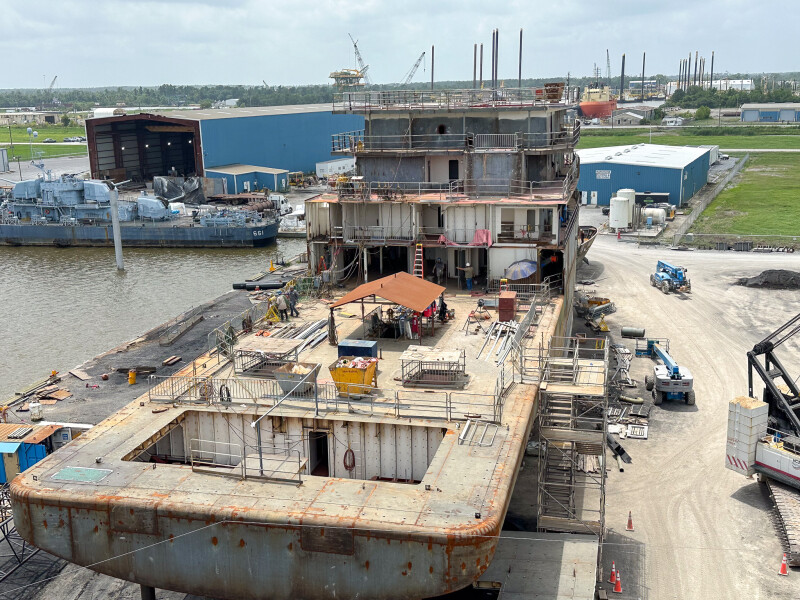
Louisiana’s congressional delegation is pressing the Pentagon to widen participation in Navy and defense-related ship contracts, with a focus on bringing more small and mid-sized Gulf Coast yards into the industrial base.
In a Jan. 27 joint letter, Congressman Clay Higgins (R-La.), Sen. John Kennedy (R-La.), and Sen. Bill Cassidy (R-La.) asked Secretary of Defense Pete Hegseth to ensure that smaller domestic shipyards receive “deliberate and sustained consideration” when the Department of Defense, also known as the Department of War, awards shipbuilding, repair, modernization, and sustainment contracts.
The lawmakers framed the request as part of a broader effort to rebuild U.S. shipbuilding capacity and reduce pressure on the nation’s largest naval shipyards, which have faced persistent schedule delays and cost growth in recent years. They pointed to Government Accountability Office findings that link delivery challenges to workforce shortages, infrastructure constraints, supply chain issues, and yards operating near capacity.
“We write to encourage the Department of War to give deliberate and sustained consideration to small and mid-sized domestic shipyards, including those in South Louisiana, when awarding shipbuilding, repair, modernization, and sustainment contracts, as the Department works to restore America’s shipbuilding capacity and strengthen the nation’s defense industrial base,” the lawmakers wrote.
According to the delegation, concentrating too much work among a small number of prime contractors has created systemic risk for Navy programs. Expanding opportunities for qualified small and mid-sized yards, they argue, would help ease production bottlenecks, improve schedule reliability, and strengthen overall fleet readiness.
The letter also aligns smaller yards with the Defense Department’s stated push for faster, more flexible acquisition. Lawmakers said many Louisiana yards already operate in competitive commercial markets that demand rapid execution, cost control, and the ability to integrate new technology.
“Louisiana’s small and mid-sized shipyards already operate in a manner consistent with the Department’s stated aim to prioritize speed, innovation, and a ‘commercial-first’ mindset in defense acquisition,” they wrote. “These yards compete daily in fast-moving commercial markets, where success depends on rapid execution, continuous innovation, and disciplined cost control. That operating model enables them to adapt quickly to evolving requirements, integrate new technologies, and deliver complex vessels at pace—capabilities that directly support the Department’s effort to modernize procurement and strengthen the defense industrial base.”

Workforce development was another key theme. The delegation highlighted South Louisiana’s long-established base of skilled maritime labor, including welders, fitters, engineers, electricians, and other trades. Stable, long-term federal contracts, they wrote, would help sustain and grow that workforce while preserving regional shipbuilding capacity for future defense needs.
Beyond geographic inclusion, the lawmakers urged structural changes to how contracts are packaged and awarded, with an eye toward lowering barriers for smaller builders.
“As the Department evaluates current and future procurement strategies, we respectfully urge consideration of approaches that broaden participation across the industrial base, including by structuring solicitations to allow capable small and mid-sized yards to compete on a level playing field, reducing unnecessary barriers to entry and bureaucratic red tape, and awarding contracts that provide the stable, long-term demand signals necessary for industry to invest and expand,” they wrote.
The letter concludes that restoring U.S. shipbuilding strength will require more than increasing output at a handful of large facilities. Instead, the delegation argues, the industrial base must be broadened to add depth, flexibility, and resilience across a wider network of American shipyards.
