


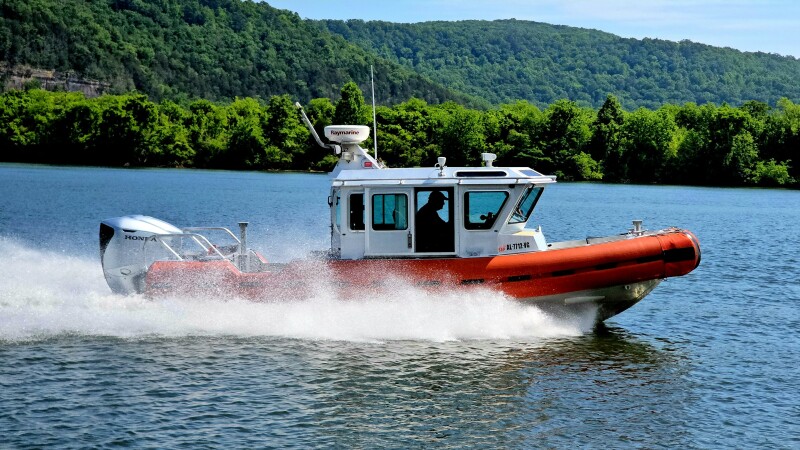
When Dave Skrzecz removed the wrapping from the 25' response boat he had purchased sight unseen, he found the remains of a working vessel.
The boat had spent about a decade sitting on a trailer in Anchorage, Alaska, exposed to snow and shifting temperatures. Its cabin was gray and black with grime. The fuel tank held roughly 50 gals. of old gasoline, while a separate tank for its diesel heater remained three-quarters full. Seats, electronics, and anything else of value had been removed when the Coast Guard decommissioned it, leaving severed wires and abandoned cable throughout the cabin.
“The trailer it sat on was in better shape than the boat,” Skrzecz said. “They literally gutted it.”
The hull, however, had endured.
On July 24, the former Coast Guard boat, now named Freedom Fighter, is scheduled to begin an approximately 4,900-mile run around America’s Great Loop. Skrzecz and fellow veteran Mike “Buch” Bucher will try to complete the route in about 11 days, challenging a record Skrzecz said stands at 12 days, 18 hours, and 10 minutes.
The voyage will test the restored aluminum vessel through locks, canals, open-water crossings, nighttime operations, and a fuel schedule measured almost to the minute. It will also serve as the first national campaign for Veterans Against Suicide, the nonprofit Skrzecz founded to encourage veterans to reconnect, seek help, and find a new sense of purpose after military service.
A boat in name only
Freedom Fighter is SAFE Boats Hull No. 255001, the first Response Boat—Homeland Security (RB-HS) completed by the Bremerton, Wash., boatbuilder following the Sept. 11, 2001, terrorist attacks.
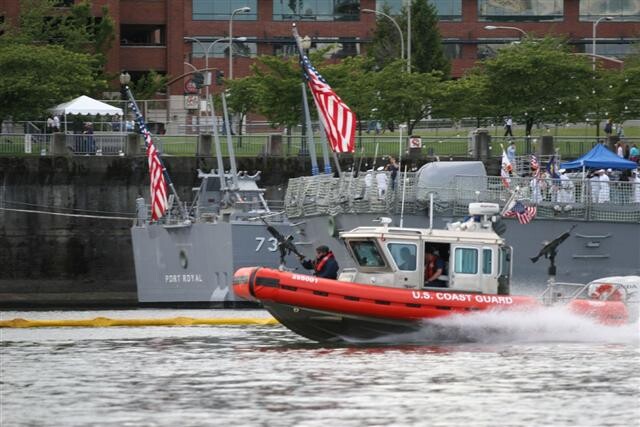
The Coast Guard acquired the high-speed RB-HS boats to strengthen security at U.S. ports and maritime infrastructure. The program helped establish SAFE Boats as a federal boatbuilder and served as a predecessor to the Coast Guard’s Response Boat–Small fleet.
CG 255001 continued serving after its Coast Guard career ended. When the service later decommissioned its 25' boats, several were donated to Alaska Native villages. The village that received CG 255001 had no use for it, Skrzecz said, and the boat eventually settled into long-term storage in Anchorage.
A colleague familiar with the vessel suggested it after Skrzecz and Bucher began discussing an attempt at the Great Loop record.
“This is the perfect vessel to do it,” Skrzecz recalled being told. “This is a floating tank.”
Acquiring the boat required patience. The village board met once a year, and completing the approval, payment, and decade-old paperwork took approximately 14 months. Once the sale was complete, the trailer had to be made roadworthy before the boat could be placed aboard a barge bound for Seattle and then towed across the country.
When it arrived in Alabama, the project grew far beyond what Skrzecz originally anticipated.
“You unwrap it and go, ‘Wow, this is what you get when you buy a boat sight unseen,’” he said. “It was pretty much a boat in name only. Fortunately, the type of boat it is, it’s that robust.”
Dry Creek Marine, Decatur Ala., helped begin the process of returning the boat to service and connected the project with Honda Marine. New twin outboards were installed, the old fuel was removed, and enough instrumentation was added to begin engine break-in and sea trials.
Each trip on the water revealed another item for the growing punch list. Some of the original electrical system remained functional, while other components had failed from age, exposure, or years without use.
“We started making a list, and I thought, ‘This is a little more daunting than I expected,’” Skrzecz said. “The punch list just grew and grew, but I had already made the commitment. We weren’t backing out.”
Skrzecz’s employer, which performs maintenance and upgrades on larger Coast Guard boats, supplied older electronics that were awaiting disposal. The equipment was installed after the necessary government approvals, giving the crew enough capability to continue testing the vessel.
Support accelerated as the voyage drew closer. SAFE Boats sent a technician to inspect and repair wiring, replace a failed searchlight and windshield-wiper motors, and address remaining issues. Raymarine provided new multifunction displays and a FLIR thermal-imaging camera for nighttime navigation.
Within several months, Skrzecz said, the project moved from a stripped hull and cabin to a well-equipped response boat prepared for sustained high-speed operation.
“We were sitting on the boat the other night going over the punch list,” he said. “I rubbed the dashboard, leaned back in the chair, and said, ‘We’re giving this old girl a new mission. How cool is that?’ She would have sat on that trailer until she became scrap aluminum. Look at her now. She is ready to get out there and do another hard, rugged job she was designed to do, and do it for a purpose.”
Purpose after mission
Skrzecz served 23 years in the Army, all of them in Special Forces. His career included counternarcotics operations in Latin America, deployments to Afghanistan, and maritime work conducted aboard Boston Whalers, Zodiacs, and other small assault boats.
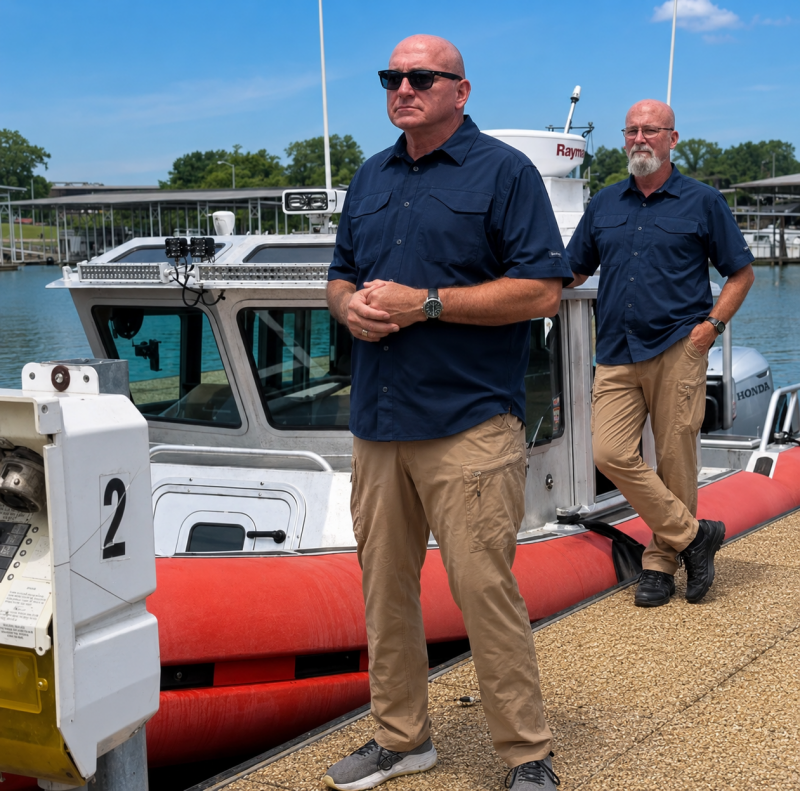
He retired in 2007 and entered civilian contracting work, but over time he began to recognize how easily veterans could drift away from the people and structures that had defined their military lives.
Some remained close to their former communities by becoming government employees, trainers, or contractors. Others moved in the opposite direction, separating themselves from the military and gradually allowing their circle of friends to shrink.
Skrzecz found himself somewhere between those paths. As the years passed, the calls and emails arrived with increasing familiarity. A veteran had attempted suicide. Another had died by suicide. A friend knew someone who had been lost, or two friends discovered they were grieving the same person.
The issue was personal. Skrzecz had one close friend who died by suicide, another whose attempt left lasting damage, and another who survived, recovered, and went on to build a business and a life. He also struggled with survivor’s guilt and the pressure to appear composed.
“On the outside, you’re the happy clown,” he said. “Everybody sees you as a veteran and thinks you have your stuff together. They look at you in a higher regard, and that becomes pressure in itself. You’re supposed to be the tough guy all the time. You’re supposed to have the answers. You’re supposed to be cool under pressure.”
His own difficult moments often arrived during periods of peace, when life appeared settled and the question of why he had been so fortunate became harder to dismiss.
The Great Loop project did not begin as a nonprofit campaign. Bucher, a retired Air Force Security Forces veteran, mentioned the route as a bucket-list trip. After learning about the existing speed record, the two men began considering an attempt of their own.
Skrzecz decided the voyage needed a purpose beyond bragging rights. The original idea was to raise awareness and collect money for an existing veterans organization, but the requirements surrounding charitable donations eventually led him to establish Veterans Against Suicide.
The process gave Skrzecz something he had not anticipated.
“I had an epiphany that this was helping me,” he said. “If this can help me, then it can help other people. My struggle is not unique.”
His son helped him put the transition into words. Skrzecz had spent more than two decades in a highly focused, hypervigilant profession, where every assignment carried a defined objective. Civilian life brought work, deadlines, and responsibilities, but not the same sense of mission.
“You feel like after the mission, you have no purpose,” Skrzecz said. “I started thinking, if I can do this, I can show veterans there is a purpose after the mission. It’s not the same purpose you had, but there is a purpose.”
According to the Department of Veterans Affairs’ 2025 National Veteran Suicide Prevention Annual Report, 6,398 veterans died by suicide in 2023, an average of approximately 17.5 veterans each day.
Skrzecz said debates over the exact daily figure can distract from the larger failure to produce a lasting reduction.
“You’re more worried about whether I quote 17, 22, or 46 than you are about the fact that it’s 17, 22, or 46,” he said. “The needle hasn’t moved. Whatever we’re doing is not working.”
His measure of success for the voyage is more personal than a stopwatch.
“If I can get one veteran to reach out, whether they call me, email through the website, or call my personal cellphone during the trip, I don’t care,” he said. “Or if I can get one family member or one close friend to have that hard conversation with a veteran, I’m a success.”
Racing the clock
The Great Loop is commonly described as a roughly 6,000-mile system of waterways surrounding the eastern United States and portions of Canada, although its distance depends on the route selected. Skrzecz expects Freedom Fighter to cover closer to 4,900 statute miles.
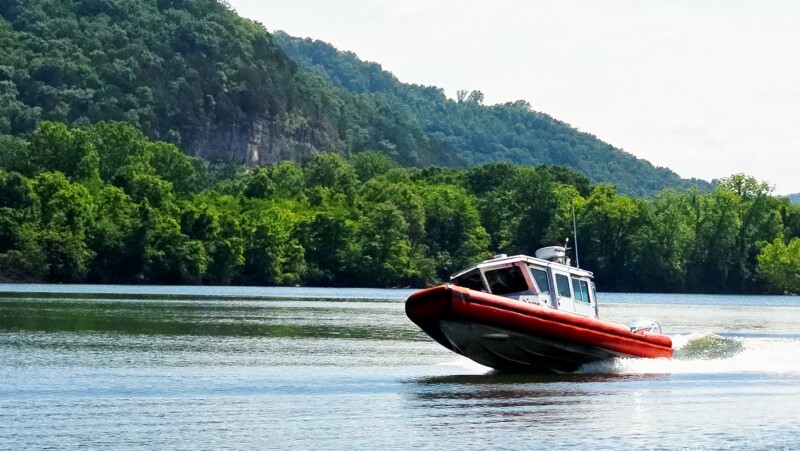
The record attempt will bear little resemblance to the leisurely Great Loop voyage undertaken by many recreational boaters. Skrzecz’s plan requires nearly continuous movement and precise coordination among locks, bridges, fuel docks, canal operating hours, weather windows, and the physical limits of a two-person crew.
Starting from Ditto Landing Marina in Huntsville, Ala., the crew will pass through 12 locks before reaching Mobile Bay. A passage could take 20 minutes or two hours depending on commercial traffic. Any delay affects arrival times at fuel docks farther down the route.
From Mobile, the crew must reach another fuel stop near Gulf Shores, Ala., before beginning a run of more than 360 miles toward Fort Myers, Fla. The schedule calls for arriving when a fuel dock opens in the morning, then reaching the Okeechobee Waterway in time for its first lock opening. A railroad bridge farther along the route requires advance notice.
Additional long runs will carry the boat up the Atlantic Coast before it reaches the Hudson River, the Erie Canal, and the Oswego Canal. The Erie Canal operates on a fixed daily schedule, creating unavoidable periods when the crew must stop, anchor, and wait. Passage through Canada’s Welland Canal also requires advance coordination, even though delays elsewhere could shift the boat’s arrival.
“It’s strictly timing,” Skrzecz said. “You’re trying to get all those dominoes to line up. You don’t want to arrive too soon and sit idle, but you can’t get there too late and miss the fuel stop.”
The crew has planned approximately 45 minutes for each lock and 30 minutes for each fueling stop. Three 55-gal. drums carried on the rear deck will extend the boat’s range, with hand pumps used to transfer fuel.
Skrzecz approached the route with the planning methods he developed in Special Forces.
“I treated this no differently than planning a raid in Afghanistan or a drug raid in Colombia,” he said. “You look at the environment, and then you add in the risks of the environment. I’m not worried about the enemy shooting at me. I’m worried about Mother Nature slowing me down to where I’m burning more fuel, and now I have to start replotting gas stations and finding ones that are open.”
Skrzecz and Bucher trained at night, in poor weather, and while transferring fuel underway. They will divide helm duties based on fatigue rather than a rigid schedule, with each responsible for recognizing when the other needs relief.
“The question you ask the other guy shouldn’t be, ‘How are you doing?’” Skrzecz said. “The question should be, ‘How am I doing?’ We leave the egos at the dock.”
The crew will avoid open water during small-craft advisories and move to protected routes if conditions deteriorate. Weather may cost them the record, Skrzecz said, but safety will take priority.
Breaking the record would draw more attention to the organization and strengthen plans for the boat’s next mission. Skrzecz intends to reconfigure Freedom Fighter and travel the loop again next year at a slower pace, operating during daylight and bringing at-risk or disabled veterans aboard for portions of the route.
The speed attempt is designed to make people take notice so the nonprofit can work directly with veterans later.
“Bold actions demand bold conversations,” Skrzecz said. “If we started out by saying we were another veteran’s organization taking some veterans out on a boat, people might say, ‘Gotcha,’ and move on. We start with this, and we make people sit up and pay attention.
“Next year is when we can truly make a difference,” he added. “If I can get one at-risk veteran onto the boat, get him talking, or just get him out of that dark place, that’s success.”
