



A federal judge in Washington, D.C., has dismissed a constitutional challenge to the Jones Act brought by Kōloa Rum Company, Kauai, Hawaii, ruling that the 1920 cabotage law remains valid and that the distiller’s claims were either time-barred or failed on merits.
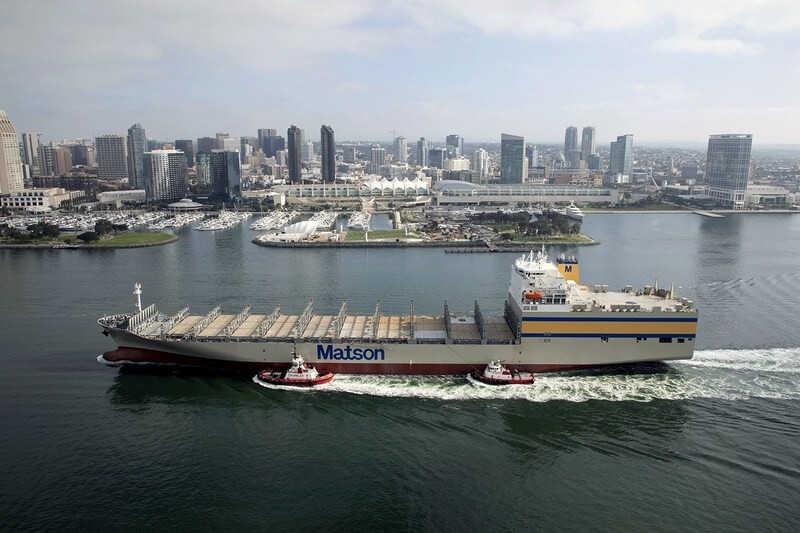
In a 46-page memorandum opinion issued Jan. 20, Chief Judge James E. Boasberg of the U.S. District Court for the District of Columbia granted motions to dismiss filed by the Department of Homeland Security, Customs and Border Protection, and maritime industry intervenors including Matson Navigation Co., the American Maritime Partnership (AMP), and the AFL-CIO’s Maritime Trades Department.
The decision was quickly welcomed by Jones Act supporters. In a statement following the ruling, AMP said the court had “resoundingly rejected claims that the Jones Act violates the Due Process Clause and the obscure Port Preference Clause of the Constitution.”
“We commend the Trump Administration for vigorously defending the Jones Act in court and defending the men and women who serve America’s national security, homeland security and economic security,” said Jennifer Carpenter, AMP’s president. “The Jones Act is foundational to our nation, and we thank the Court for its thoughtful analysis of the history of the law. This decision reaffirms not only the constitutionality but also the critical importance of the Jones Act to every American.”
Kōloa Rum, a small distiller founded in 2009 on the Hawaiian island of Kauai, argued that the Jones Act’s requirement that domestic waterborne trade be carried on U.S.-built, U.S.-owned, and U.S.-crewed vessels imposed disproportionate costs on island businesses that lack access to rail or trucking.
“The price of doing business on the idyllic island is the thousands of miles of water separating Hawaii from a broader customer base on the mainland,” the court summarized from the complaint. “The distance itself, however, is not the problem. The alleged culprit is a maritime statute known as the Jones Act.”
The company sought to enjoin enforcement of the law, contending it violated the Constitution’s Port Preference Clause and its Fifth Amendment right to earn a living. Government attorneys and maritime groups countered that the company lacked standing and that a challenge to a century-old statute was long out of time.
Judge Boasberg found that Kōloa Rum had met the threshold for standing but that the case ultimately could not proceed. “Although the standing inquiry is no pleasure cruise, the Court concludes that Plaintiff has cleared the threshold,” he wrote. “The statute-of-limitations and merits waves, however, swamp Kōloa Rum’s craft.”
A central issue was whether the Jones Act discriminates against Hawaiian ports. The court rejected that argument, concluding that the statute is “neutral legislation that does not create any direct preferences by channeling commerce through the ports of one state at the expense of others,” language highlighted by AMP in its release.
On the due-process claim, the judge held that the Act met rational-basis review, noting that maintaining “a strong domestic merchant marine, protecting national security by ensuring that vessels are available for military use, and supporting American maritime employment” are “paradigmatic examples of legitimate governmental interests.”
AMP pointed to those findings as confirmation of the statute’s broader role. The organization cited a 2025 review by Seafarers Rights International that found “105 nations – representing over 85% of the world’s coastlines – are covered by laws similar to the Jones Act.”
The ruling ends the case at the district court level, though Kōloa Rum could appeal to the U.S. Court of Appeals for the D.C. Circuit. AMP used its statement to question the motivations behind the lawsuit, noting it was brought by the Pacific Legal Foundation, which the group described as having undisclosed funding sources.
For now, the court concluded, any change to the cabotage regime must come from Congress. Judge Boasberg granted the motions to dismiss, leaving the Jones Act intact and reaffirmed.
