



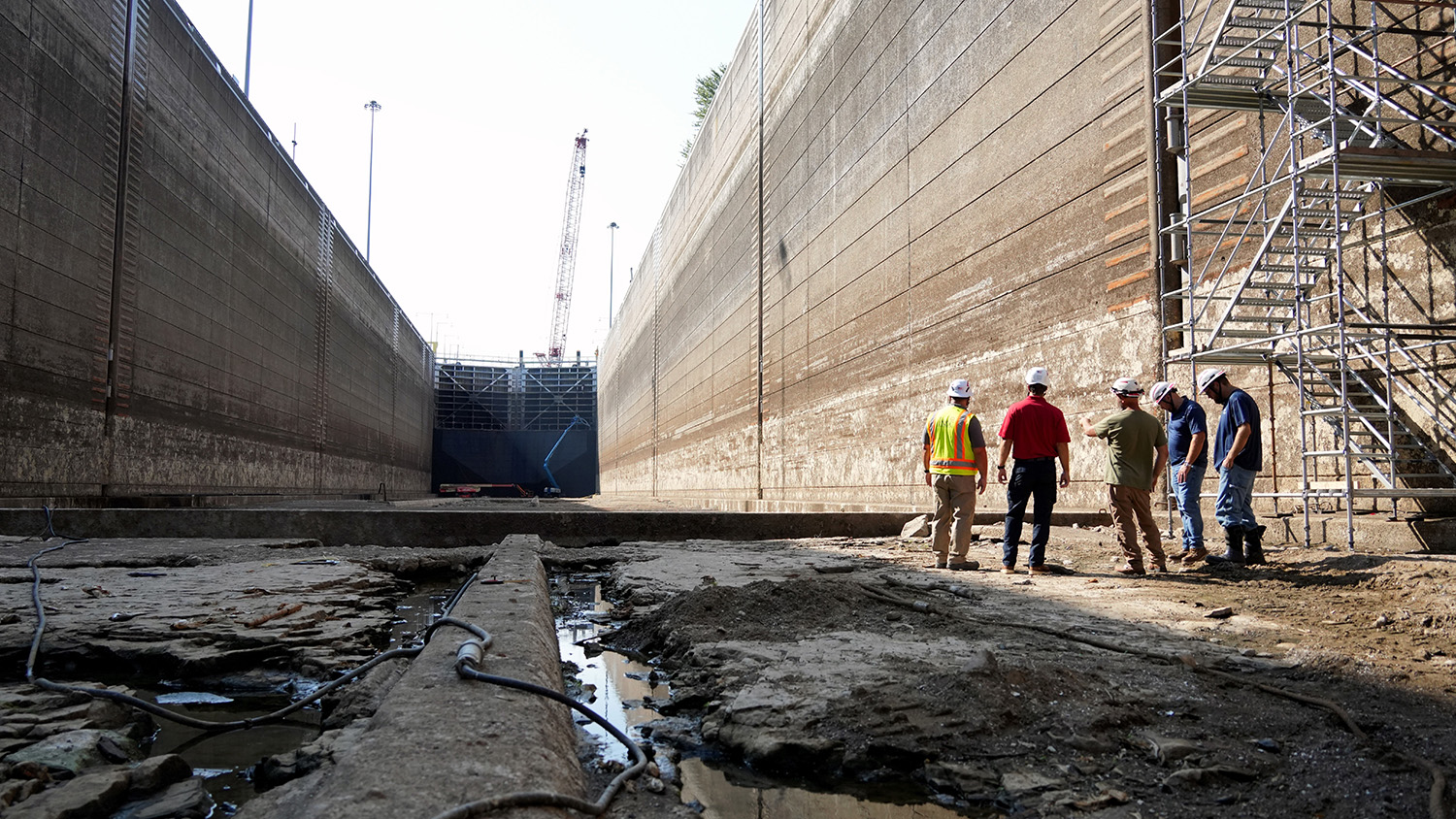
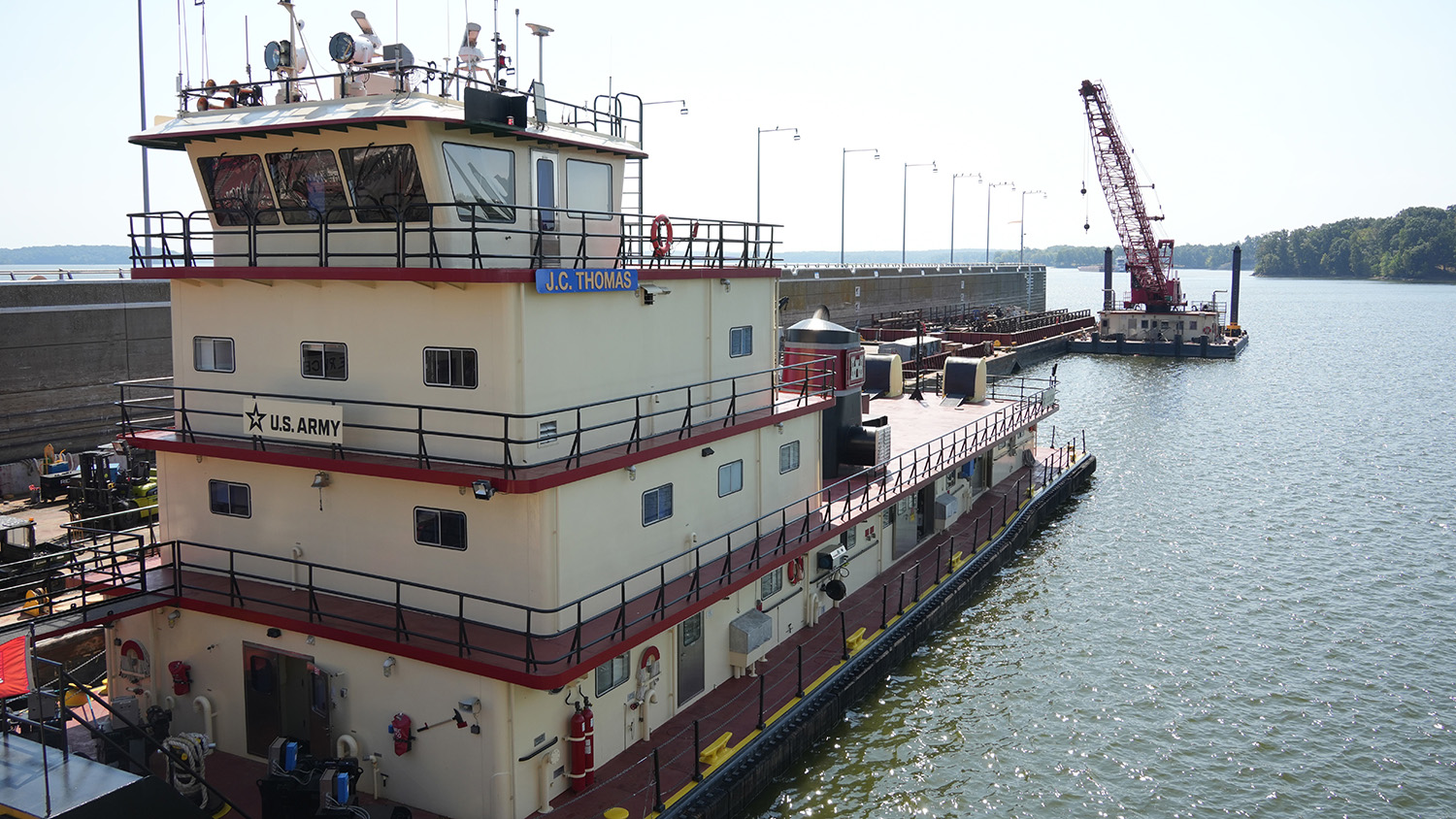
The U.S. Army Corps of Engineers' Nashville District is in the midst of a once-every-decade maintenance closure and dewatering at Barkley Lock on the Cumberland River near Grand Rivers, Ky. Nashville District personnel and the Huntington District's Regional Rivers Repair Fleet closed the lock to navigation on August 10. Personnel plan to complete maintenance work and reopen the lock to commercial traffic on October 1.
The lock is located at the northern end of the Land Between the Lakes, a region in southwestern Kentucky and northwestern Tennessee bounded by the Cumberland River on the east and the Tennessee River on the west. The Cumberland River continues north past Barkley Lock and enters the Ohio River at Smithland, Ky., while the Tennessee River flows westward past Kentucky Lock to meet the Ohio just upriver from Paducah, Ky. The Barkley Canal, just south of the two locks, allows barge traffic to continue moving during the closure at Barkley.
According to the Nashville District, Barkley Lock passed 23.6 million tons of cargo over the past year, supporting the movement of agricultural products, aggregate, and fuel between the Cumberland and Tennessee rivers, with direct water access to the city of Nashville, Tenn. Lt. Col. Guillermo Guandique, commander of the Nashville District, said maintenance work at Barkley is part of the Corps' broader mission of supporting marine transportation and national security.
"By ensuring the reliability of the navigation system, the fleet helps lower shipping costs, supports national security, reduces flood risks, and keeps commerce flowing smoothly," Guandique said. "At the Corps, the mission extends beyond maintaining waterways. It includes helping build the foundation for economic growth, global trade, and national security."
Ahead of the dewatering, dive teams cleared silt and debris from slots for stop logs, which, when stacked in the lock chamber, allow lock personnel to dewater the chamber. With the chamber dewatered, inspection crews get an up-close look at the lock's miter gates, draining and filling valves, concrete, and other infrastructure typically obscured by the water line. Doing so helps identify and address maintenance issues early before they trigger an emergency closure.
"This is one of the few opportunities we have to fully access major lock components," said Jeff Neely, lockmaster at Barkley Lock. "Once the chamber is dry, we can inspect areas that are normally underwater and make repairs that help keep the lock operating reliable."
The maintenance team is focusing on repairing Barkley's miter gates and its filling and emptying valves, both common wear items, especially at a higher-lift lock. Barkley Lock, which meansures 800'x110', features a 57-foot lift. The lock opened to navigation in July of 1964. According to the Nashville District, maintenance workers are also reinforcing structural members, replacing deteriorated steel, and addressing corrosion.
"Dewatering gives us the chance to do more than just look," Neely said. "It gives us the chance to fix things before they become emergency repairs."
